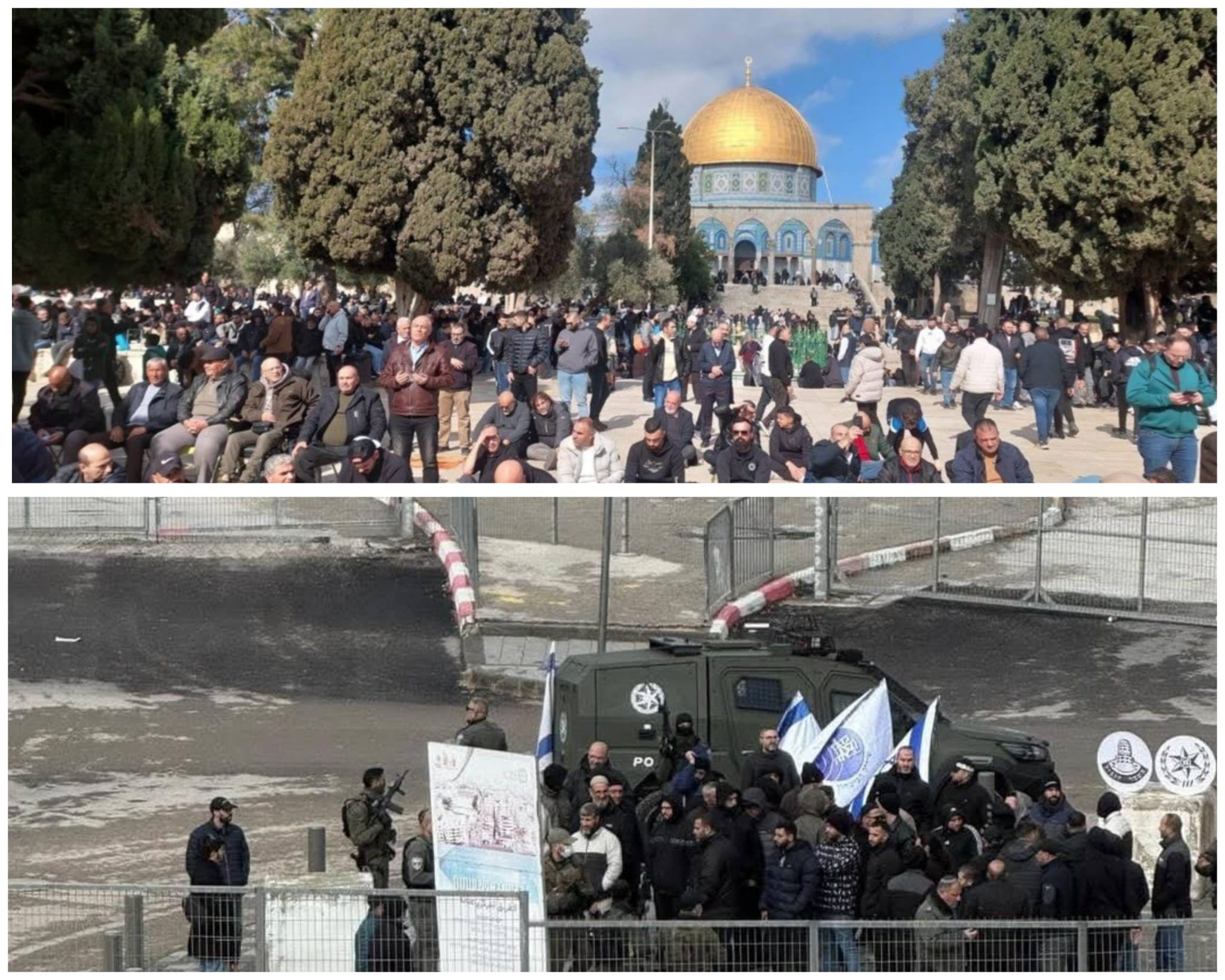
Ramadan is expected to begin this year on February 18, 2026 (subject to the sighting of the moon) and end on March 19, 2026. Each year, the holy month brings heightened tensions across Jerusalem, particularly on the Temple Mount, as tens of thousands of Palestinians and Arab citizens of Israel visit the Al-Aqsa Mosque daily. On Fridays, the number of worshippers and visitors can exceed 100,000.
What Is Driving Claims of a Shift in the Status Quo?
This year, the risk of escalation appears higher than usual. Palestinian officials and commentators argue that the long-standing status quo on the Temple Mount has been eroded, citing what they describe as expanded permissions granted to Jewish visitors. These include public prayer, prostration, the wearing of prayer shawls and the introduction of religious items into the compound.
On Palestinian social media, warnings that “Al-Aqsa is in danger” have become increasingly frequent, alongside calls for the public to ascend to the site and “defend” the mosque from what are framed as Jewish “incursions.”
At the same time, Palestinian media have voiced concern over recommendations by Israel’s Knesset National Security Committee to impose numerical and group-based restrictions on the entry of worshippers from the West Bank into Jerusalem during Ramadan. These proposals are widely portrayed as “collective punishment.”
The Palestinian Authority’s governor of Jerusalem, along with the PA’s Jerusalem Affairs Ministry, has issued statements warning against what they describe as “arbitrary plans” to limit access to Al-Aqsa. Palestinian analysts caution that Ramadan 2026 could become “the most violent and tense in years.”
How Are Israeli Security Forces Preparing for Ramadan 2026?
Against this backdrop, Israeli security preparations in Jerusalem are already underway. Alongside large-scale police deployments aimed at maintaining public order, authorities are focusing on monitoring and restricting the movement of individuals identified as potential instigators of unrest from the Temple Mount area.
According to Palestinian media reports, Israeli security forces have recently summoned dozens of Palestinian residents of Jerusalem for warning meetings ahead of Ramadan. Many were reportedly issued 10-day exclusion orders barring them from the Temple Mount, with extensions expected pending approval by the Jerusalem District Police commander.
Palestinian outlets have highlighted what they describe as a wave of interrogations, threats and restraining orders targeting dozens of former prisoners from East Jerusalem in the lead-up to Ramadan. These steps are portrayed as an effort to exert psychological pressure and reduce the presence of influential figures at Al-Aqsa during the holy month, under the justification of “preventing incitement.”
The summonses reportedly focused primarily on former prisoners identified with Hamas, including individuals released many years ago. According to the reports, actions were carried out at several locations across Jerusalem, including the Shuafat refugee camp checkpoint, the Ras al-Amud neighborhood in Silwan, the Kishle police station in the Old City and the Oz police station in Jabal Mukaber.
At the Shuafat checkpoint, Palestinians claim a particularly tense incident took place. More than 70 former prisoners were allegedly summoned, detained for approximately four hours and made to stand next to Israeli flags for a group photograph against their will. Attempts by officers to address them collectively reportedly led to verbal confrontations.
In summary, while Israeli authorities present these measures as legitimate preventive steps ahead of Ramadan 2026, Palestinians view them as an infringement on freedom of worship and a politically motivated campaign against those who refuse to comply with Israeli control.