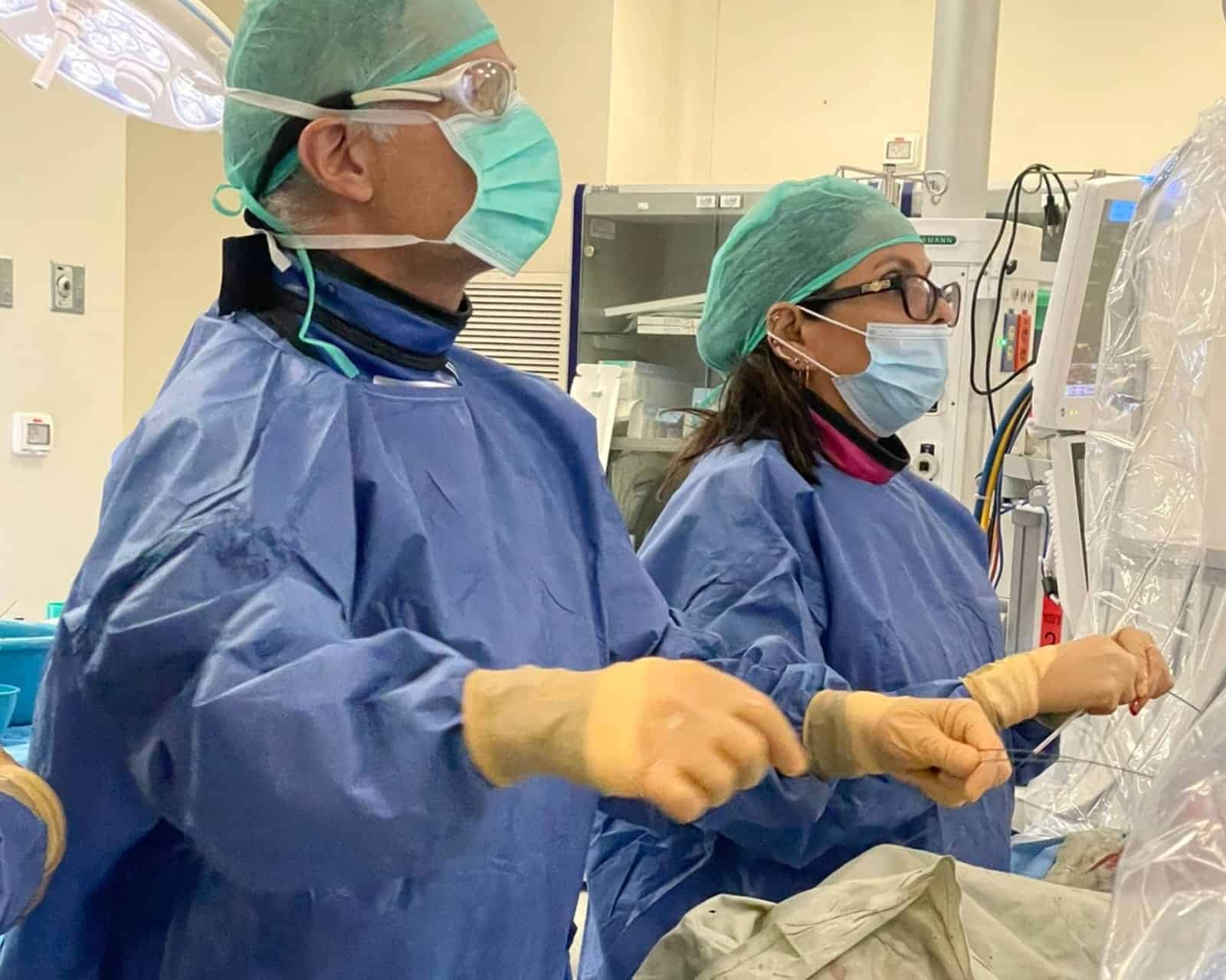
At Hadassah Ein Kerem Hospital in Jerusalem, a unique medical milestone was set this week: nine urgent patients underwent aortic valve replacement through cardiac catheterization (TAVR – Transcatheter Aortic Valve Replacement) within a single day. The procedures, performed consecutively by an experienced catheterization team, could not be delayed due to the critical condition of the patients
Prof. Ofer Amir, Director of the Heart Institute at Hadassah, explained: “The accumulation of many cases in a single day reflects the constant rise in patients arriving for treatment, yet there are still many undiagnosed patients at risk. We hope that awareness and vigilance regarding heart health will increase
Heart valve replacement by catheterization – an alternative to open-heart surgery
Aortic valve replacement via cardiac catheterization offers a groundbreaking alternative to open-heart surgery, avoiding the need to open the chest. This advanced procedure enables immediate treatment for patients suffering from valve dysfunction. Hadassah has been performing such interventions for over a decade, but this week marked an extraordinary achievement – nine TAVR procedures in one day, triple the national norm
The surgeries were carried out by the valve team led by Prof. David Planer and Prof. Gabi Elbaz-Griner. The aortic valve, located between the left ventricle and the aorta, plays a vital role in blood circulation. Malfunctions caused by stenosis or leakage can endanger life
Research highlights the need for rapid treatment
Prof. David Planer, Head of the Cardiac Catheterization Department, stressed: “Symptomatic aortic stenosis is a life-threatening condition. Effective treatment improves symptoms and prolongs life. Rapid diagnosis and intervention are essential to prevent heart failure or sudden death. All cases that day were urgent, and the team decided to proceed with consecutive catheterizations despite the workload. The risk facing these patients was a decline in cardiac output or sudden death.” He noted that even on this record-setting day, all other catheterization units continued to operate, performing elective and emergency procedures as well as complex electrophysiological interventions
Prof. Gabi Elbaz-Griner, Head of the Structural Catheterization Unit, addressed international standards: “In OECD countries, an important quality measure is the waiting time between diagnosis and treatment. In North America, the average waiting time for valve replacement surgery is 42 days for elective cases and 14 days for urgent cases. There is no reason this standard should not apply to catheter-based TAVR as well. The shorter the waiting period, the lower the morbidity and mortality
(Europe in Jaffa Street? Jerusalem light rail moves forward)
In research she published in Circulation, Prof. Elbaz-Griner found that mortality and hospitalization rates for heart failure rise steadily with longer waiting times. “A waiting period of just eight days was associated with a 2% mortality rate and 12% hospitalization. That is why early diagnosis and timely treatment are crucial, and it was clear to our team that none of the cases that day could be postponed,” she said
Prof. Ofer Amir concluded: “This demanding day would not have been possible without the full collaboration of all units within the Hadassah cardiac center – the intensive care unit led by Dr. Mordechai Golomb, the electrophysiology unit led by Prof. David Luria, the devoted nursing team led by Head Nurse Ira Orinovsky, and our outstanding technicians under Shlomo Habib. All nine patients were treated successfully and discharged home. This was a moving medical achievement for our staff and for the healthcare system in Jerusalem as a whole