For many Palestinians in Jerusalem, Sheikh Abd al-Azim Salahab was more than a religious figure. He was regarded as a symbolic guardian of Al Aqsa and a central voice in the long struggle over control, identity and authority on the Temple Mount.
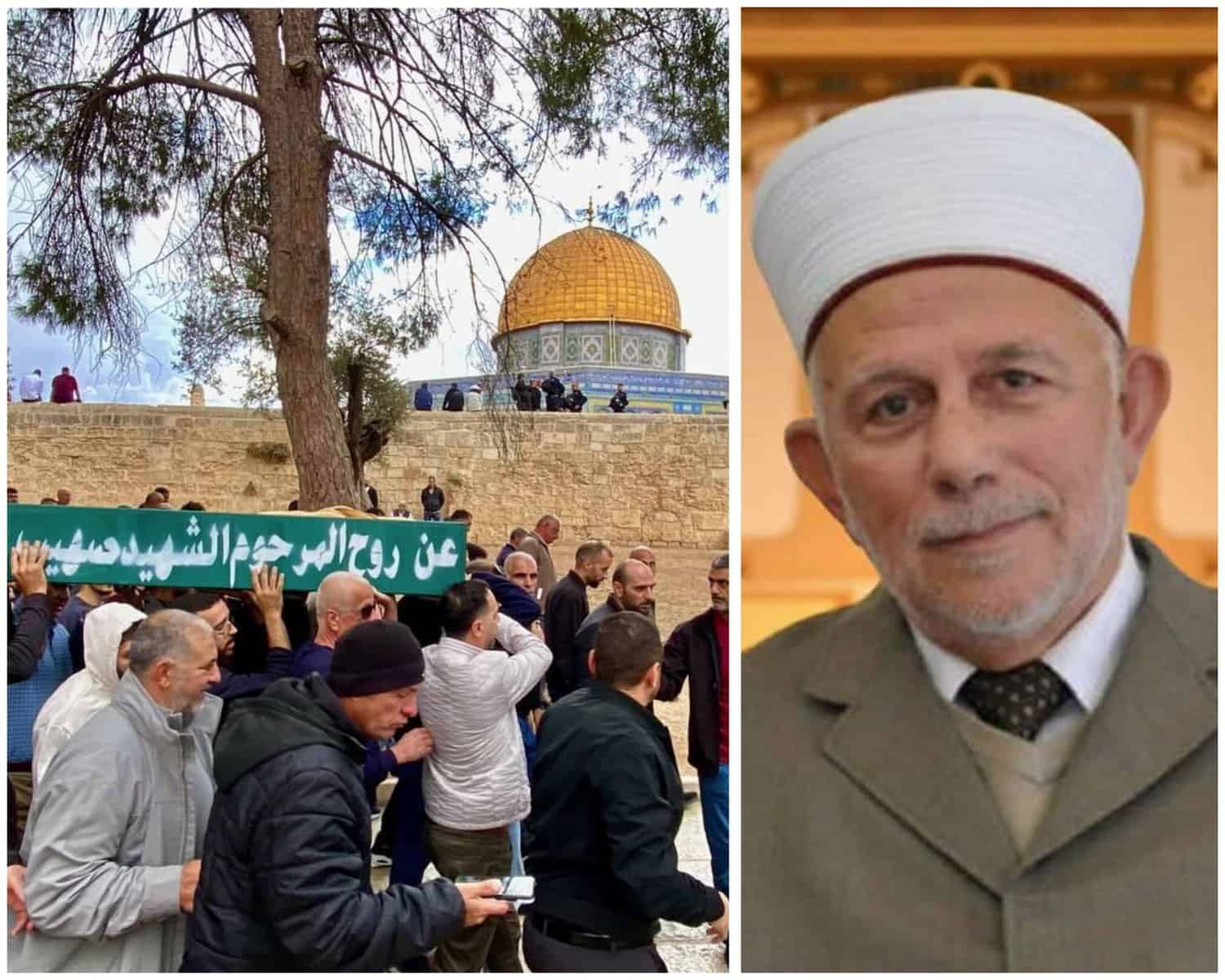
Thousands of Palestinians took part in his funeral in Jerusalem. Salahab, the long-time head of the Islamic Waqf Council, was widely seen as the traditional “protector” of Al Aqsa and of its Palestinian character, as well as a firm opponent of what he viewed as attempts to alter the status of the holy site.
The funeral procession, held on Friday, began at Al Aqsa Mosque and made its way toward the ancient Muslim cemetery beside Bab al Rahma on the eastern side of the Temple Mount. At the cemetery, he was eulogized by Sheikh Ikrima Sabri, head of the Higher Islamic Council and a prominent critic of Jewish presence on the mount, and by Sheikh Muhammad Hussein, the Grand Mufti of Jerusalem.
جنازة رئيس مجلس الأوقاف الإسلامية في القدس، الشيخ عبد العظيم سلهب، في مقبرة باب الرحمة الملاصقة للمسجد الأقصى المبارك pic.twitter.com/Hq8OkIJ523
— شبكة العاصمة الإخبارية (@alasimannews) November 14, 2025
A defining figure in Jerusalem’s Waqf leadership
Salahab served as one of the most influential religious authorities in Jerusalem’s Islamic sphere. As a senior sharia judge, chairman of the Waqf Council and an educator, he dedicated his life to safeguarding the Islamic heritage of the holy sites, particularly the Temple Mount (Al Haram al Sharif) and Al Aqsa Mosque. He was known among Palestinians as the “faithful guardian” of the compound, contributing to restoration work, stone flooring, renovations at the Dome of the Rock, and preservation of historical schools and courtyards around the mount.
He also chaired the Islamic Sciences and Culture Committee, which operates the private Al Iman school network in Jerusalem. The network, associated with Hamas, focuses on Islamic education combined with science and cultural studies, serving thousands of students. For Salahab, education was a strategic tool for preserving Palestinian and Islamic identity in the city.
Arrests, confrontations and the Bab al Rahma crisis
Salahab was arrested several times by Israeli authorities over his activities at Al Aqsa, turning him into a national-religious symbol among Palestinians. These arrests, often carried out during tense periods on the mount, included temporary bans on his entry to the compound. In 2019, he was detained along with his deputy, Sheikh Najeh Bakirat, after joining prayers in an area sealed by authorities. The 40-day ban that followed was condemned by Jordan and the Palestinian Authority and was widely viewed as an attempt to weaken the Waqf’s leadership structure.
One of the defining moments of his public life came during the Bab al Rahma crisis. The prayer hall near the eastern wall of the mount had been closed by Israel in 2003 on the grounds of illegal political activity. In February 2019, as Waqf chairman, Salahab led the decision to reopen it for the first time in 16 years. He personally opened the doors, allowing thousands to enter for Friday prayers. Despite repeated attempts by authorities, the hall has remained open ever since and today functions as an additional prayer area on the mount.