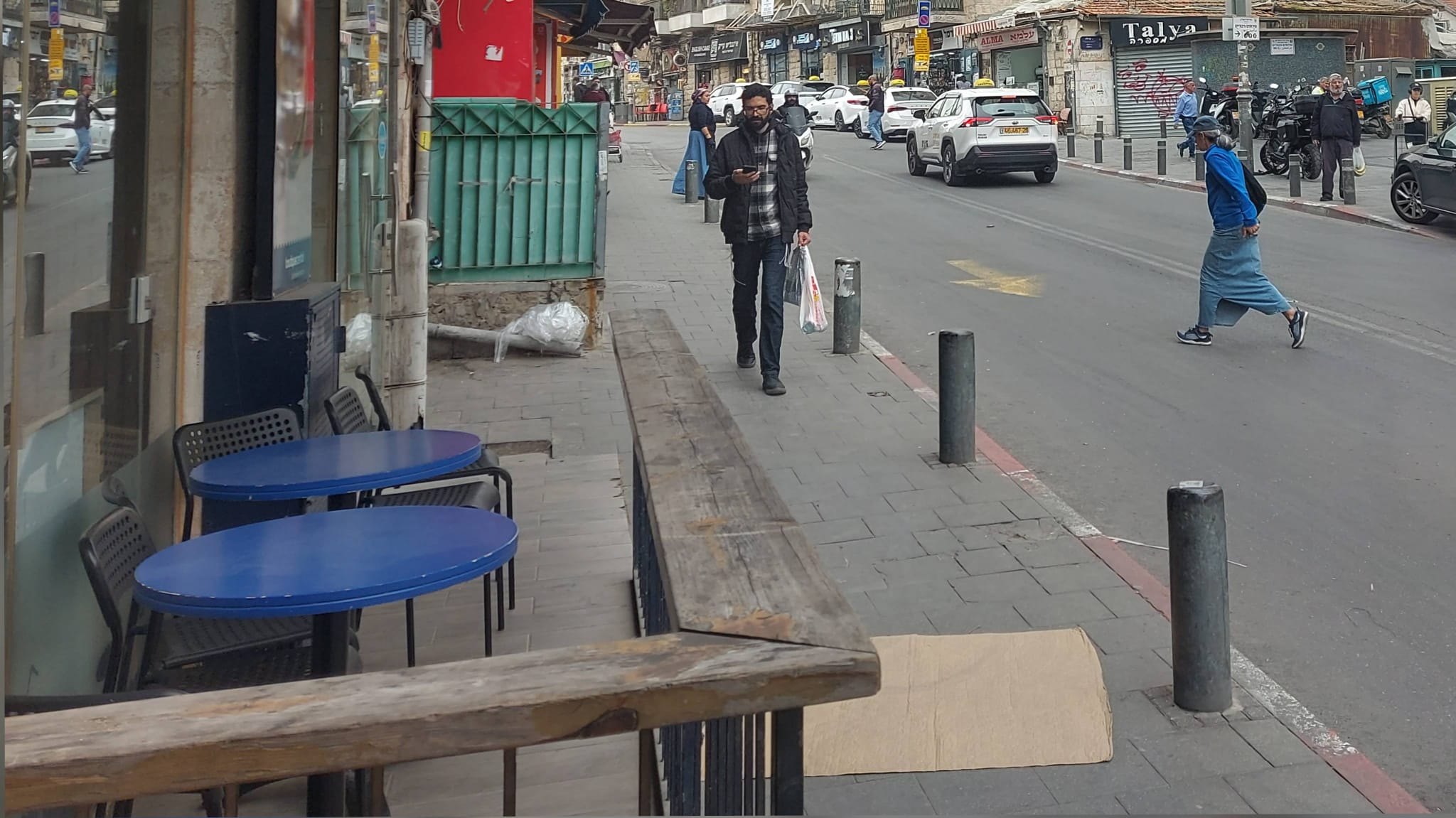
Major streets in Jerusalem, including Agripas Street, Ben Yehuda pedestrian mall, Jaffa Street, King George Street and the Talpiot industrial area, appear unusually quiet on some days. Foot traffic is low, customers are fewer, and many business owners are struggling to survive from one siren to the next – a reality that reflects the state of businesses in Jerusalem during wartime.
The war with Iran has reshaped daily life in the city: frequent sirens, interception debris falling across different areas, and a constant sense of uncertainty are directly impacting economic activity. For business owners, this means declining revenue, canceled orders, and ongoing instability.
Beyond the financial hit, many are dealing with significant mental pressure. Some have been called up for reserve duty, others are trying to support families while running struggling businesses, and some openly speak about anxiety, burnout, and even reliance on medication just to keep functioning.
Jerusalem’s streets, usually vibrant and busy, are now operating at a different pace – one dictated by the security situation and the ongoing war with Iran.
What relief measures has the Jerusalem Municipality introduced for businesses and what do they include?
Against this backdrop, the Jerusalem Municipality has announced a series of steps aimed at helping business owners continue operating.
As part of the measures, the Business Promotion Department will allow expanded placement of merchandise in public space, as well as additional installations near businesses, subject to accessibility, safety, and visibility considerations – until May 31, 2026.
In addition, businesses will receive an extension for dismantling winter enclosures until June 30, 2026.
One of the key measures is a full exemption from facility permit fees for 2026. Business owners will also be able to transfer ownership of a licensed business via affidavit only, without time limitation, except in the case of death.
Regarding signage, a 10% discount on signage fees will be granted until April 30, 2026, while the first standard sign is provided free of charge.
Jerusalem Mayor Moshe Lion notes: “Business owners are a central growth engine of the city. Especially in such a complex period, we are committed to easing their burden and enabling stable activity and growth.”
Head of the Business Promotion Department, Kfir Neiman adds: “The measures were designed based on direct feedback from the field. Our goal is to provide greater operational flexibility while maintaining order, safety, and the city’s appearance.”
Deputy to the Mayor, Ariel Baziz explains: “Our policy is clear – reduce bureaucracy, encourage the market, and strengthen the local economy, especially during a time of war and reserve duty.”