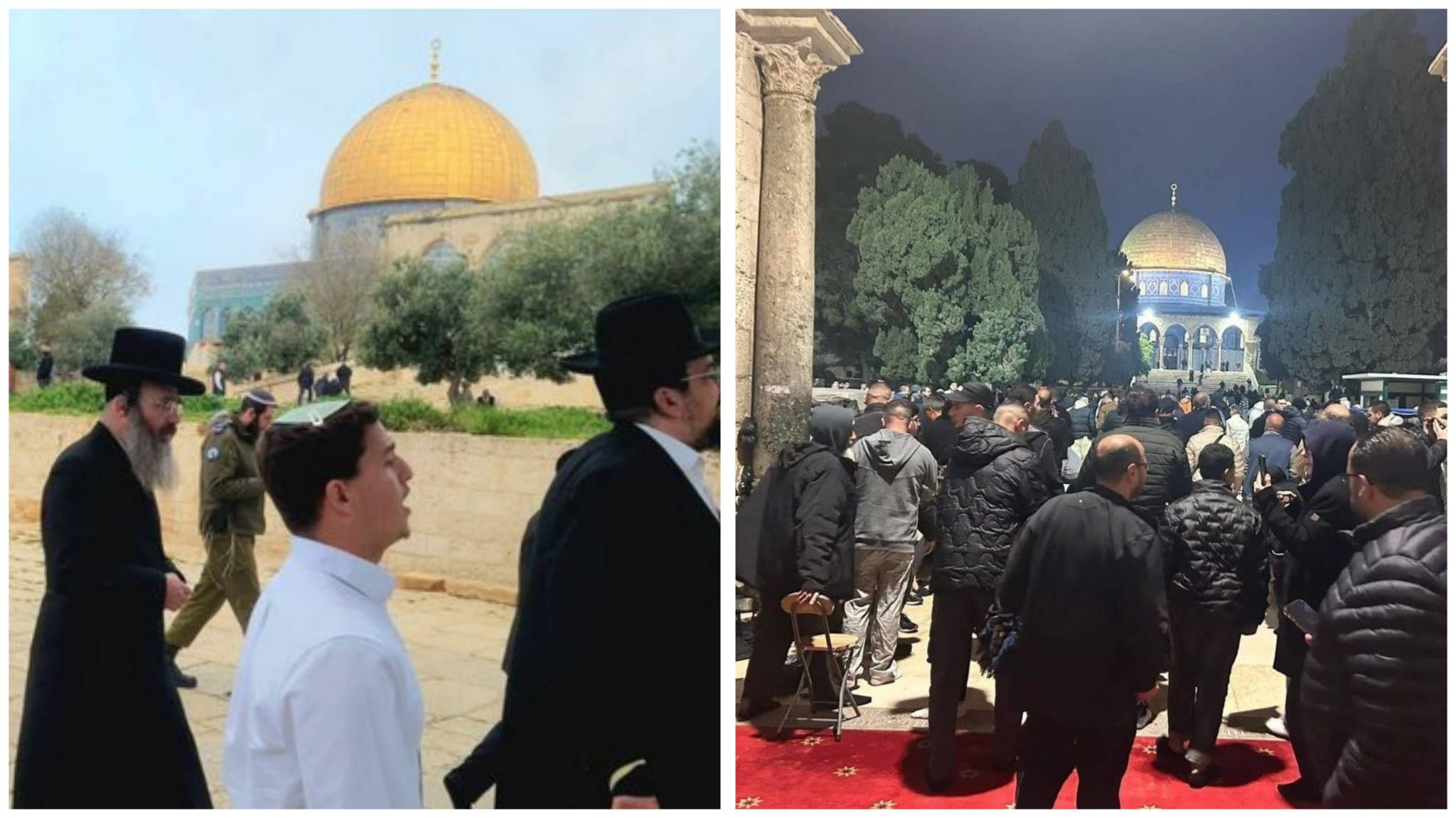
Following updated Home Front Command guidelines and changes to security policy after the ceasefire with Iran, the Temple Mount in Jerusalem reopened this Thursday morning after 40 days of closure, allowing entry once again to worshippers and visitors of all faiths. The Church of the Holy Sepulchre in Jerusalem has also reopened to Christian visitors.
In a statement ahead of the reopening, the Jerusalem District Police said: “Jerusalem District Commander, Superintendent Avshalom Peled, has ordered increased operational readiness, with hundreds of police officers, Border Police fighters and volunteers deployed across Jerusalem, on main routes, in the Old City and at holy sites, in order to enable all worshippers and visitors to arrive safely and exercise freedom of worship, while strictly maintaining public order and security.”
The first to enter the compound were hundreds of Muslim worshippers who arrived at dawn for the Fajr (morning) prayer at Al-Aqsa Mosque. After the Muslim dawn prayer ended and the compound was cleared, Jewish visitors were allowed to ascend the Temple Mount. The first Jewish visitors entered with singing, reciting the “Shehecheyanu” blessing, blowing a shofar and performing prostration rituals. Starting today, an additional half hour has been added to Jewish visiting hours, bringing the total time for morning and midday visits to six and a half hours.
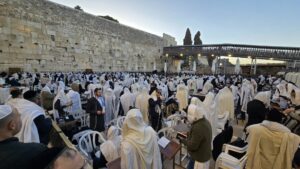
During the 40 days of closure, Jewish visits to the Temple Mount were completely halted throughout the Passover holiday and its intermediate days – a period that in normal years draws tens of thousands of pilgrims to both the Temple Mount and the Western Wall, especially for the traditional Priestly Blessing ceremony, which this year was held in a reduced format without public attendance.
Muslim worshippers were also largely prevented from accessing Al-Aqsa Mosque during most days of Ramadan and the Eid al-Fitr holiday that followed. From the Palestinian perspective, the site was not closed solely for security and life-saving reasons, but rather that the war was used by Israel as a pretext to impose Jewish dominance over the compound and restrict Muslim access to Al-Aqsa.
פתיחת המקומות הקדושים בירושלים pic.twitter.com/Ww0GduEIrq
— jerusalem online (@Jlmonline) April 9, 2026
המקומות הקדושים בירושלים שוב פתוחים pic.twitter.com/ixiMd3oGth
— jerusalem online (@Jlmonline) April 9, 2026