Jerusalem is once again rewriting its future from the ground up. Where buses once parked, refueled and disappeared back onto the city’s arteries, planners now envision a radically different landscape. The Egged bus depot in Talpiot, at the junction of Moshe Baram Street and Hebron Road, is set to become one of the most ambitious urban redevelopment projects advanced in the city in recent years – a shift from infrastructure serving movement to a district designed for everyday urban life.
The local planning and building committee has recommended depositing the plan, promoted by the Jerusalem Municipality in cooperation with Eden, the city’s economic development company. City planners see the site as a strategic anchor in the broader transformation of Talpiot, long identified as one of Jerusalem’s main growth engines. The location sits at the heart of a rapidly changing area, adjacent to the Blue Line of the light rail and close to the emerging Talpiot business district, with direct links to Hebron Road, Pierre Koenig Street and Yad Harutsim.
How will the Egged bus depot redevelopment reshape Talpiot and southern Jerusalem?
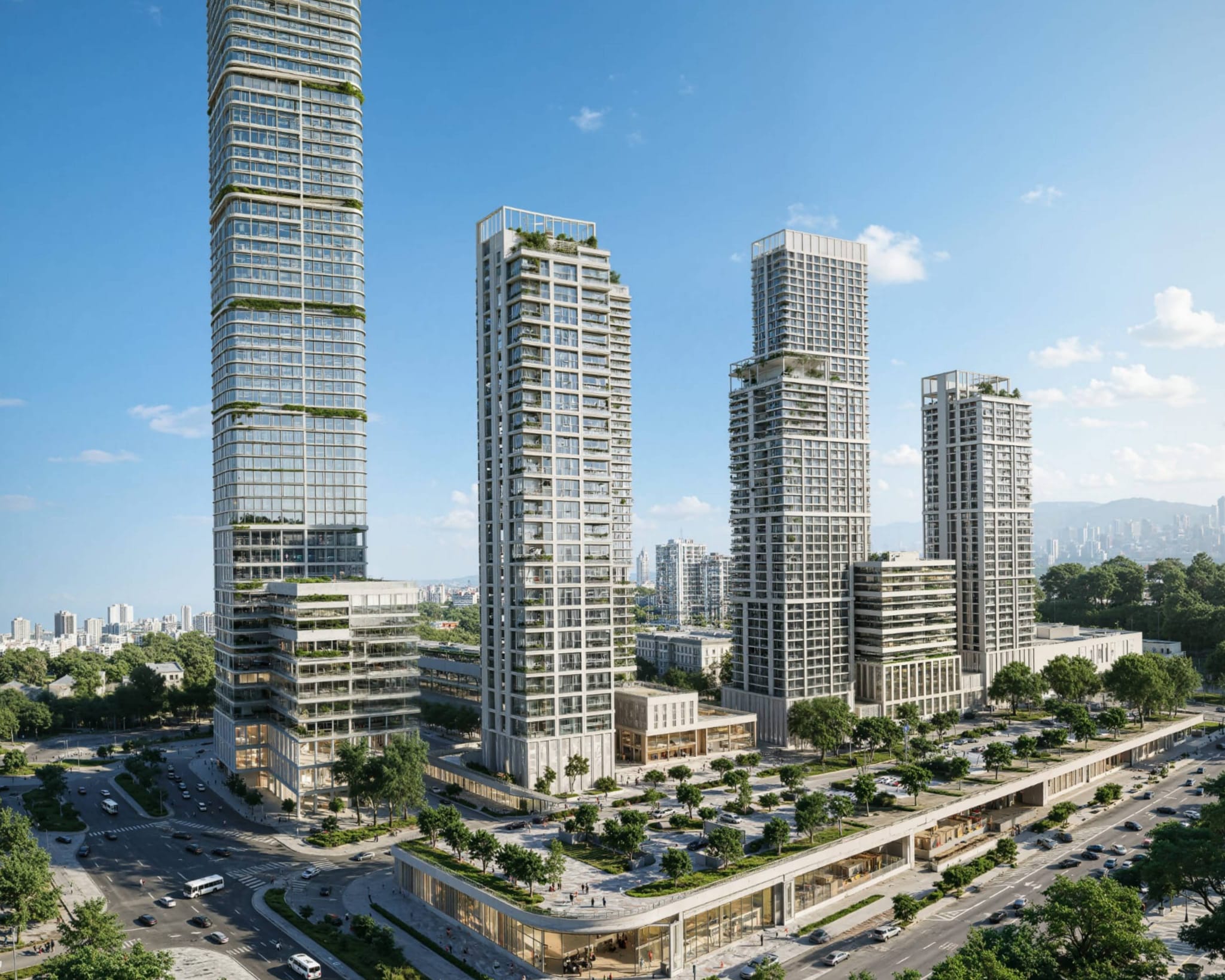
Spanning approximately 73 dunams, the plan proposes demolishing the existing depot and replacing it with an intensive mixed-use urban complex combining residential towers, employment, commerce, hospitality and public institutions. According to the proposal, eight residential buildings ranging from 13 to 50 storeys would rise above active podium levels dedicated to offices and retail.
The project includes around 2,000 housing units, at least 20 percent of them apartments of up to 80 square metres, alongside some 1,000 long-term rental units to be leased for a minimum of 20 years. In addition, roughly 60,000 square metres of employment space are planned in a separate building, together with about 9,200 square metres of commercial space.
Public and civic functions play a central role in the scheme. Plans include a swimming pool, with an option for a football pitch above it and a basketball hall, as well as community facilities and public institutions. Beneath street level, extensive underground parking is planned, including charging infrastructure for electric vehicles and a 7-dunam underground bus depot – a nod to the site’s transport legacy, reimagined for a denser urban future.
Equally significant is the treatment of public space. The proposal features an urban square, landscaped open areas, pedestrian promenades and cycling paths, playgrounds, greenery and decorative water features. The emphasis is on walkability, public transport priority and the creation of active streets, in line with contemporary principles of sustainable urban development.
The plan was submitted by the Netzba Group and designed by architect Yigal Levi. It forms part of the Talpiot 2040 master plan, which aims to transform the area from a traditional industrial zone into a leading district for business, employment, housing and culture. For city planners, the Egged site is not merely another construction project but a test case for Jerusalem’s ability to absorb growth through density, height and mixed use rather than outward expansion.
From Jerusalem Mayor Moshe Lion it was stated: “The Talpiot neighborhood is becoming an advanced and innovative district in the heart of Jerusalem. Talpiot is experiencing a momentum of planning and action unlike anything we have seen before. This is exactly what we envisioned when we approved the Talpiot 2040 master plan. Today, we are seeing that vision take shape and materialize in its surroundings, together creating a new and impressive urban continuum. This is the face of the future, and I am proud of it.”
The redevelopment of the Egged bus depot does not stand alone. It joins a growing list of large-scale urban projects through which Jerusalem is attempting to address housing shortages, shifting employment patterns and competition with other cities for young residents and businesses. In Talpiot, the stakes are particularly high. The question is whether a city so often shaped by caution and historical weight can successfully deliver a dense, high-rise and ambitious district almost from scratch – without tipping the delicate balance that defines Jerusalem’s urban character.