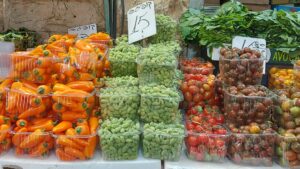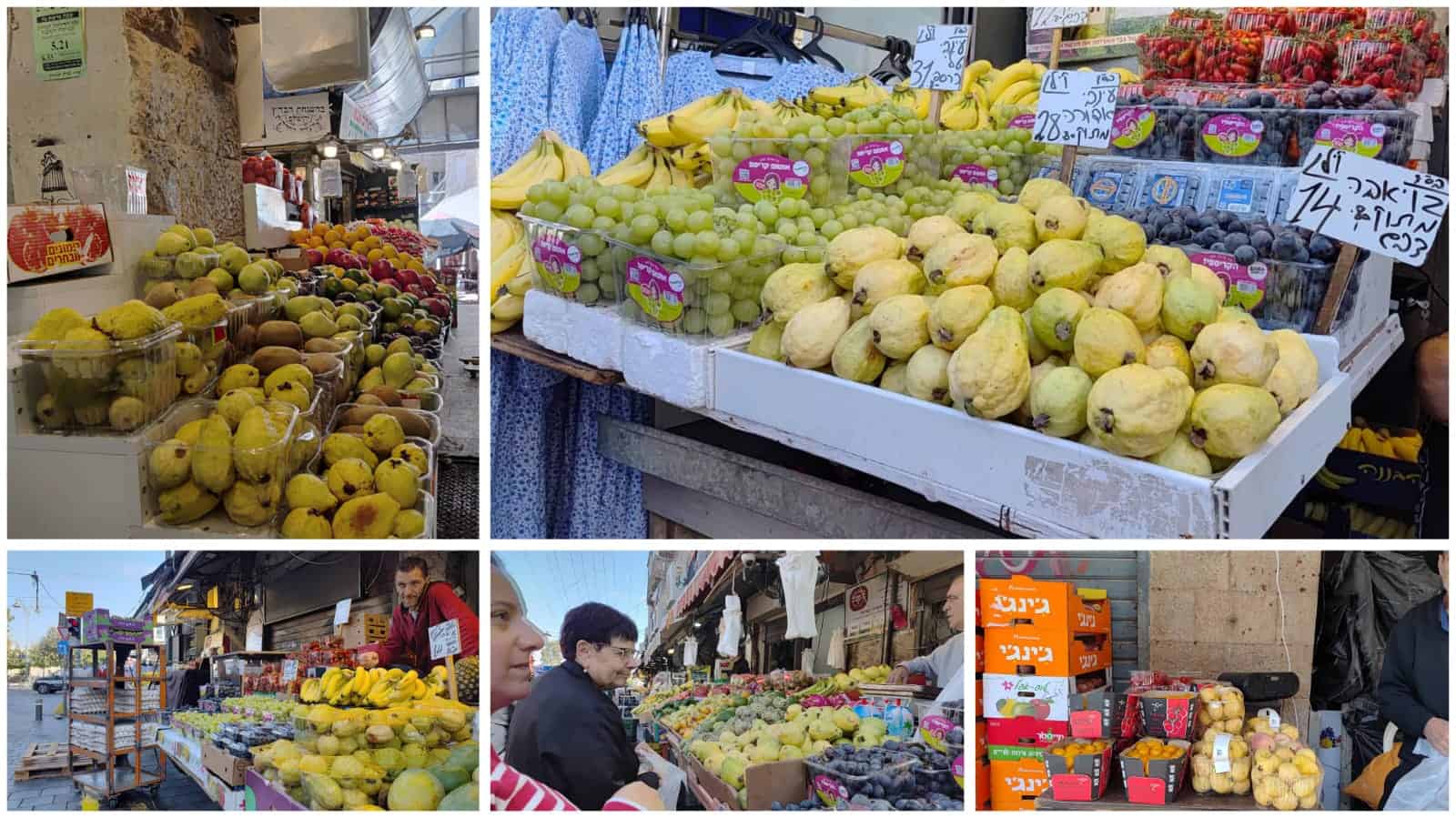
In mid-October 2025, as November approaches, guava season blossoms in Jerusalem. Alongside the wagtail hopping on Navon Street and the autumn leaves scattered across Agripas and Ki’ach Streets leading to Mahane Yehuda Market, the guava’s perfume joins as one of autumn’s messengers. Jerusalemites stepping off the light rail after the city center station are greeted with a rare seasonal sensory experience: the aroma of guavas displayed in the market stalls.
Guavas and Jerusalem’s alleys
The smell arrives before the fruit itself. In the neighborhoods between Baka and Nahlaot, that same sharp-sweet air sneaks back, impossible to ignore. It comes from the last of the fruit trees still standing in the city’s old courtyards.
At Mahane Yehuda Market, stalls are filled with yellow and golden piles of guavas, dizzying in their abundance. Vendors call out loudly: “Fresh guavas!”, and passersby respond with longing or a wrinkled nose. Some smile, recalling the scent of a truly Jerusalem childhood, while others hold their breath as if a skunk had passed by.
In a city so attuned to the seasons, guava signals that summer has faded and autumn has arrived. Summer ends when guava lands in Mahane Yehuda Market. It is the season when its scent floods courtyards in Katamon, Talpiot, and the YMCA area, where old fruit trees have survived for decades. In 1960s Jerusalem, nearly every courtyard had at least one guava tree. Children climbed them, while adults below argued whether the smell of guava was paradise or hell.
In Jerusalem, the question was never whether you had a guava tree, but whether you liked the pale yellow fruit. A gritty fruit dividing Jerusalemites, just like debates about riding on Shabbat or who sang “Jerusalem of Gold” better. Yet all could agree that the guava’s scent arrives long before the tree is even seen.
Health value and Jerusalem guava jam
Beyond its fragrance and controversies, it is worth remembering that this fruit, resembling a tiny citron, carries health benefits that are bringing it back into fashion. A vitamin C powerhouse, full of fiber and antioxidants. Yet in those days, no one needed science to know its worth. Grandma’s guava jam from Zikhron Tuvia slid down the throat, cooked on a kerosene stove with sugar and lemon, long before anyone called guava a superfood. Today, the price ranges between 14 and 20 shekels per kilo.
In an age where everything is recorded and photographed, guava reminds us of something the algorithm still cannot do – it cannot transmit smell, at least not yet. It cannot share the memory or feeling of childhood, nor can it easily show an old courtyard graced with a guava tree or a barefoot child named Yonatan climbing to its top.
That is the secret charm of guava and of Jerusalem – not just a seasonal fruit, but part of the city’s emotional landscape. In my childhood, when father brought guavas home, we knew summer vacation had ended. Yet mother never dared include guava in a school breakfast. She knew it could distance us from our friends. Guava, never included in the Four Species or the Seven Species, etched in the hearts of Jerusalemites sensory memories that did not fade with time. Perhaps that is its true magic.