Jerusalem’s Old City is only a few hundred meters wide, but it holds centuries of tension, faith, and meaning in every stone. In one short walk, the air shifts — from flags to silence, from souvenirs to solitude
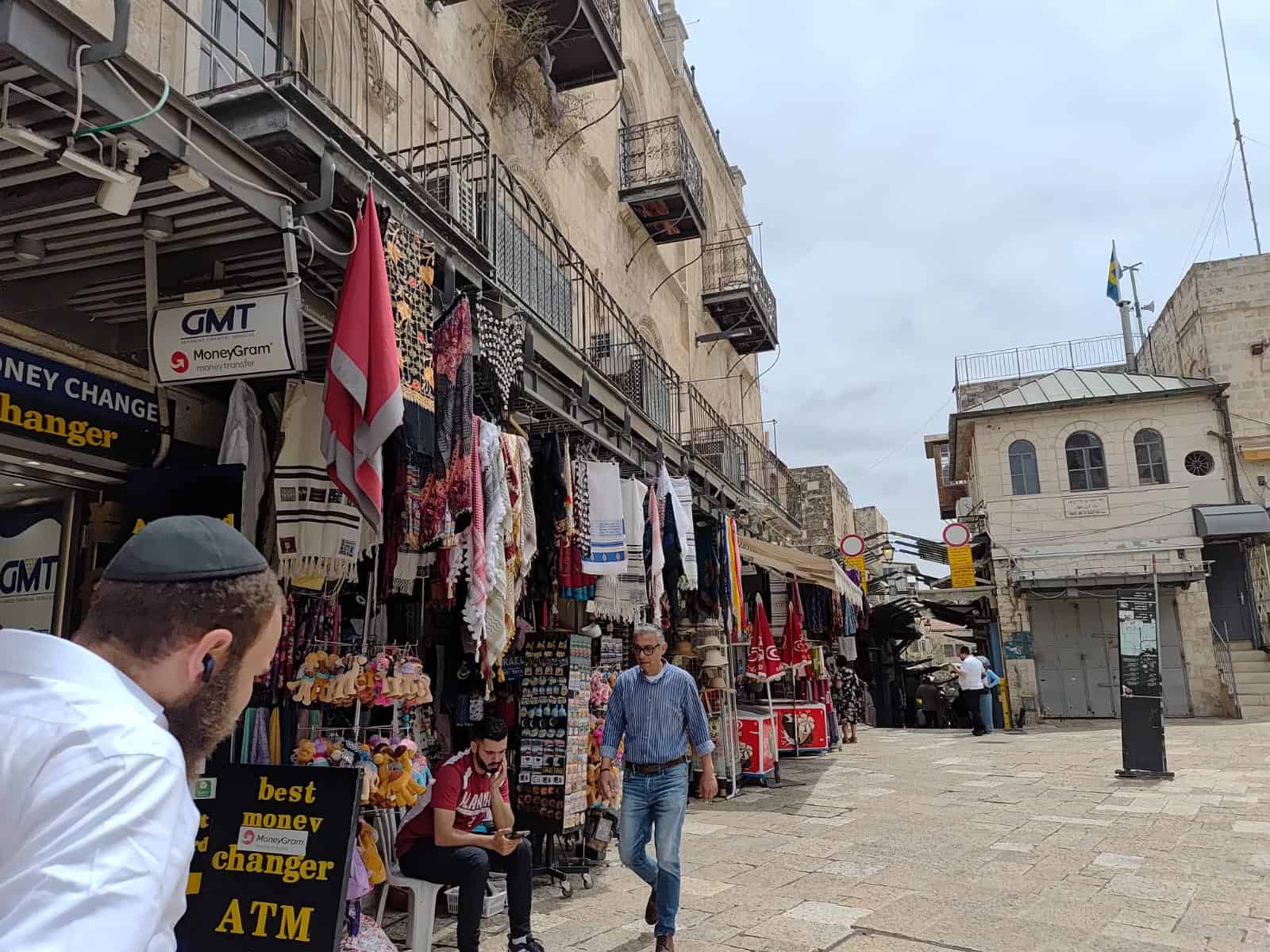
On one side, a crowded alley bursts with color. Palestinian scarves hang next to Jewish prayer shawls, while tourists search for the “best money changer” under signs in Hebrew, Arabic, and English. It’s a market of contradictions: a place where a yarmulke, a keffiyeh, and a Coca-Cola fridge all coexist — just barely
From tourist stalls to silent streets
Just steps away, the mood changes. A narrow lane in the Armenian Quarter offers no souvenirs, no sounds, no slogans. Only silence. Flags of Armenia hang still on a restaurant wall, and an ultra-Orthodox boy passes quietly, absorbed in his own thoughts. The contrast is striking — not just visual, but emotional
Then, at the city’s western edge, another image: a memorial wall displaying dozens of fallen soldiers, alongside a bold sign reading “To the Western Wall.” It’s part pilgrimage, part protest, part memory. And just a few feet from smiling tourists — the tension sits in the sunlight
In Jerusalem, every street tells a story. But sometimes, it’s the space between them that says the most