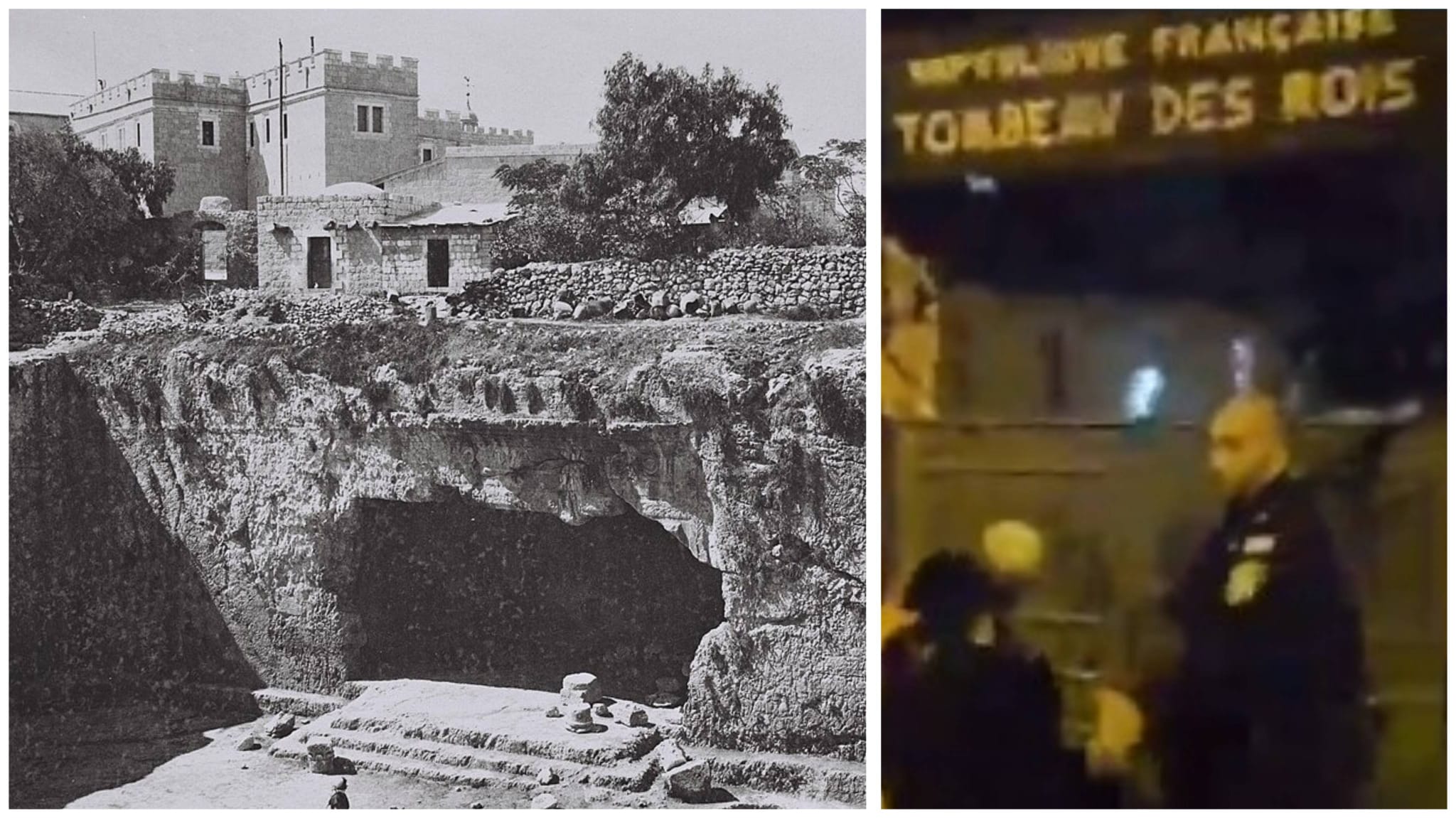
Tensions around the Tombs of the Kings in East Jerusalem, which have resurfaced in recent weeks, reached a peak this week during the night between Sunday and Monday, when a group of about 100 rioters attempted to forcibly break into the compound, which is owned by the French government.
Jerusalem District Police were forced to disperse the rioters using crowd control measures. One suspect was arrested and three officers were lightly injured.
Over the past week, a group of followers of Rabbi Eliezer Berland from the “Shuvu Banim” yeshiva was documented, among others by journalist Shlomi Heller, repeatedly attempting to break into the private compound despite police restrictions, demanding free access for prayer.
In a statement, Jerusalem District Police said: “Police forces operated in the Tombs of the Kings area in Jerusalem following an attempt by about 100 rioters to forcibly break into a private compound and trespass, while confronting officers who acted to disperse them. One suspect was arrested. Police used measures to push back the rioters and restore public order. Three officers were lightly injured and treated at the scene.”
What are the Tombs of the Kings in Jerusalem and who is buried there?
The Tombs of the Kings (Tombeau des Rois) in Jerusalem is an impressive archaeological site that combines ancient history, religious disputes and a complex diplomatic dimension. The compound is located in the Sheikh Jarrah (Shimon HaTzadik) neighborhood on Salah a-Din Street in East Jerusalem. It is a monumental rock-cut burial complex featuring a large courtyard, an impressive staircase and a system of underground chambers. Most researchers and archaeologists identify the site as the burial place of Queen Helena of Adiabene and her family, who converted to Judaism and came to Jerusalem in the 1st century CE.
The name “Tombs of the Kings” originates from early traditions, including those mentioned by the geographer Pausanias, which attributed the site to the kings of the House of David. Modern research, however, rejects this due to the structure’s dating to the late Second Temple period. Certain religious groups, including followers of “Shuvu Banim,” view the site as sacred (sometimes identifying it as the burial place of Kalba Savua) and demand free, unrestricted prayer access, similar to sites such as Rachel’s Tomb or the Cave of the Patriarchs.
In the 19th century, the land was purchased by a Jewish family from France (the Pereire family) with the intention of preserving it for the Jewish people. After the brothers’ deaths, their heirs transferred the site to the French government in 1886. Since then, France has retained ownership of the compound, which is considered French territory (similar to St. Anne’s Church in Jerusalem). The site remained closed to visitors for many years due to conservation work and disputes over access, and reopened in 2019 under strict limitations, including advance registration, payment and restricted visitor numbers.
Attempts by Jewish groups to “reclaim” the site through legal channels have so far failed due to the diplomatic immunity enjoyed by the compound. The French government regards the site as a sovereign cultural asset. French authorities fear that turning it into a de facto synagogue would harm its preservation and international status. Various ultra-Orthodox groups that reject the current legal framework have carried out repeated attempts to enter by force without coordination, leading to recurring clashes with police and guards from the French consulate.