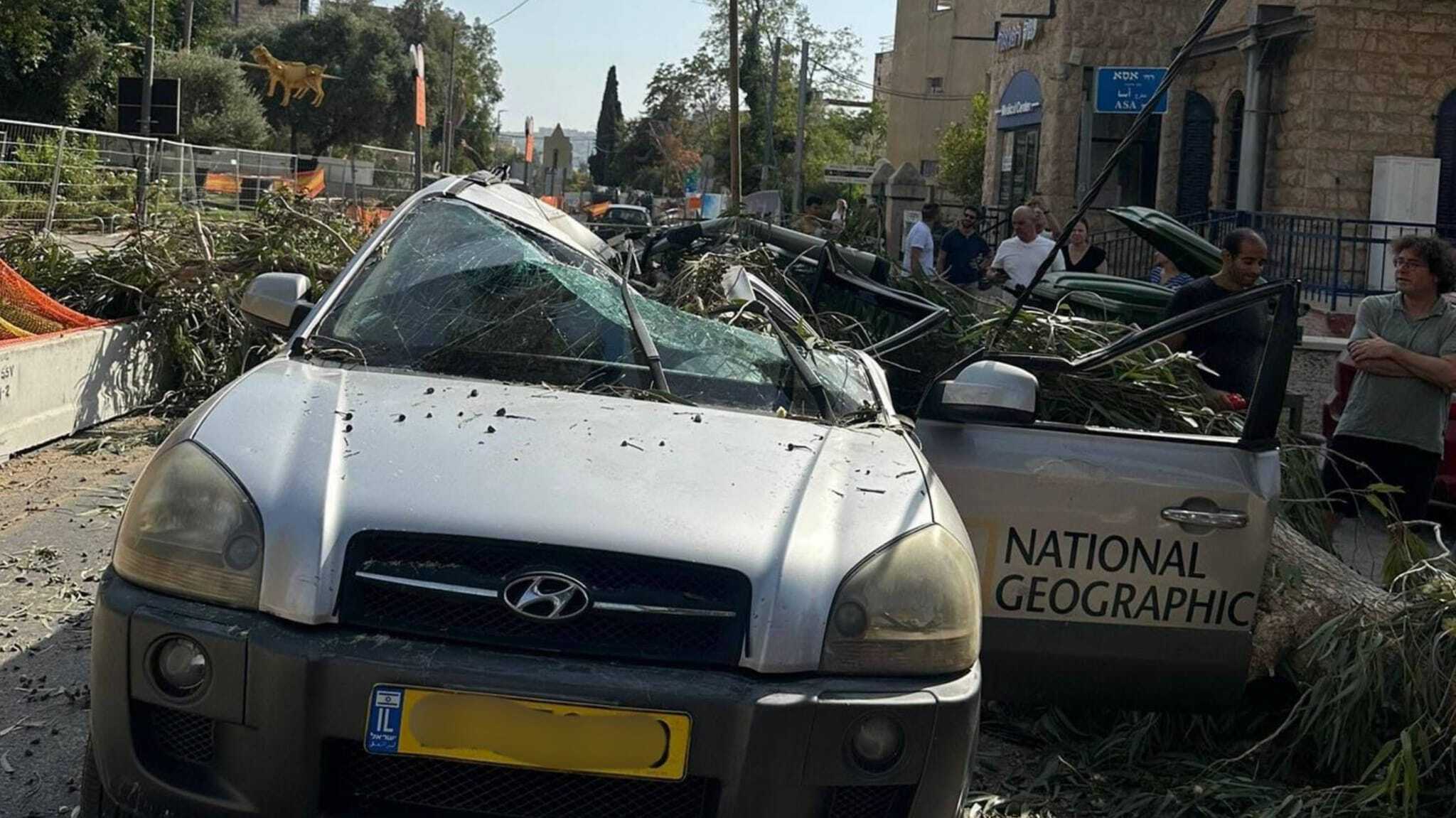
On Friday, Jerusalem’s Emek Refaim Street turned into a scene of chaos. A large tree suddenly collapsed on a passing car, leaving bystanders shocked. Officers from the Moriah police station rushed to the site, blocked traffic in the area, and rescued the injured driver, who was evacuated to the hospital. The street remained closed for several hours until the hazard was cleared, while residents described sudden panic in one of the city’s busiest avenues
Jerusalem Light Rail construction works
Emek Refaim has long been considered the heart of Jerusalem’s German Colony. In recent weeks, however, it has become a hub of heavy works as part of the Jerusalem Light Rail project. Excavations, drilling, and constant noise are part of the Blue Line of the Jerusalem Light Rail – a line expected to reshape the city’s public transportation. While there is not necessarily any connection between the construction and the tree collapse, the timing intensified public concerns about safety. Many residents say the street feels like a permanent construction site
German Colony Light Rail project
The phrase “German Colony Light Rail” has become increasingly common in searches, as locals seek to understand the project’s impact on daily life. The German Colony is a historic neighborhood with heritage houses, cultural institutions, and schools, and every change here affects thousands of people. While there is not necessarily any connection between the fallen tree and the Light Rail, the combination of a crowded street and heavy machinery raises questions about quality of life. Daily presence of trucks and workers has already altered the neighborhood’s character
Public safety in Jerusalem construction zones
The image of a National Geographic car crushed under a tree in Jerusalem highlights the city’s striking contrasts: an ancient capital with cultural depth, yet a modern metropolis racing toward infrastructure growth. The central question is how to balance development with public safety, especially when major construction zones sit within old and densely populated neighborhoods. Previous incidents, even if not fatal, have already stirred debate over municipal oversight and emergency preparedness. Residents worry that the pace of development has outstripped the city’s ability to safeguard them
(Heatwave in Jerusalem? Celebrations at the Western Wall)
National Geographic in the heart of Jerusalem
The presence of a National Geographic vehicle in the scene gave the story international resonance. A brand known for documenting nature and exploration suddenly became part of a chaotic urban story in Jerusalem. The irony is powerful: a global icon of storytelling caught in the middle of a dramatic local event. For international audiences, such images tie Jerusalem once again to a universal narrative – a place where every incident becomes a story of global interest