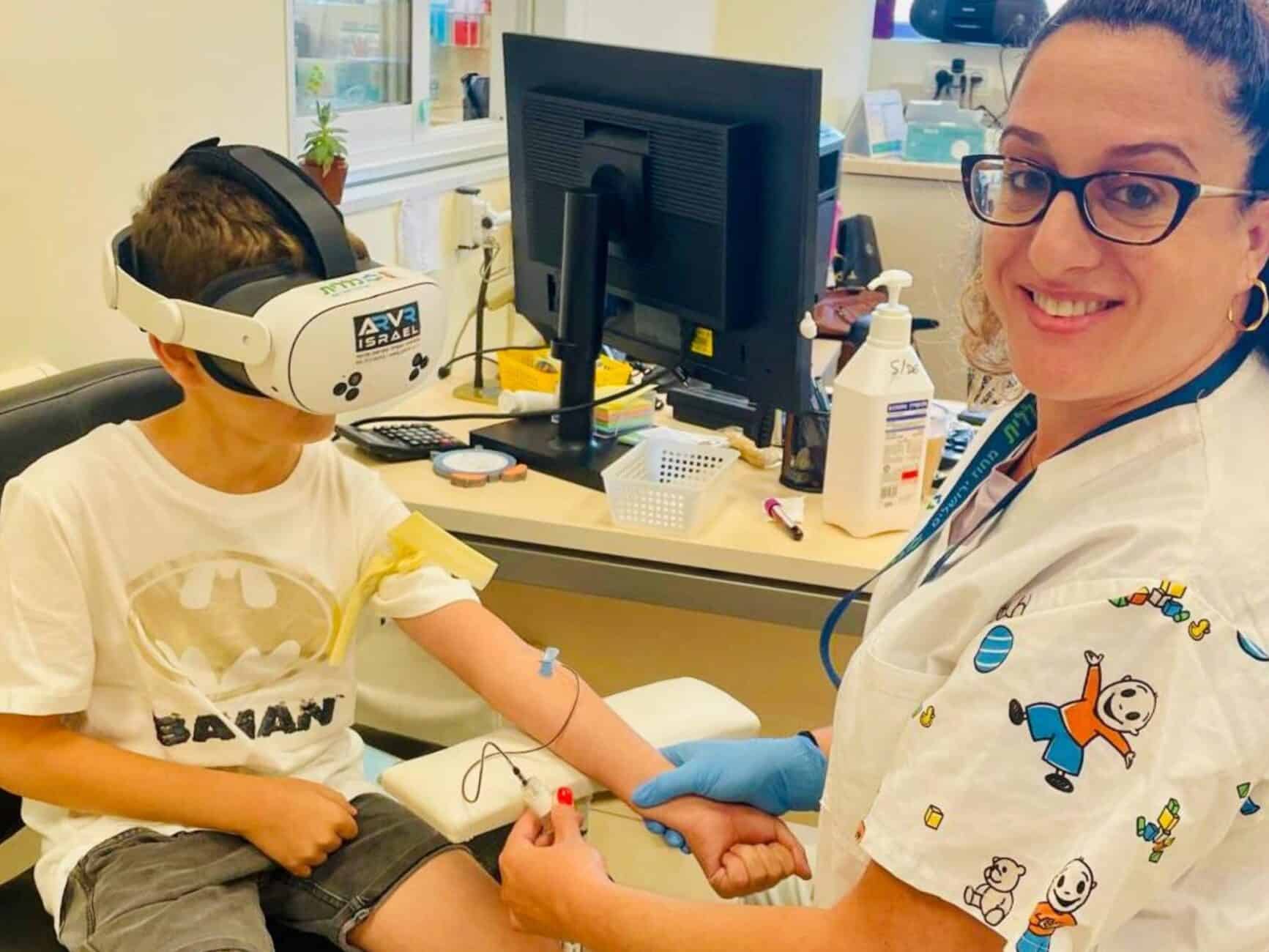
The child sits quietly. The nurse approaches with a needle. But instead of tears or panic, the child is immersed in a quiet forest filled with colorful animals. The treatment begins – and ends – with barely a flinch.
This is the new reality inside Clalit Health Services’ pediatric clinics in Jerusalem District, where cutting-edge VR technology is being used to reduce anxiety and pain in young patients during medical treatments, vaccinations, and blood tests. The experience blends technology, imagination, and empathy into a smoother, more humane healthcare encounter.
Not Just a Tool – A Whole New Experience
The system, developed by Israeli startup ARVR Israel, allows children to wear a VR headset and enter relaxing virtual worlds – forests, oceans, and animated adventures – while undergoing real-life procedures
(Jerusalem’s Urban Shift: 1,300 New Homes Reshape the City)
“This is part of our mission to bring advanced, compassionate care into the community – not just hospitals,” says Erez Levy, Director of Clalit’s Jerusalem District. “It helps children stay calm, and it allows our teams to carry out treatments more efficiently and kindly
The initiative launched at two key sites – Clalit’s Child Health Center at Beit Shemesh’s BIG complex, and the clinic in Sheikh Jarrah – both reflecting the district’s cultural and social diversity
Less Crying, More Cooperation
Beyond the screens and goggles lies something deeper: a new way to build trust between children and caregivers
“As soon as a child puts on the headset, fear turns into curiosity,” says Mira Shorek, head nurse at the Beit Shemesh clinic. We finish procedures faster and with less distress. It’s truly a game changer – for us and for the children
Tali Haviv, head of innovation for Clalit in Jerusalem, describes the project with quiet conviction
“We saw the impact right away. Children cooperate more, they report less pain – and they leave with a smile. That’s what matters
Technology With a Heart – and in Every Language
The VR platform includes over 50 immersive videos and is available in four languages – Hebrew, Arabic, English, and Russian – with adaptations for ultra-Orthodox and multilingual communities. It’s not just innovative; it’s inclusive
(After-School Dilemma in Jerusalem: Parents Still Unsure)
“Our goal is simple,” says ARVR founder Amir Rosenzweig. “We want to make healthcare more human, more peaceful, and more empowering. A smiling child after a needle – that’s the whole story
After proving itself in major hospitals like Schneider, Emek, Kaplan, and Meir, the system is now being rolled out in local clinics – where the real magic happens: in the everyday moments between caregiver and child, in all corners of Jerusalem