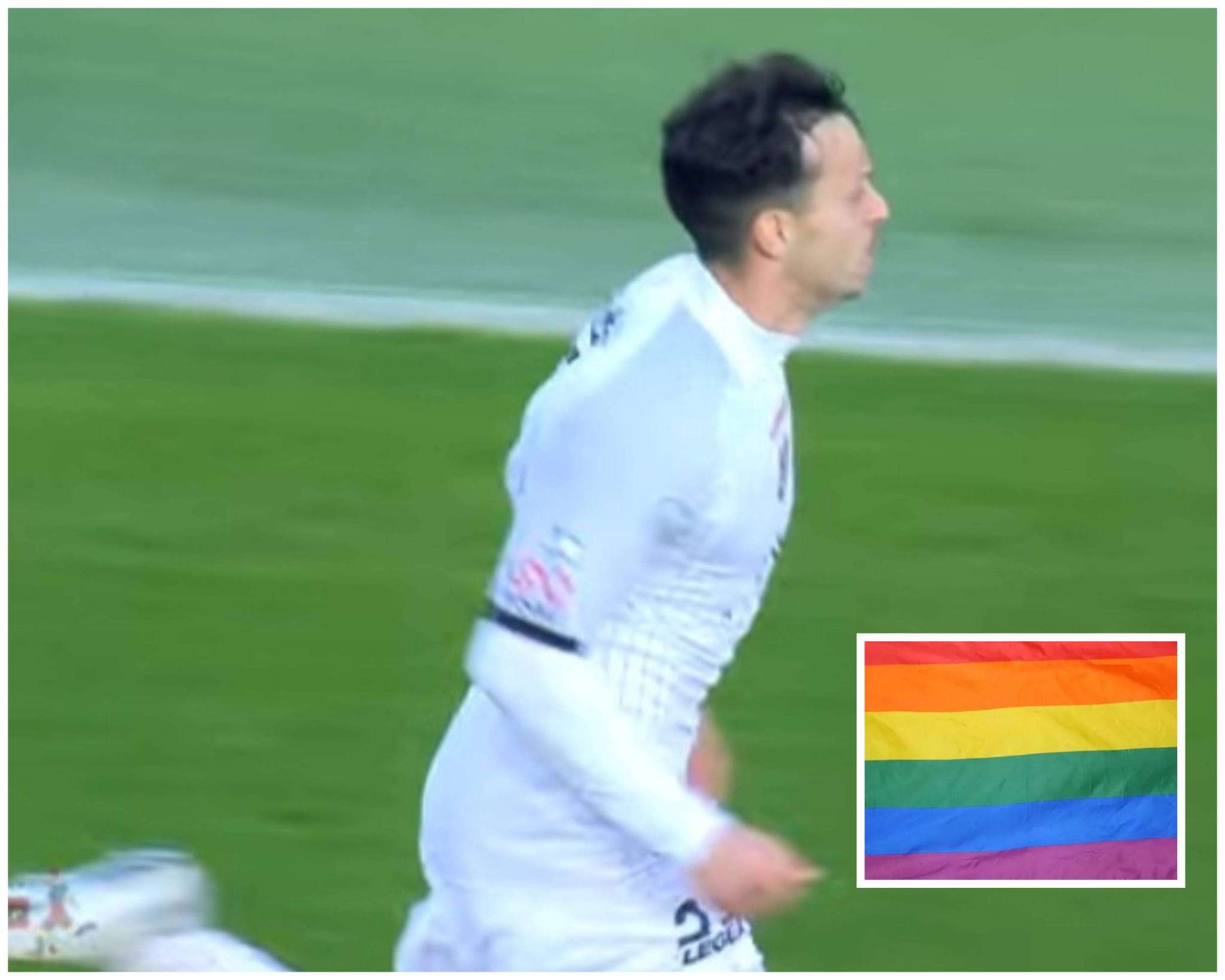
Of course, the matter was said by me with no real connection to Guy Badash, but nonetheless, apologies and forgiveness, forgiveness and apologies. I wish to use the platform given to me here to apologize to the LGBTQ community, to all supporters of the moderate team from Jerusalem, Hapoel Jerusalem, and to anyone who felt hurt by my inappropriate and offensive remark – even if it was said in the heat of the moment, at the football stadium in Netanya, during Hapoel Jerusalem’s match last Friday. The remark was directed at one of the players, and of course, I owe him a personal apology.
I have no intention of hiding behind interpretations of so-called “football slang.” The remark should never have been said by me, and for that, I apologize sincerely and without reservation.
Does a personal apology cancel professional criticism?
At the same time, my apology does not in any way diminish the sharp professional criticism I hold. First and foremost, this concerns the player’s rough physical push during the match against the team captain on the pitch. It is difficult to understand how such an incident did not result in an immediate substitution by the professional staff at Hapoel Jerusalem. In any club, such behavior should not occur, and all the more so at Hapoel Jerusalem, where one expects higher standards and accountability.
Beyond that, with all due respect, there is no scenario in which a player who scored nothing more than a penalty should run toward the stands to confront a supporter, however important he may believe that supporter to be, instead of restarting play and trying to win the match.
I have received no small amount of criticism from close friends regarding my remarks toward the players. In their view, a supporter must encourage his team’s players at all costs and under all circumstances. I disagree. I will not condemn a player for poor ability if he is clearly making every effort to help the team succeed. On the other hand, a player who, in my view, displays a lack of commitment, strikes poses, and pulls faces on the pitch deserves criticism rather than unconditional support.
The investment and emotional commitment required of a football supporter are immense. It is therefore reasonable to demand appropriate conduct from players, for whom football is not only a passion but also a well-paid profession. A player who fails to meet that standard justly earns the criticism directed at him.
That said, I do take two positive things from the incident. First, it appears to have shaken the player himself, and one can hope that he will return to the level he showed before his move to Hapoel Be’er Sheva, from which he later returned to help Hapoel Jerusalem fight relegation. Second, in all his years at Hapoel Jerusalem, I have never seen him sprint as fast as he did toward the stands in the previous match. Now that it is clear he is capable of such speed, one can only hope that he directs it toward chasing opposing defenders rather than confronting supporters.
Is Hapoel Jerusalem making mistakes in the current transfer window?
As for the transfer window, the situation is far from encouraging. The first expected signing is Montenegrin striker Marko Rakonja, whose last season with OFI Crete in the lower reaches of the Greek league was anything but impressive. To put it mildly, this does not inspire confidence. He is expected to be joined by either Ilon Almog or another foreign striker, after which Hapoel Jerusalem is set to close its current transfer window.
Despite media reports, the club has decided to part ways with Goni Naor, both due to the surprising emergence of John Otoo and because of Naor’s high salary demands. In addition, squad player Ibeh Ransom is expected to be released to one of the National League clubs, in order to free up budget and playing time for incoming players.
In my view, this policy of settling for minimal changes – essentially swapping like for like – is yet another mistake in a chain of errors that has marked Hapoel Jerusalem’s season from the very beginning.
As for the cup match, there is little to add beyond expressing regret that once again the decision appears to have been made in advance to forgo this competition, very much in keeping with tradition.