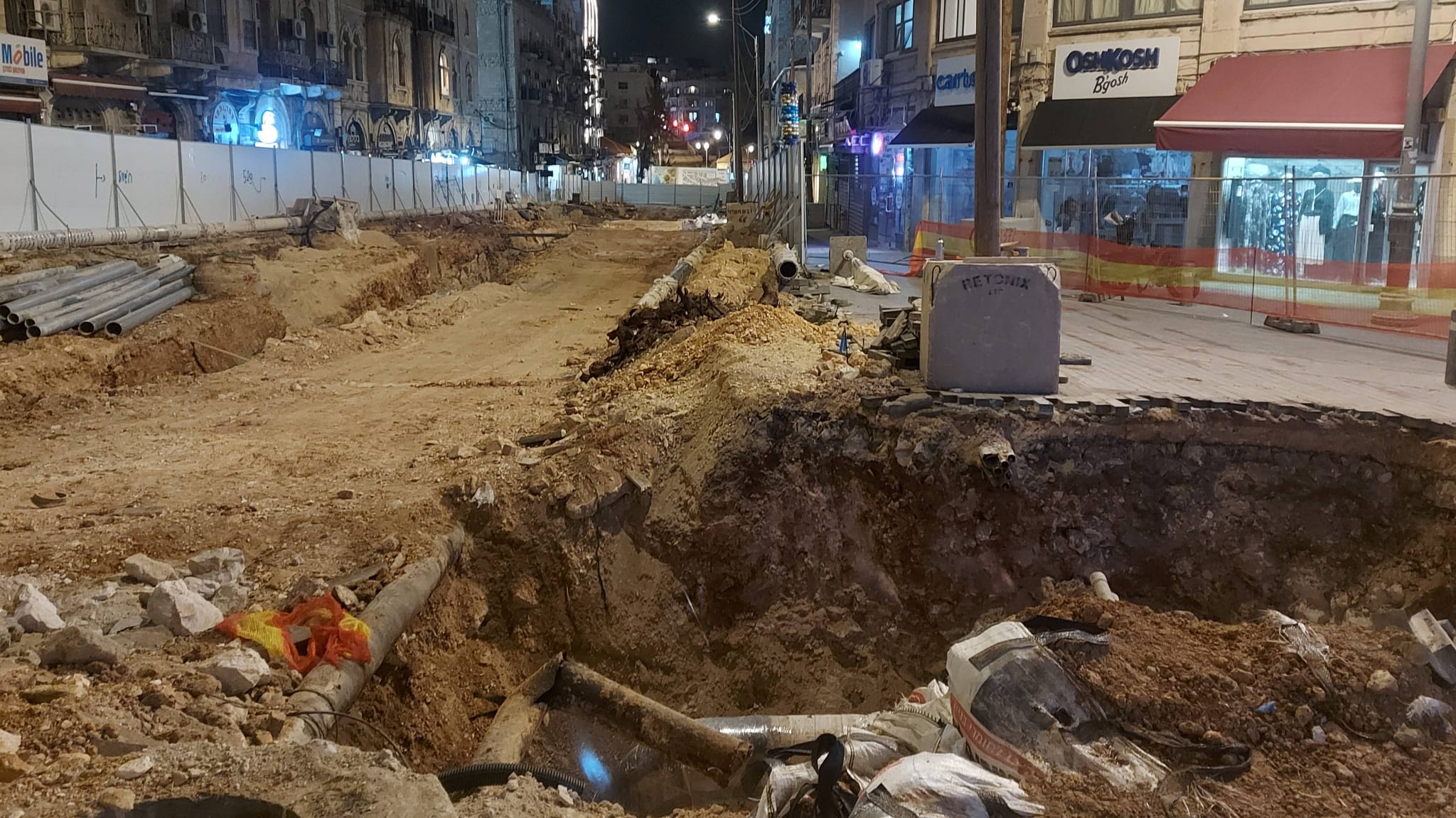
In days when sirens sound across Jerusalem amid the war with Iran, King George Street in the heart of Jerusalem has for weeks resembled a deep excavation site in the middle of the capital.
In the center of one of Jerusalem’s main streets, a large pit cuts through the road. Piles of dirt line the sidewalks, and exposed infrastructure pipes have replaced the asphalt. Anyone arriving in the area might think they are looking at the aftermath of an impact site. In reality, these are infrastructure works that have been continuing for weeks.
Why has central Jerusalem looked like this for weeks?
The works on King George Street are part of a long series of infrastructure projects carried out across Jerusalem in recent years. In some cases they involve upgrading water, sewage and electricity systems. In others they are tied to transportation development, light rail expansion and changes in the public space.
But for residents, visitors and business owners in the area, the result often looks very different. Central Jerusalem turns for long periods into an open excavation zone, with metal barriers, deep pits and pedestrians navigating between work areas.
When this scene meets the security backdrop of sirens and incoming missiles, the result can feel almost surreal: the skies tense with missile alerts, while the ground itself is torn open by infrastructure works.
Are long infrastructure works unique to Jerusalem?
Infrastructure projects take place in every major city. London, Paris and Rome also carry out large-scale works to upgrade transportation systems and urban infrastructure.
Yet many capitals try to shorten construction periods in central districts or carry them out in tighter stages to reduce disruption. In Jerusalem, by contrast, excavation sites sometimes seem to have become a permanent feature of the urban landscape.
In recent years prolonged works have appeared along Jaffa Street, near the Mahane Yehuda Market, in central downtown streets and in several neighborhoods.
How long will central Jerusalem look like this?
City officials often stress that the works are part of long-term development plans meant to upgrade Jerusalem’s infrastructure and prepare the city for the coming decades.
But for anyone walking along King George Street today, the scene appears simpler: a deep excavation pit in the middle of one of Jerusalem’s main streets.
And while sirens occasionally echo above Jerusalem because of the war with Iran, the view on the ground carries a small ironic message. Not everything that looks like destruction was caused by missiles.