Kicking the bucket has become an all-too-familiar habit for the moderate team from Jerusalem, Hapoel Jerusalem. There is no other convincing explanation for the heavy defeat at Turner Stadium in Be’er Sheva on Wednesday, a match that opened what now looks like a decisive and unforgiving ten-day tunnel.
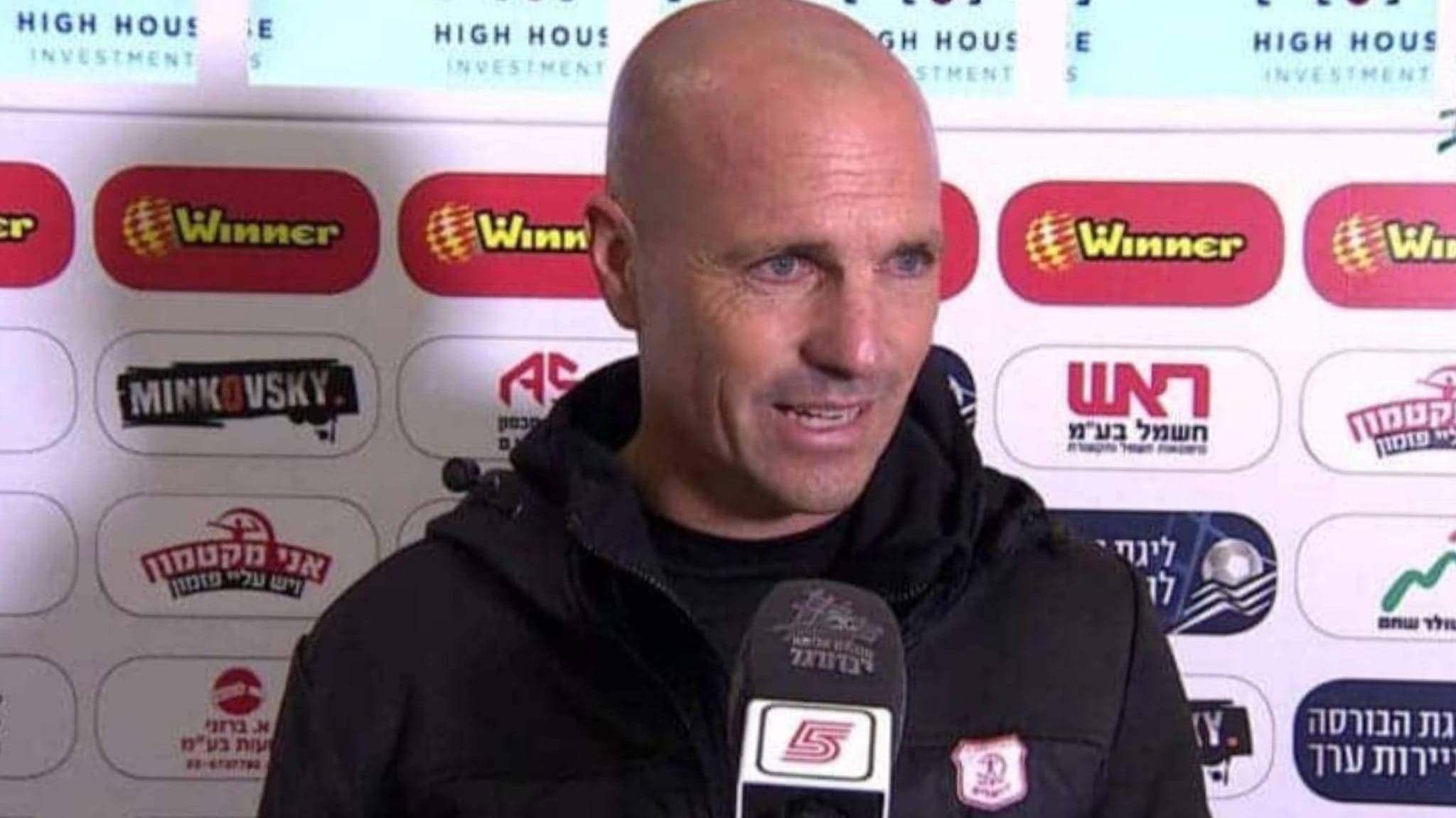
Instead of retreating into the predictable ritual of calling for the head coach’s dismissal, it is worth asking a more uncomfortable question: how can a professional staff of this size fail so completely to help Ziv Arie make the right calls? The issue no longer appears to rest solely with the head coach, but with the structure meant to support him.
Who Is Actually Helping Ziv Arie on the Bench?
A look toward the bench reveals a crowded technical area filled with staff members clutching folders and notebooks, scribbling endlessly. One might mistake the scene for an academic seminar rather than a Premier League match. The inevitable question follows: who, exactly, is this helping?
First and foremost, responsibility points to assistant coach Lior Zada, reportedly the most expensive assistant coach in the club’s history. Arie, like many of his players, is clearly caught in a human and professional storm. This is precisely the moment when the coaching staff should intervene, guide, and stabilize the situation.
From a rational, analytical perspective, many of the decisions taken during matches are difficult to justify. No one appears to be offering Arie meaningful assistance. The continued insistence on starting Guy Badash is the clearest example. The midfielder is enduring a dreadful run, contributes little defensively, and moves with intent only when the ball is at his feet – and even then, without notable success.
Another critical moment against Be’er Sheva came despite an excellent and tactically sound opening. Full-back Ofek Nadir, who had shown encouraging flashes in recent matches, was completely off the pace. Several serious errors followed, any of which could easily have ended in goals.
This was precisely the moment for an early substitution. Whether by introducing Yinon Eliyahu and shifting Agbadish to left-back, or by bringing on Harel Shalom directly, the problem could have been addressed. It was no coincidence that the goals eventually arrived from that very flank.
The second major mistake was, once again, a halftime substitution of a center-back, triggering a total defensive collapse. The strained relationship between Domgjoni and Arie has already been well documented. A January separation would likely benefit both sides. It remains unclear what Arie expected to gain from the defender after their prolonged saga.
The situation surrounding center-back Noam Malmud is equally perplexing. Once considered an automatic starter, he has been reduced to a player excluded from the squad altogether, leapfrogged by two youth players. The logic behind this shift is unclear, as is the role he is expected to play going forward.
These are precisely the moments in which the professional staff is meant to step in and assist the head coach.
Is Hapoel Jerusalem Facing a Mental Crisis?
Equally troubling is a growing phenomenon within Hapoel Jerusalem: visible on-field disputes between players, led by Ofek Nadir, marked by shouting matches and frustrated hand gestures. This behavior demands immediate attention. Left untreated, such cracks risk spreading rapidly through the squad.
The only real bright spots have been defensive midfielder John Otomao, who emerged unexpectedly, and goalkeeper Nadav Zamir. Yet even their strong performances are not enough to compensate for a system that continues to undermine itself.
With Maccabi Tel Aviv awaiting on Saturday, Hapoel Jerusalem must hope that these structural flaws are addressed quickly – before the tunnel closes in completely.