Jerusalem has, in recent years, become the scene of a steady and troubling pattern of workplace accidents. Days blur into weeks, weeks into months, and reports of workers falling from height or being evacuated from construction sites keep returning. For thousands of laborers across the city, daily work increasingly feels like a roulette wheel: scaffolding, unfinished balconies, exposed floors and heavy machinery, where a single misstep can quickly turn into a life-threatening incident.
Why Have Workplace Accidents in Jerusalem Become Routine?
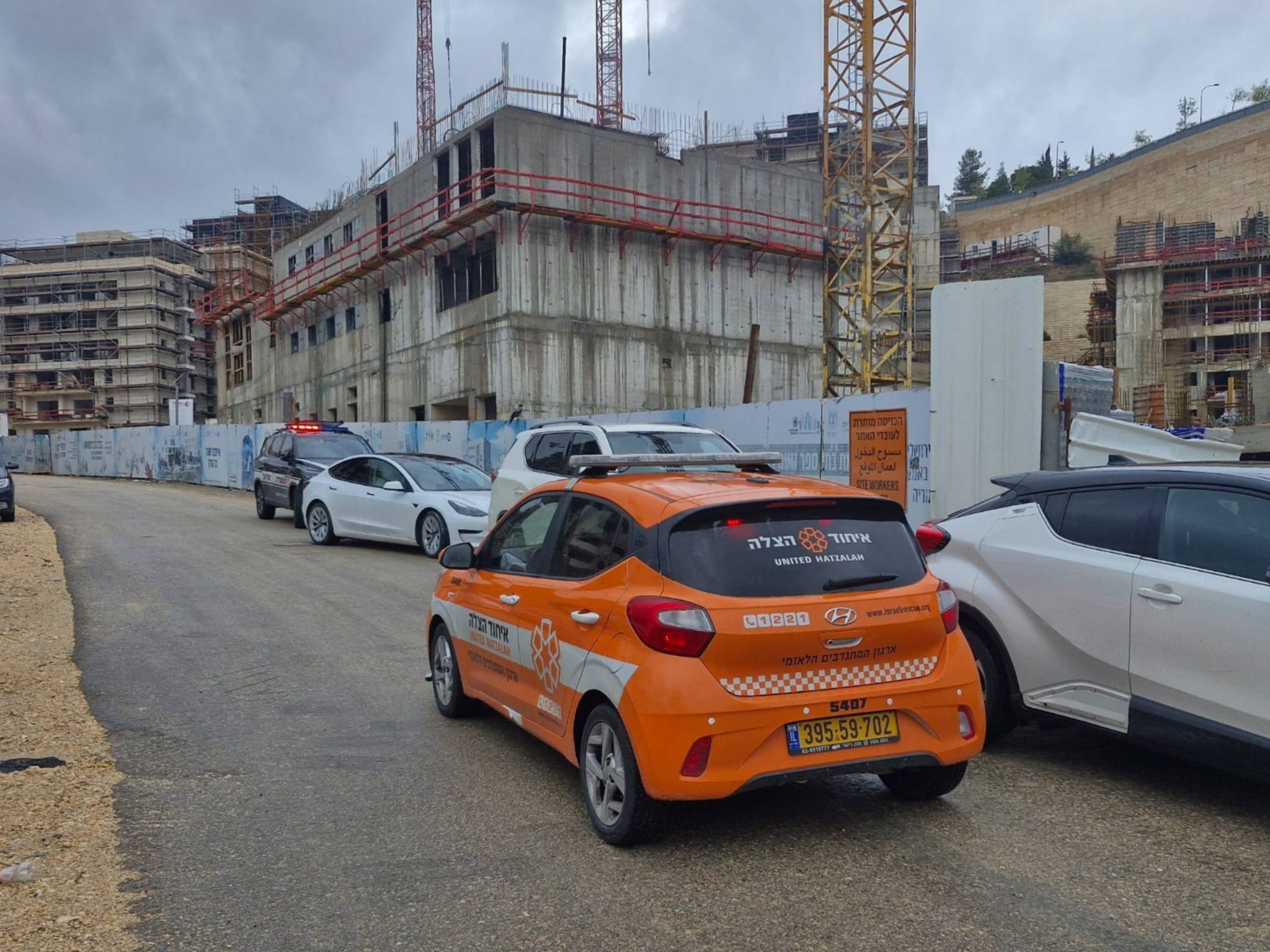
In recent days, two additional workplace accidents were reported in the city, adding to the wider trend. In one case, a worker in his 40s was moderately injured after falling from a balcony while working at a construction site on Yaakov Elazar Street in Jerusalem. Medical teams from United Hatzalah provided initial treatment at the scene before evacuating him to hospital. United Hatzalah medics Moshe Hanania, Yehuda Yavrov and David Amar said: “We were told at the scene that the worker fell from a balcony while working at a construction site. We provided initial medical care and he was then evacuated to hospital. At this stage, his condition is defined as moderate.”
In another incident, a 27-year-old worker was moderately injured after falling from a height of approximately eight meters while working in the Talpiot industrial zone. MDA first responders from the Rescue Team were called to HaSadna Street following reports of a workplace accident. Volunteer responder Ephraim Cohen said: “When I arrived, we were directed into a garage, where I saw a 27-year-old male worker suffering from limb injuries after falling from a height of about eight meters during work.” After receiving initial treatment including immobilization and bandaging, the worker was evacuated by an intensive care ambulance to the trauma unit at Shaare Zedek Medical Center.
Construction Boom, Light Rail Works and Urban Pressure – What Is the Cost?
The explanation lies not in a single factor, but in a convergence of pressures unique to Jerusalem. The city is in the midst of an unprecedented construction surge: large residential developments, continuous infrastructure upgrades, and extensive works on the light rail system cutting through central neighborhoods, industrial zones and major traffic arteries.
Alongside active construction sites, Jerusalem is also experiencing heavy congestion in garages and industrial compounds, partly due to an increase in vehicle damage caused by disrupted road conditions, uneven surfaces and prolonged infrastructure works. Mechanics, construction crews and infrastructure workers often operate side by side, in dense and highly pressured environments.
When schedules are tight, workdays are long, and the urban landscape itself is complex and constantly changing, the margin for human error widens. In Jerusalem, more than in many other cities, every scaffold, balcony edge, shaft or work zone near live traffic becomes a potential hazard. The result is a reality in which workplace accidents are no longer isolated incidents, but a recurring symptom of a city building at full speed – and the human cost that follows.