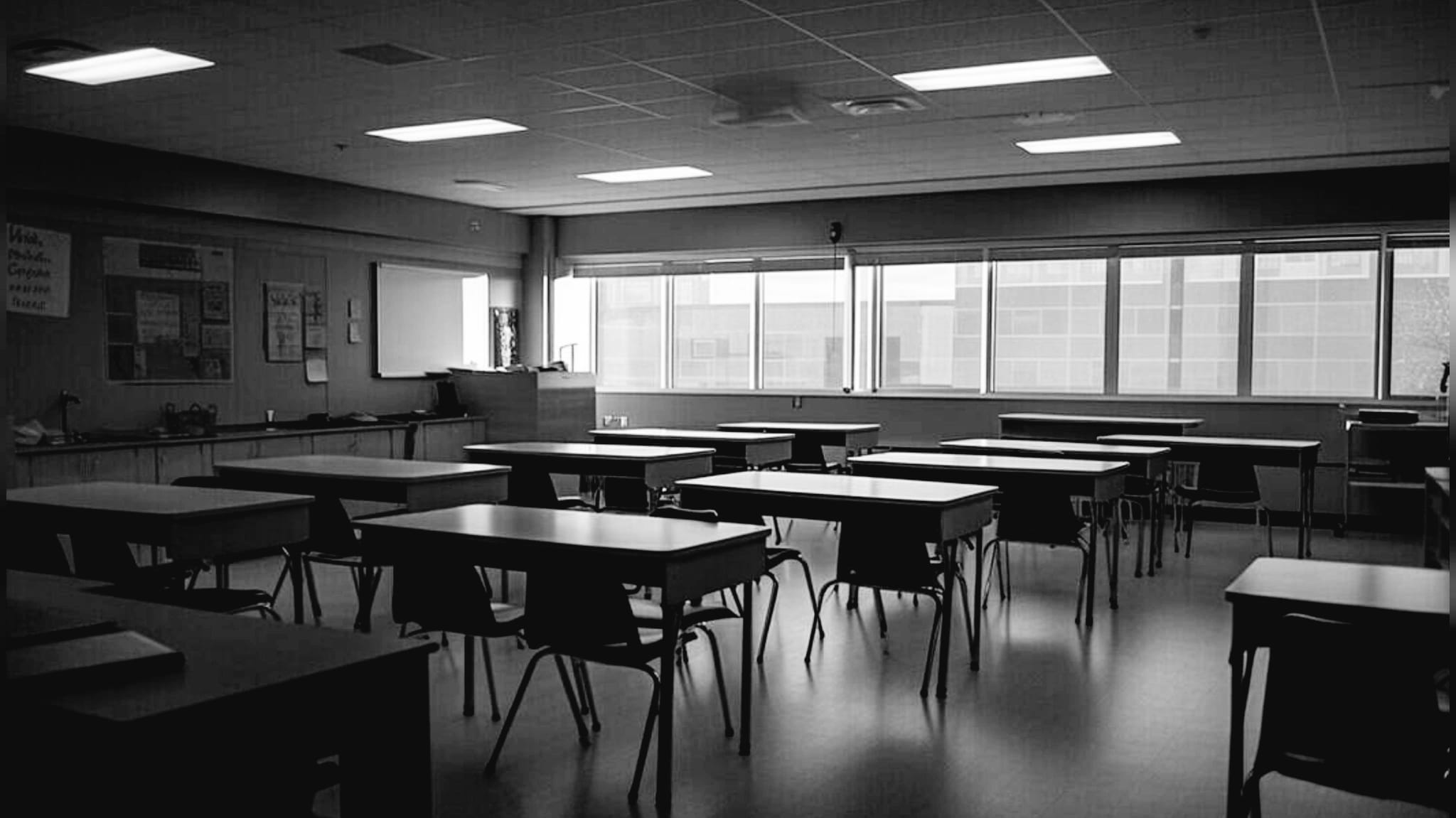
As sirens continue to echo across Jerusalem amid the war with Iran and ongoing missile fire toward Israel, a quieter but deeply disruptive crisis is unfolding inside people’s homes. Schools are not operating normally, classrooms remain empty for extended periods, and children are staying home without a stable framework. What initially felt like a temporary disruption is now stretching far beyond expectations, and with growing assessments that the war could last for weeks or even months, many parents are beginning to understand that this is not a short-term situation but an ongoing reality.
What makes the frustration even sharper is the sense that this moment was predictable. Nearly six years have passed since the COVID-19 pandemic forced education systems worldwide into remote learning, yet in Israel, many parents feel that little has fundamentally changed. Instead of a reliable, structured remote learning system that can be activated in emergencies, families in Jerusalem are once again left to improvise. For many, this is no longer just disappointing – it feels like a repeated systemic failure at the exact moment when resilience is most needed.
In a city like Jerusalem, where the cost of living is already exceptionally high, the absence of functioning educational frameworks quickly turns into a financial crisis. Parents are forced to miss work, reduce hours or juggle unstable routines, often at the expense of their income. For households without financial buffers, the impact is immediate. Even middle-class families are beginning to feel the strain, as each additional day without a solution adds to a growing sense of instability and loss of control.
But the consequences do not stop at finances.
Inside homes, tension is building. Couples find themselves arguing over responsibilities that previously felt manageable – who stays home, who keeps working, who absorbs the financial hit, and how to manage a full day with children who have no structured routine, all while sirens interrupt daily life. When there is no meaningful support from the education system – neither physical schooling nor effective remote learning – that pressure has nowhere to go but inward, into the family itself.
Why is remote learning in Israel still failing years after COVID?
The gap between expectation and reality is especially visible when it comes to remote education. After the COVID-19 crisis, there was a widespread assumption that systems would be improved, stabilized and made accessible for future emergencies. Yet nearly six years later, many families in Jerusalem report that the infrastructure remains inconsistent, fragmented and often ineffective.
Online lessons, when they exist, are not always regular or suitable across age groups, and in many cases, parents are expected to act as supervisors or even substitute teachers. For working parents, this expectation is unrealistic. Instead of easing the burden, remote learning often becomes an additional source of stress, highlighting how unprepared the system remains for prolonged disruption.
What happens to working parents in Jerusalem when schools stay closed during war?
When schools are closed for extended periods, responsibility shifts almost entirely onto parents, but the labor market has not adapted to this reality. Even those working from home quickly discover that combining full-time childcare with professional responsibilities is nearly impossible, especially with younger children or larger families. In Jerusalem, where many households have multiple children and limited living space, the strain becomes even more intense.
The uncertainty surrounding the duration of the war – whether weeks or months – fundamentally changes decision-making. If this were a short disruption, families might absorb it temporarily. But without a clear timeline for returning to routine, every decision carries long-term consequences, and the pressure continues to build.
To what extent can prolonged financial stress and crisis increase the risk of divorce?
Sociological research consistently shows that sustained financial stress, combined with prolonged time at home and uncertainty, significantly increases pressure on relationships. During the COVID-19 period, many countries reported rising levels of domestic tension, increased demand for couples counseling, and in some cases, higher divorce rates following lockdowns.
Jerusalem’s current reality combines several of these stress factors at once – economic pressure, lack of educational frameworks, security threats, and an unclear timeline for resolution. When the education system fails to provide adequate support, and remote learning does not fill the gap, the family unit becomes the primary space where all this pressure accumulates.
Not every family will break under these conditions, and some may even grow stronger. But the accumulated strain is difficult to ignore. For many families in Jerusalem, this is no longer a temporary inconvenience – it is an ongoing test of stability, resilience and the ability to hold together under prolonged uncertainty.