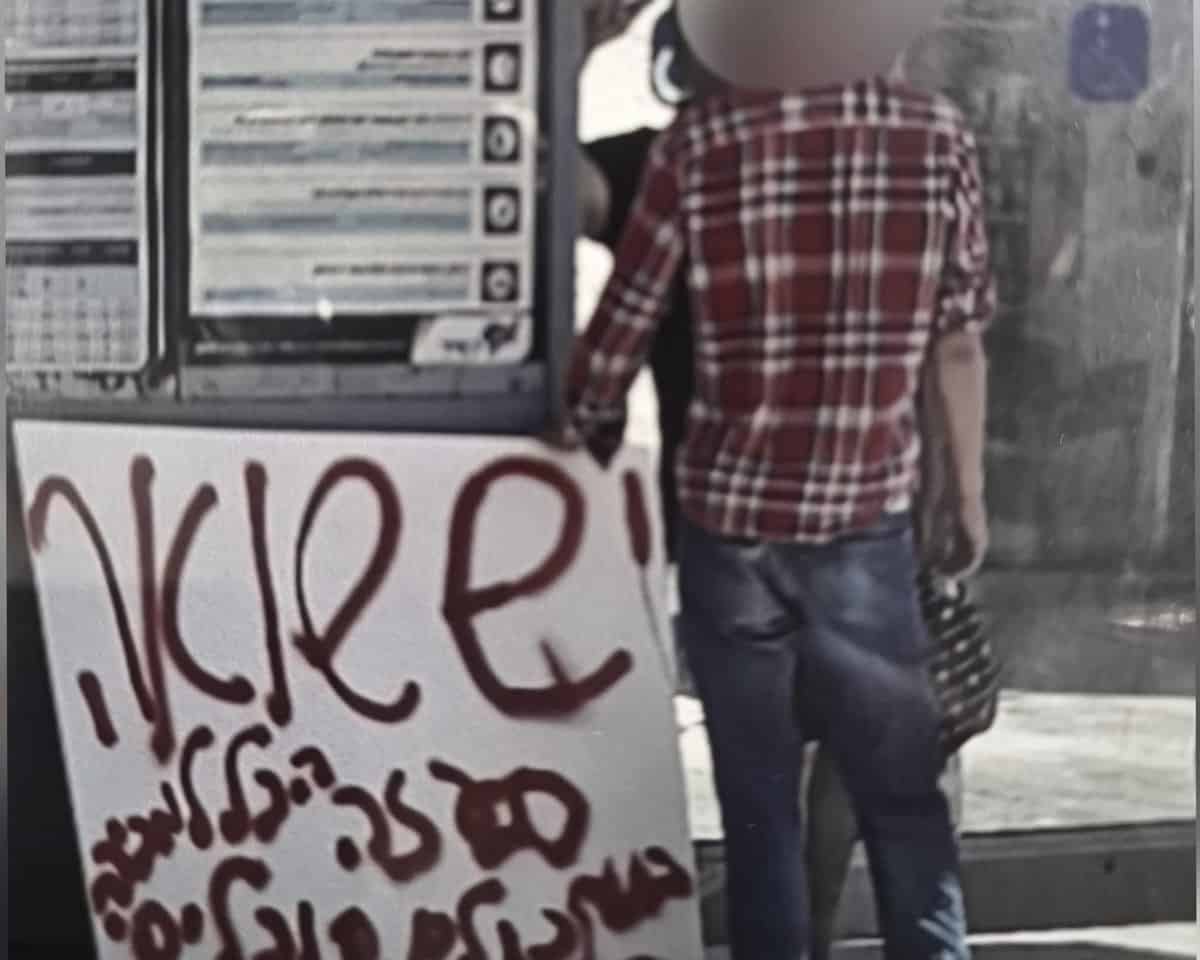
The arrest at the Jerusalem Light Rail near the Central Bus Station was not an isolated event. The 27-year-old resident had already sprayed graffiti on the walls of a synagogue, on the stones of the Western Wall, and at the Church of the Holy Sepulchre. This time he held a sign with the words “There is a Holocaust in Gaza.” The act was more than vandalism – it was a deliberate attempt to strike at the most sensitive symbols. From here, studies in sociology and social psychology help trace the contours of his profile
Jerusalem Light Rail as a stage for visibility
The incident at the Light Rail station, in full view of thousands of daily commuters, highlights a central theme: the pursuit of visibility in the public sphere. Research indicates that young men who repeatedly engage in graffiti after arrest are driven by a craving for recognition. Choosing a major transport hub in Jerusalem ensured not only attention but resonance, transforming a private act into a public performance. From this point, the pattern of calculated choices becomes clear
Western Wall and Church of the Holy Sepulchre: striking sacred symbols
His earlier actions at the Western Wall and the Church of the Holy Sepulchre raised the pattern to another level. Studies in sociology explain that targeting sacred sites reflects an effort to challenge collective identity. In Jerusalem, every holy site carries national and international significance. By spraying graffiti on such locations, the young man positioned himself against the very symbols that define the city. This demonstrates a consistent drive to provoke through the desecration of what others hold sacred
(Hate crime in Abu Ghosh near Jerusalem: vile act)
There is a Holocaust in Gaza: provocation as identity
The repeated use of the phrase “There is a Holocaust in Gaza” reveals a calculated reliance on extreme language. Social psychology research points to a mechanism where individuals deploy the most charged expressions to guarantee public echo. For the young man, being arrested in front of bystanders and later reported in the media was not a failure but part of the intended outcome. The provocation becomes a tool for identity-making, even at the cost of renewed detention. From here, Jerusalem emerges once more as the global stage for a local drama