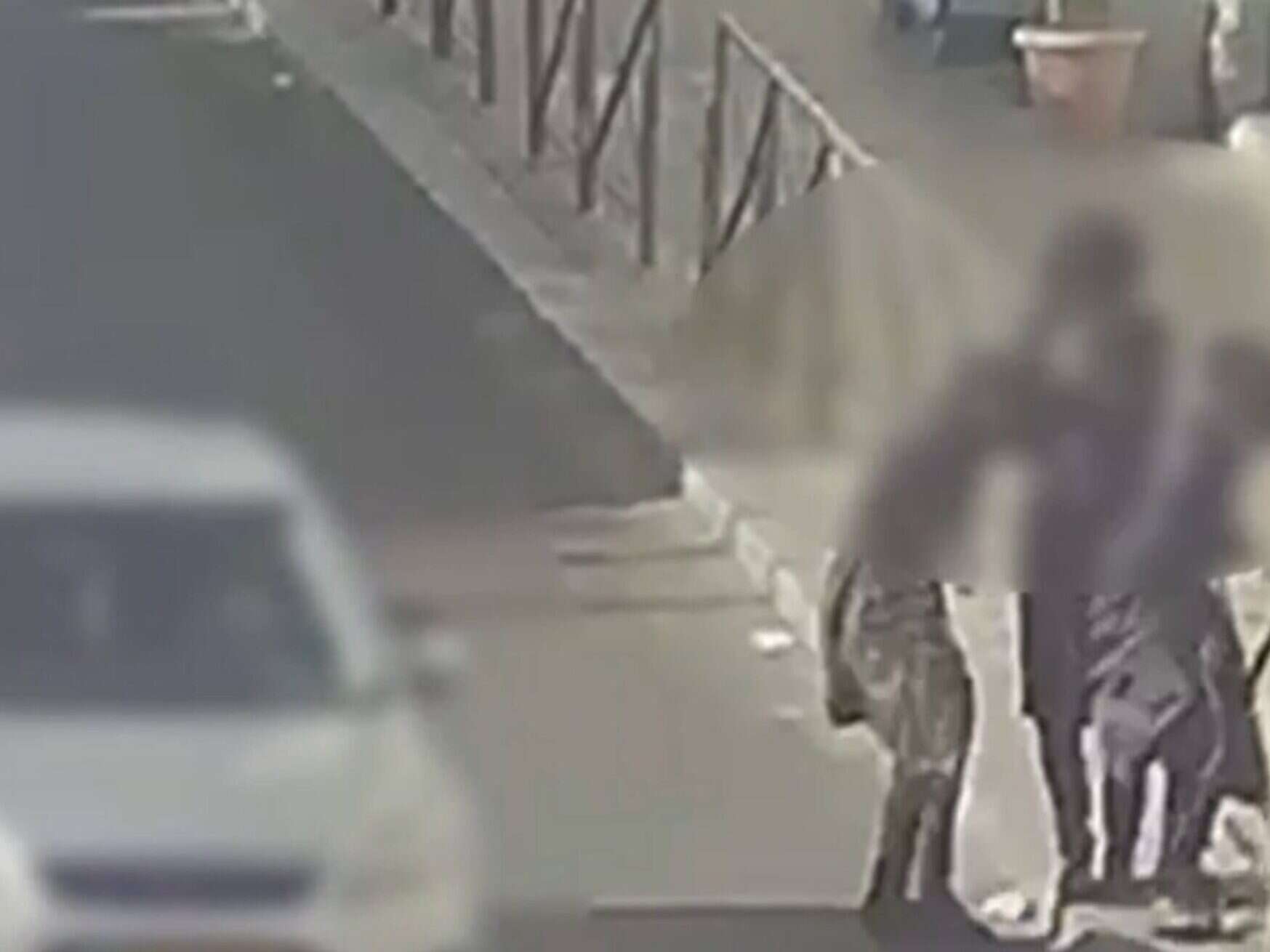
In one of the city’s most volatile zones, near the Damascus Gate in East Jerusalem, an unusual incident quickly escalated: a driver stopped his car beside a sidewalk and hurled a cup of coffee at unsuspecting pedestrians — allegedly out of racial hatred. The act was captured by security cameras
Police forces were dispatched to the area following the report. With the help of the district control center, officers from the Shalem Station and the Jerusalem Special Patrol Unit swiftly located the suspect — a man in his 30s from East Jerusalem
He was arrested on Sultan Suleiman Street and taken for further questioning. Today, he is expected to appear in court for a remand hearing. Police emphasized the severity of the event, stating that “there will be zero tolerance for any form of violence or intimidation in public spaces
How Small Acts Can Ignite Tension in Jerusalem’s Most Sensitive Areas
In a city shaped by layers of identity, trauma, faith, and political struggle, even a seemingly “minor” act — like throwing coffee — can become a spark
Studies in sociology and conflict psychology describe this phenomenon as a "micro-event with macro resonance" — where a localized act, especially in contested urban space, can reverberate far beyond its physical scope
(Wounded Bus Driver in Jerusalem: A Call for Protection)
Near Damascus Gate and the entrances to the Temple Mount, any gesture can be interpreted as dominance, humiliation, or provocation. These zones are saturated with memory and expectation — where many believe the next flare-up is always just a moment away
In such a city of symbols, public space isn’t just geography — it’s narrative. And even a cup of coffee, when weaponized by hate, becomes more than just a liquid — it becomes a statement