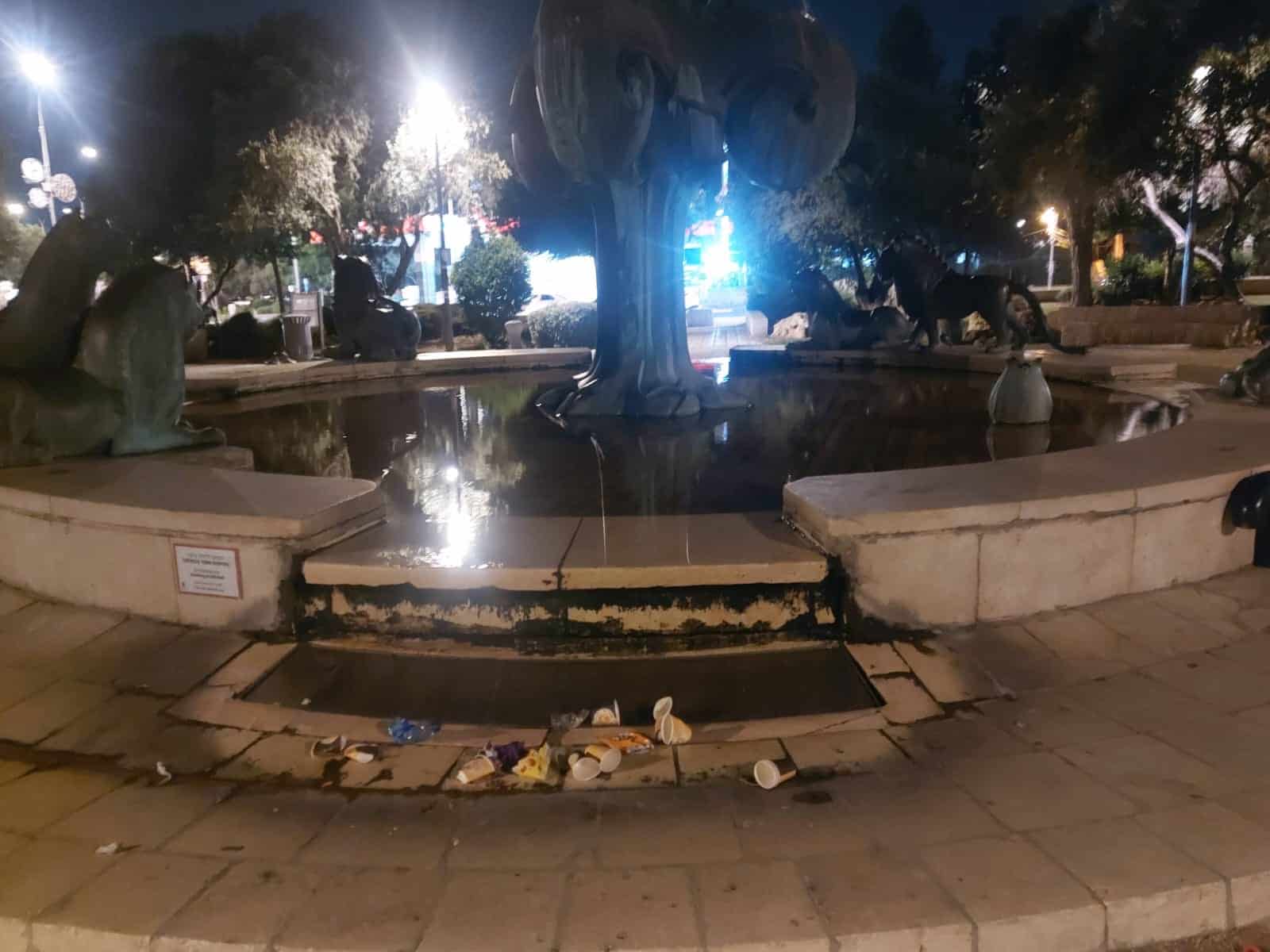
Just a few steps from the Old City walls, framed by pine trees and bronze sculptures, stands the Lion Fountain in Bloomfield Garden. It was meant to be a symbol—of unity, dignity, even hope. But this past weekend, it stood for something else: neglect
Plastic cups, food wrappers, nylon bags. Not one or two, but scattered generously around the base of the stone lions. This wasn’t a one-time mishap. It’s a pattern. A ritual of disregard
Not a municipal failure. A cultural fracture
In Israel 2025—and especially in Jerusalem—the public space has become a mirror of exhaustion. What used to be shared ground now feels like no-man’s-land. No one cleans up because no one feels it’s theirs to care for. The act of polluting is no longer rebellion—it’s resignation
(Pop Star Sparks Outcry Over Jerusalem Stadium Plan)
It’s not who littered – it’s who stood by
The problem isn’t the trash itself. It’s the quiet permission behind it
The internal green light that says: Go ahead—drop it. No one cares
It’s not lawlessness. It’s loneliness
Public space no longer feels public. It feels abandoned. And when a space feels abandoned, people treat it like it doesn’t matter
When the bench is dirty – the boundary between us erodes
A neglected street is a silent signal: trust is gone
Public doesn’t mean everyone—it means no one
The slow collapse of civic glue
Cleanliness isn’t about aesthetics. It’s about connection
When sidewalks are ignored, neighbors are too. When no one bothers with the trash, no one bothers with the truth
The most fractured societies often show their wounds not through violence—but through mess. The disorder is quiet. But it spreads
(Life Returns to the Western Wall – with Water and Tears)
What research keeps showing – again and again
Studies in sociology and psychology point to the same truth
The dirtier the shared environment, the weaker the social fabric
When spaces are left uncared for, empathy declines, and aggression increases
Trash becomes more than trash—it becomes evidence of emotional distance
In clean environments, people tend to collaborate. In neglected ones—they retreat
And slowly, quietly, the city turns into a loose collection of individuals—each living beside the other, but never with
The lions don’t roar – but they speak
They stand there, frozen. Bronze and mute
But in their stillness, they echo something deeper than sound: acceptance
The tourists still take photos—just not of the ground
The children still run—just not toward responsibility
Jerusalem isn’t broken. It’s adapting to the break
And when the adaptation becomes habit, identity dissolves
The question no longer is “Who left this trash?
It becomes
Do we still believe this belongs to us?