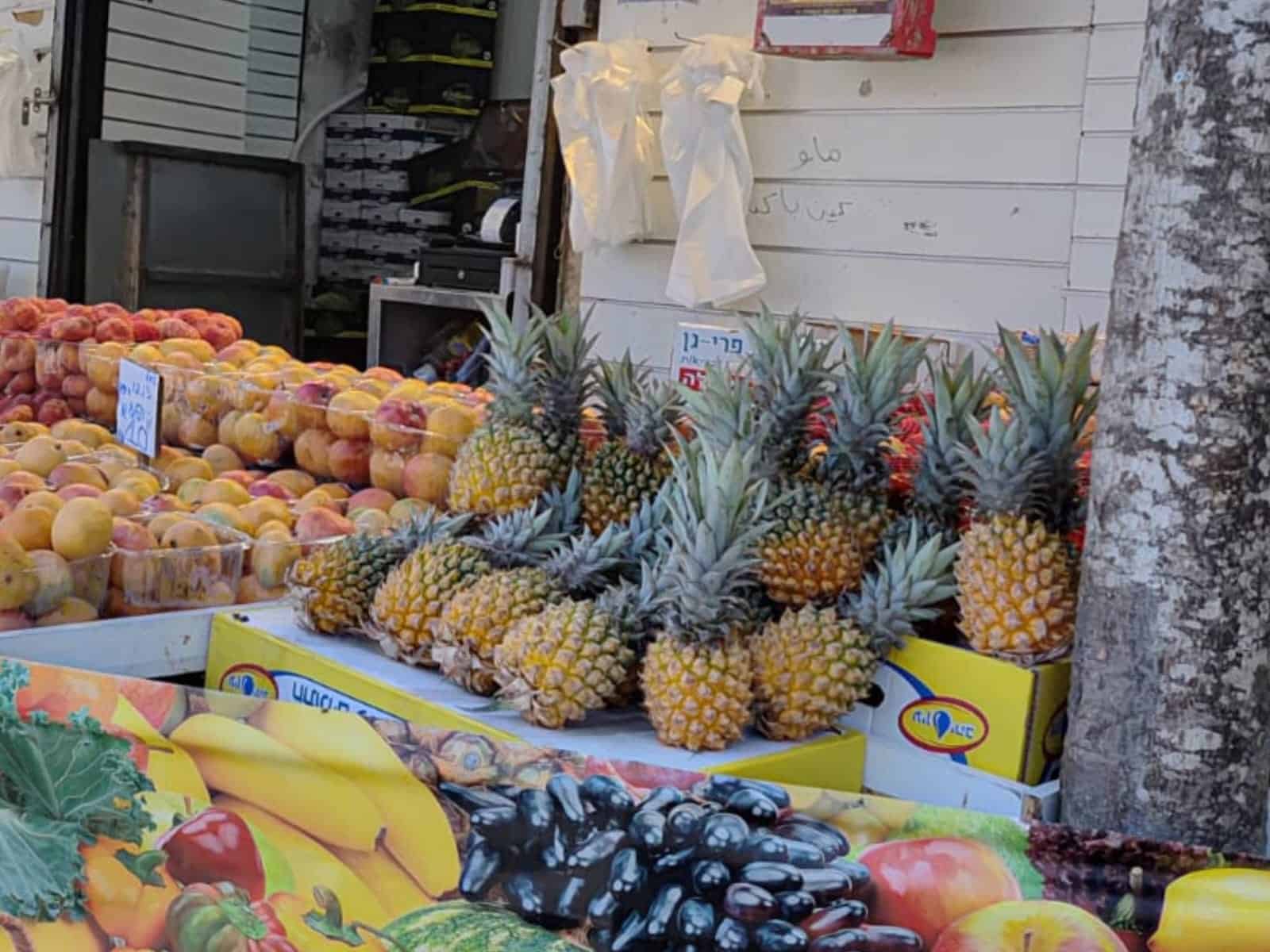
At the heart of Jerusalem’s Mahane Yehuda market, something golden is stealing the show: pineapples. Not imported, not extravagant – but local, affordable, and full of meaning. Wrapped in green spiky crowns, these summer fruits carry more than just sweetness. They carry a message
A summer festival in the streets of Jerusalem
Mid-July in Jerusalem. The light rail is paused for renovations, and Agripas Street is crowded with pedestrians, shuttle vans, and street vendors. From every corner, people pour into the market: locals, tourists, regulars who’ve made Mahane Yehuda their second home
The scent of fresh summer fruits fills the air – figs, melons, cherries, apricots – yet among them, the pineapple stands out. Not just for its shape or color, but for its story
(Forest Circus Blooms in Jerusalem’s Botanical Garden)
From Columbus to Jerusalem – a fruit with a journey
Once an exotic delicacy from the Caribbean, the pineapple symbolized royalty and luxury. In colonial times, it was rare and expensive. Today, Israel grows it proudly – in the Western Galilee, the Negev, and the Arava – in shaded greenhouses during summer and under plastic cover in winter
Christopher Columbus brought the pineapple to Europe, where it found a new home in the glasshouses of the continent. In 1720, its English name “pineapple” emerged, comparing it to a pinecone. But its deeper symbolism remained: celebration, invitation, and abundance
The most photogenic fruit of the market
“It’s the fruit of the summer break,” says Ehud, a smiling vendor. “Pineapple brings out joy
“An apple, a date, and a pear – together they still don’t taste like pineapple,” adds his friend Avramiko with a wink
Once considered too pricey to bring home, pineapples are now accessible – blue-and-white grown, sweet, and symbolic. Rich in vitamin C, known to regulate blood pressure and reduce clotting, this fruit is also known for its beauty
But beyond its nutrition or aesthetics, the pineapple reflects something deeper
(Jaffa Street Speaks Again: Jerusalem’s Cafés Reawaken)
From Eden to Jerusalem – and back
“This is the most photogenic fruit here,” says Moshe Levy, a veteran market seller. “In Eden, they had fruit like this – but it wasn’t enough. They wanted the fruit of knowledge
And so, humans continue to eat pineapples and other gifts of paradise – yet always seek more: answers, wisdom, peace. The pineapple reminds us that to taste life’s sweetness, we must peel away the layers. It’s not just about pleasure – it’s about understanding
In a world torn by war, captivity, and conflict, perhaps the pineapple – local, vibrant, and rooted in the soil of Jerusalem – is a quiet symbol of what peace could grow