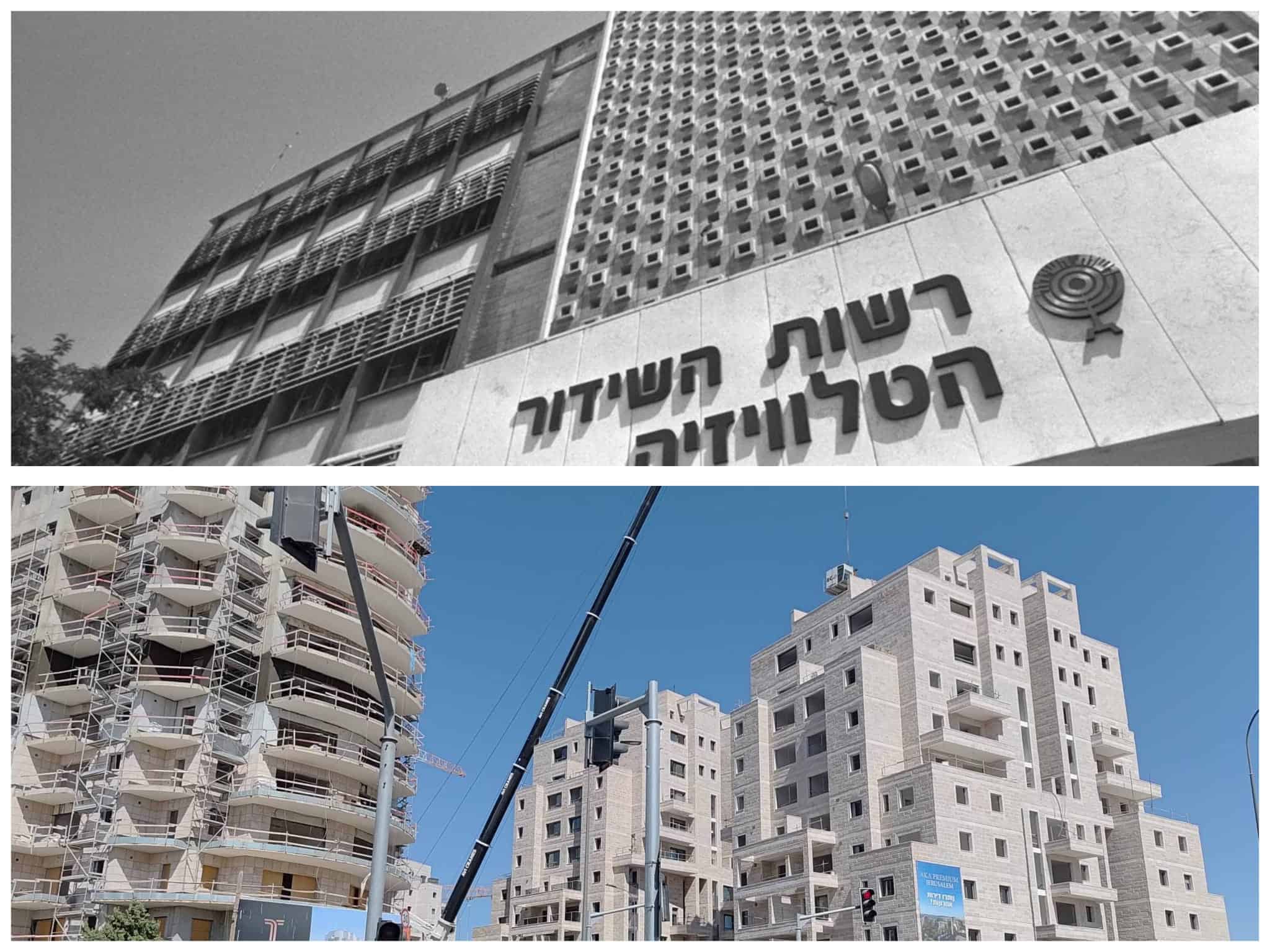
As Israeli society is engulfed in media storms, deep divisions, and ongoing debates about trust in public broadcasting, something symbolic is quietly fading in the heart of Jerusalem: the iconic building of the Israeli Broadcasting Authority is no more
Once, when the clock struck 9:00 p.m., the nation stood still. But today, behind metal fences and massive cranes on Sarei Israel Street, a large-scale real estate project is nearing completion—right where Israel’s official voice once resonated
Overlooking the Jerusalem Central Bus Station
This new residential complex towers above Jerusalem’s urban core. From its high balconies, it surveys Schneller Compound and gazes westward toward the Central Bus Station. Its shadow falls upon the beloved, older neighborhoods of Mekor Baruch and Geula
Blue signs in multiple languages declare: “Your home is your hotel.” Just meters away, families still live modestly in crowded apartments, many without bomb shelters. In some homes, children still sleep two to a bed
(Schneller: Closest to Conscription in Jerusalem)
A dramatic shift in the heart of Jerusalem
For many passersby, this place stirs powerful memories. Here, Israel watched war broadcasts, children's shows, documentaries, and public ceremonies. A three-generation cultural legacy was born and broadcast from this very location—and is now buried under concrete
Haim Yavin, once dubbed “Mr. Television,” was a household name across Israel. A 70-year-old resident of nearby Malchei Yisrael Street recalls: “He felt like family
Near the nearby Clalit Health Clinic, people waiting for their turn look up and comment: “This wasn’t just another government building. This was where the nation was addressed—loud, clear, and united.” Even cab drivers still remember: “This is where they aired Mabat Sport, Zehu Ze, and Nikui Rosh
And as for the kids: "Parpar Nechmad, Telepele, Keshat BeAnan, Rechov Sumsum"—those names still ring sweet
(Spat On in Jerusalem, But Still Marching)
A local woman walking home from the corner store put it simply: “That building meant something
It was the beating heart of Israel’s public voice. A national broadcast center for live events, music festivals, radio dramas, and educational shows—all under one roof. A sacred space where figures like Dan Kaner, Daniel Peer, Sari Raz, Yaakov Ahimeir, Rafik Halabi, and Zuhair Bahloul shaped a shared identity
A building once made of stone, now erased by cranes. Its replacement marks not only a change in architecture—but a deeper shift in collective memory and cultural values