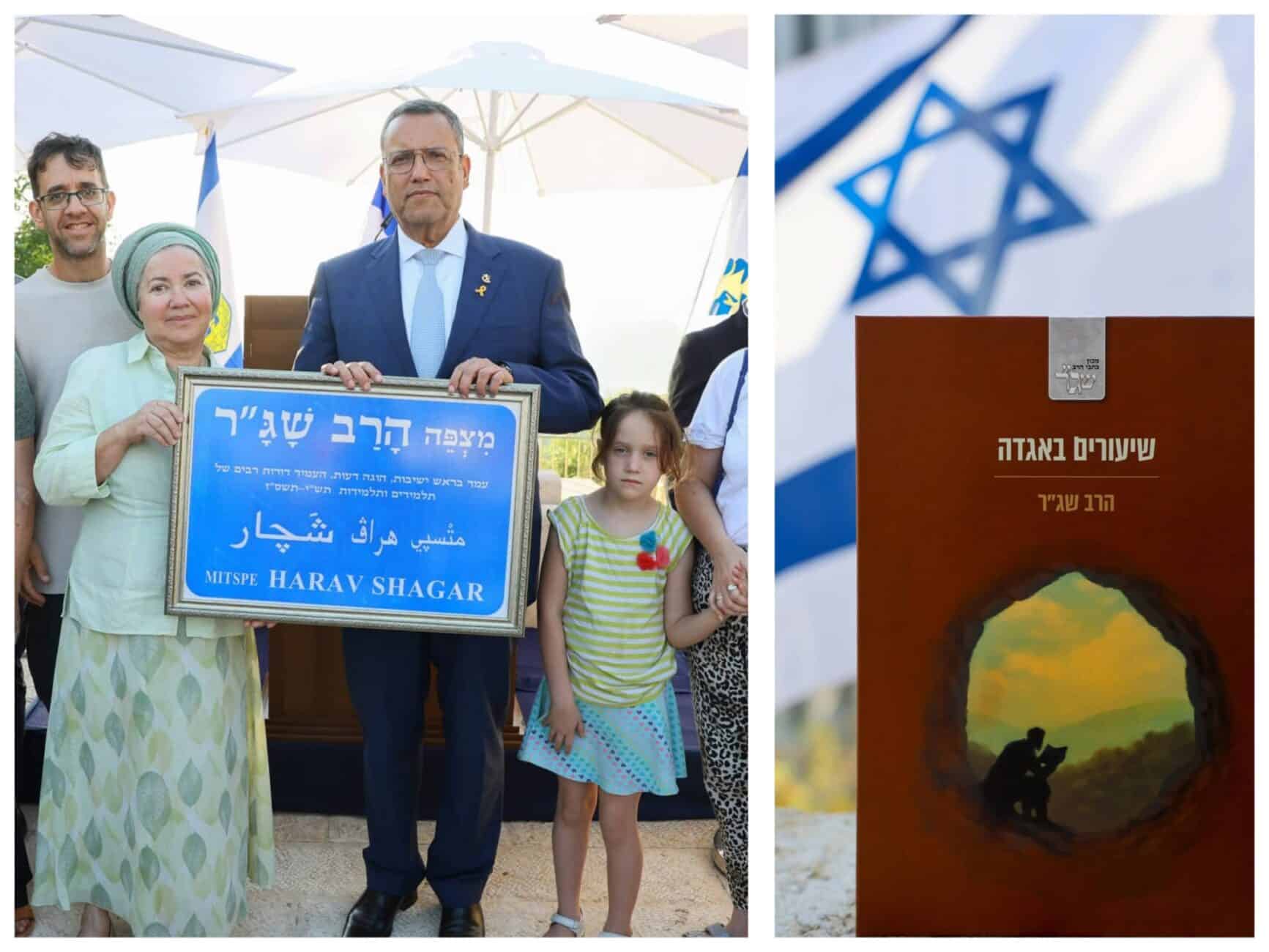
On a quiet hilltop in Kiryat Yovel, overlooking the skyline of Jerusalem, a new public viewpoint has been inaugurated in memory of one of the most original religious thinkers in Israel’s recent history: Rabbi Shimon Gershon Rosenberg – better known as Harav Shagar
The dedication ceremony, held on Arthur Hantke Street, brought together Jerusalem Mayor Moshe Lion, members of the city council, Shagar’s family, and dozens of students and admirers. But this was more than a memorial. For many, it was a public recognition of a man whose teachings opened minds and hearts
Harav Shagar, born and raised in Jerusalem, studied in some of the city’s most prominent yeshivot and later became a teacher at Yeshivat HaKotel. In 1996, together with Rabbi Yair Dreifus, he co-founded Yeshivat Siach – a place that would redefine religious learning for a new generation
A Simple Question That Shook the System
One of his students once recalled a moment that captured Shagar’s essence. When a fellow student quoted the revered Rabbi Kook, Shagar didn’t respond with critique or commentary. Instead, he asked: “And what do you think about that?” – a question that was almost unheard of in the traditional yeshiva world at the time
(Jerusalem’s Chain Street: Old Decree, New Tensions)
Through such moments, Shagar became a voice for spiritual depth, emotional honesty, and intellectual freedom within faith. He challenged his students not only to learn—but to become
A Viewpoint, and a Vision
Jerusalem Mayor Moshe Lion said at the ceremony: “Harav Shagar was one of the great minds of our time. He reshaped religious thought, opened new paths of reflection, and empowered his students to ask deeper questions. Naming this viewpoint after him is our way of honoring that contribution
The newly named site offers more than just a scenic view of Jerusalem. It reflects a broader vision—of spiritual courage, of inner perspective, and of a city that dares to remember those who taught it how to look beyond
(Shock in Jerusalem: “Holocaust in Gaza” Painted at Station
A Legacy That Still Echoes
Although Shagar passed away from cancer in 2007 at the age of 57, his writings, teachings, and influence continue to grow. From seminaries to universities, his approach resonates with those seeking meaning in a complex world. In a city filled with monuments to warriors and politicians, this viewpoint now honors a different kind of hero: a rabbi who asked questions no one else dared to