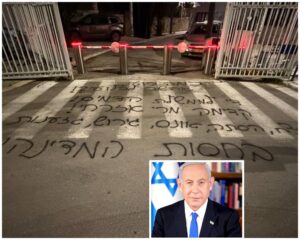
Unknown Jewish individuals, who for understandable reasons chose to remain unnamed, affixed a mezuzah late Wednesday night at the Cotton Gate – one of the internal gates leading directly to the Temple Mount in Jerusalem. Taking advantage of a brief pause in Storm Byron and sheltered by darkness and cold, they carried out the act quietly and deliberately.
The Cotton Gate is one of the entrances commonly used by Palestinians as they make their way to the al Aqsa Mosque. As such, the act holds political, ideological and religious significance, expressing a declaration of Jewish attachment and a symbolic assertion of sovereignty over the Temple Mount compound.
What controversies surround affixing a mezuzah on gates of Jerusalem’s Old City?
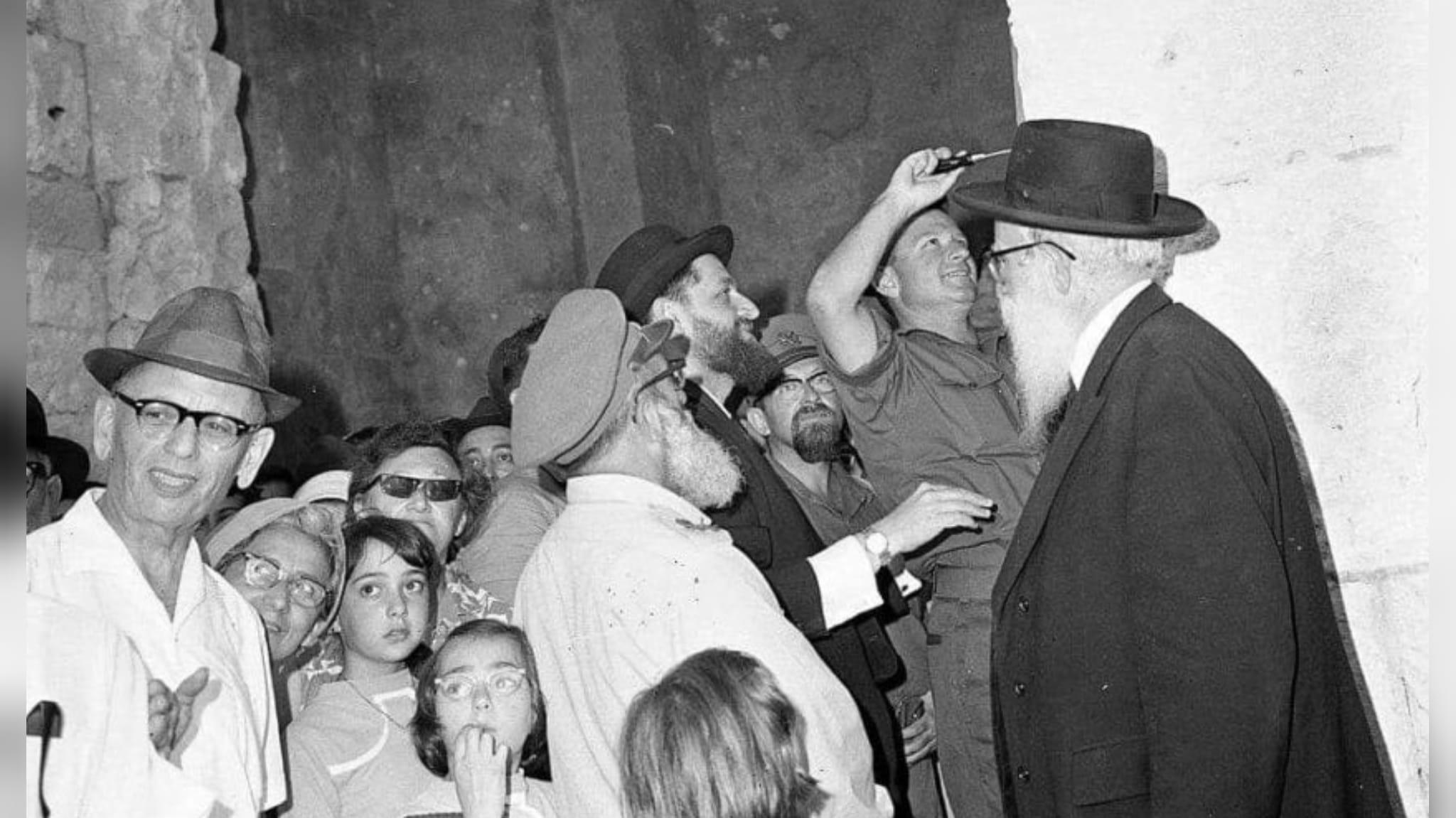
The event evokes memories from the early weeks following the Six Day War in June 1967, when mezuzot were affixed to several of the Old City’s gates.
Immediately after the Old City came under Israeli control in the 1967 war, a symbolic and religious initiative emerged: to affix mezuzot to the gates of the Old City as an expression of renewed Jewish sovereignty over a reunified Jerusalem. The initiative was led primarily by Rabbi Shlomo Goren, then chief rabbi of the IDF (and later chief rabbi of Israel).
Even at the time, the initiative sparked halachic debate among rabbinic authorities. The central question was whether the obligation of mezuzah applies to the gates of the Old City in the same way it applies to entrances of homes, guardrooms or study halls with defined interior use.
Rabbi Goren and other supporters viewed the gates as symbolic “entrances” to the Jewish national home. In cases where a gate also served as a guard post or shelter – such as Zion Gate – the halachic justification was seen as stronger.
Opponents or skeptics, including other rabbis, argued that large city gates do not meet the classical halachic criteria, especially given the lack of consistent interior use such as residence or guarding. Some maintained that the Temple Mount and its surrounding gates, being sacred ground, are exempt from the obligation of mezuzah altogether.
Ultimately, a compromise was reached: mezuzot were affixed to some gates, but in many documented cases without reciting the blessing, due to lingering doubts about the halachic requirement.
Is the religious status quo on the Temple Mount at risk?
The gates where mezuzot were installed included Jaffa Gate, Zion Gate, Lions’ Gate and the Dung Gate. Photographs from the ceremonies at Jaffa Gate and Zion Gate show Rabbi Goren, Major General Uzi Narkiss – commander of Central Command during the war – and Jerusalem public figures taking part. The mezuzah cases, made of bronze and in some instances gold-plated, were supplied by the IDF Rabbinate.
Inspections conducted in recent years, including a 2020 examination at Jaffa Gate, revealed that the historic mezuzah cases affixed to the gates were empty. The decorative outer casings remained, but the parchment scrolls – the essential halachic element – had been removed or gone missing.
The prevailing assessment is that the scrolls were removed shortly after being placed, likely due to pressure from then Defense Minister Moshe Dayan, who sought to avoid a political dispute over sovereignty on the Temple Mount. Dayan aimed to preserve the religious status quo and transferred administrative responsibility for Temple Mount arrangements to the Waqf. The act of affixing mezuzot to the gates was perceived as part of an effort to assert Jewish religious presence in the public space of the Old City – a move Dayan sought to restrain.