Israel once had real leaders. That sentence may anger readers on the right, the left and anyone tired of political nostalgia, but it is difficult to ignore when looking back at Shimon Peres. One could oppose him, be furious with him, see him as a fierce political rival and reject entire parts of his worldview. Yet Peres belonged to a generation of politicians who sought to shape a country, not merely survive another headline, another coalition crisis or another round on social media.
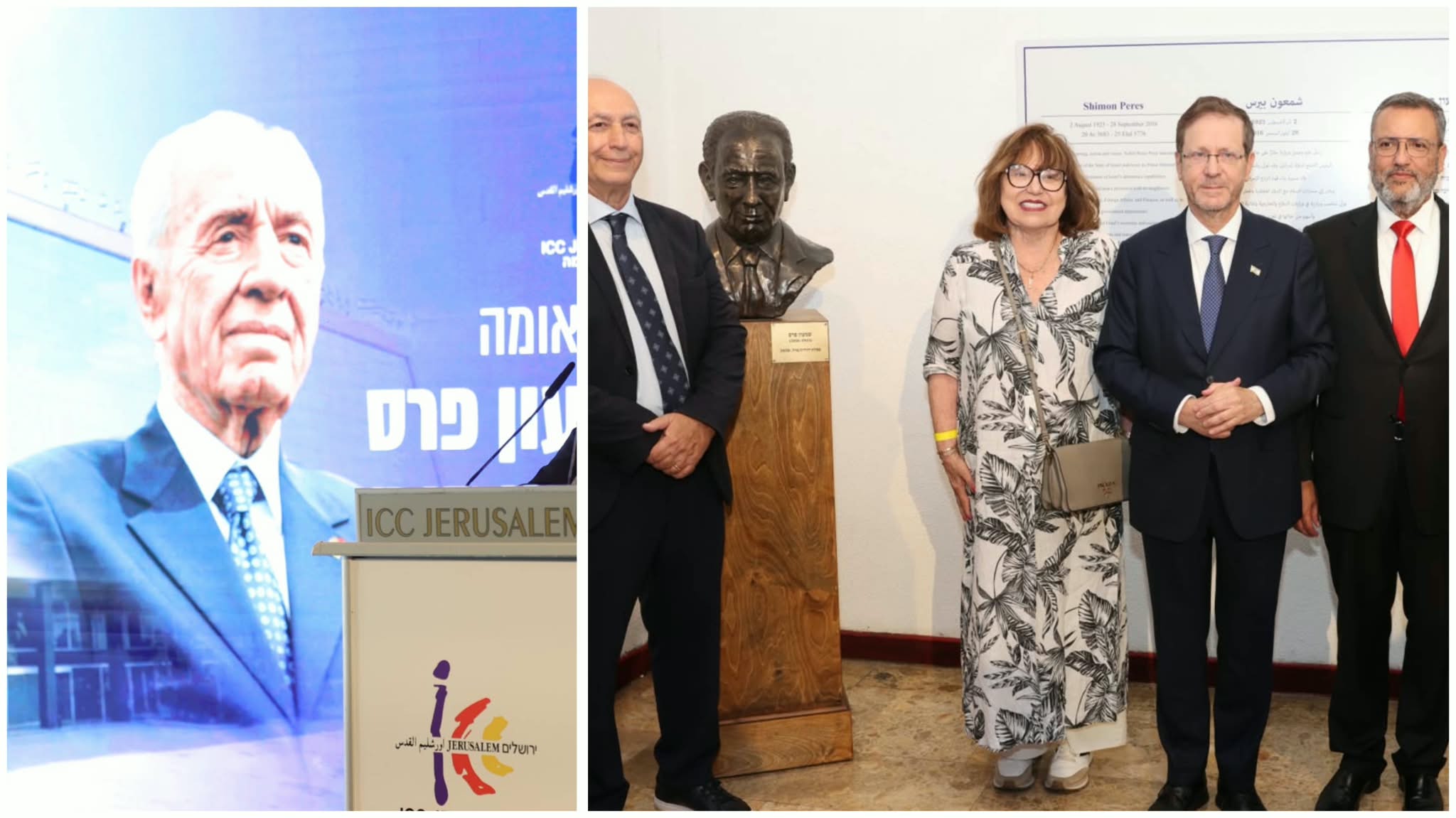
In recent days, that memory has received a new address in Jerusalem. The International Convention Center, one of the capital’s most recognizable national landmarks, has been named after Israel’s ninth president and former prime minister, Shimon Peres, marking a decade since his death.
Why was Jerusalem’s International Convention Center named after Shimon Peres?
For decades, the center has hosted national and international conferences, political leaders, foreign guests, cultural events and diplomatic gatherings. Peres himself was part of that world throughout most of his public life as a Knesset member, minister, twice prime minister and later president.
In 2008, he founded the Israeli Presidential Conference, bringing together leaders, intellectuals, entrepreneurs and opinion makers from Israel and abroad to discuss the country’s future, its challenges and its opportunities.
President Isaac Herzog described the connection between Peres and the venue as “natural and fitting.” Herzog recalled that while serving as chairman of the Jewish Agency, he approached Jerusalem Mayor Moshe Lion and proposed naming the center after Peres.
“As a man of innovation who always insisted on looking forward and becoming familiar with the most advanced technologies and capabilities, I believe there is no more appropriate place than the International Convention Center, at the heart of Jerusalem’s renewed and advanced Gateway District, to commemorate Shimon Peres and his legacy,” Herzog said. He added that he had personally been privileged to work alongside “one of the greatest leaders the State of Israel has known.”
Does Israel still produce leaders of the kind Shimon Peres represented?
Jerusalem Mayor Moshe Lion described Peres as “one of the architects of the State of Israel and one of its most prominent leaders,” saying he devoted his life to building the country, strengthening its security and shaping its future.
“For decades of public service, he worked from Jerusalem on behalf of the State of Israel,” Lion said. “It is fitting that the International Convention Center, a place that hosted historic moments in the country’s history, will now bear his name.”
KKL-JNF Chairman Eyal Ostrovsky called Peres “a symbol of revival and extraordinary strength,” while his daughter, Prof. Tsvia Walden, said: “Our father was a solid rock in his work and open to the world,” later comparing him to “an ever-flowing spring, bubbling with living water.”
Peres’ legacy remains open to fierce political argument, as it should. But one thing is harder to dispute: he thought in decades and generations. Perhaps that is why the new name on one of Jerusalem’s best-known buildings feels less like a tribute to the past and more like an uncomfortable question about the present.