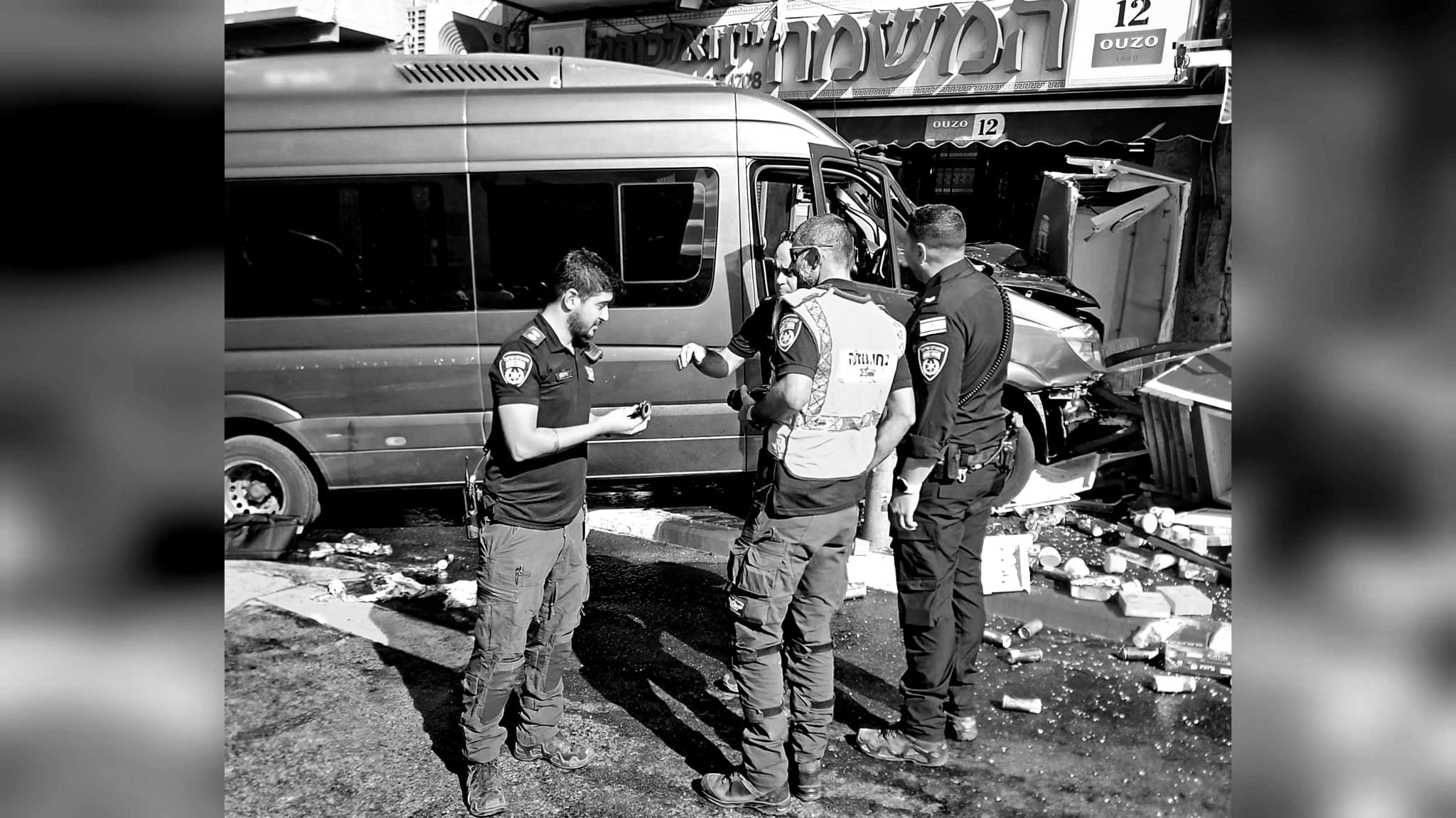
On Thursday, when a minibus mounted the sidewalk on Agrippas Street in Jerusalem, struck a pedestrian and crashed into a nearby shop, it was easy to imagine a terrifyingly familiar scenario: a vehicle-ramming attack. But this was not terrorism. It was a fatal traffic accident that claimed the life of Klara Schneiderova, a Czech diplomat. The disturbing question is not only how the crash happened, but why, in a city like Jerusalem, the possibility of terrorism can arise before the facts are even established.
Why Can a Traffic Accident in Jerusalem Trigger Thoughts of Terrorism?
Psychologists describe one relevant mechanism as the “availability heuristic”: the human brain assesses risks partly according to how easily similar events come to mind. In a city that has experienced vehicle-ramming, stabbing and shooting attacks over decades, a vehicle striking pedestrians can immediately activate memories of a security threat. The response resembles Pavlovian conditioning, although the underlying psychological mechanisms are considerably more complex.
Studies of populations exposed to prolonged terrorism have identified links between security threats, psychological distress and disruptions to everyday life. The concept of “collective trauma” helps explain how threatening events become embedded in a society’s shared memory, influencing perceptions of reality even when individuals do not suffer from post-traumatic stress disorder.
The cost extends beyond anxiety. When public spaces are perceived as potential danger zones, a fundamental sense of security begins to erode. Streets, markets and bus stops cease to feel entirely neutral. Even when no attack has occurred, the possibility of terrorism remains present in the collective imagination.
Does Fear of Terrorism Also Influence Voting in Jerusalem?
The relationship between security threats and political behavior has been studied for decades. Research suggests that perceived threats can strengthen preferences for order, authority and leaders who promise security. Yet this is not a universal rule, and political choices are also shaped by religious identity, socioeconomic circumstances and community affiliations.
In Jerusalem, the paradox is particularly striking. The city has consistently given strong electoral support to right-wing and ultra-Orthodox parties, while security remains a central theme in its political discourse. Now, as the results of Israel’s national elections raise the possibility of a change in government, another question emerges: can political change transform a city’s mindset, shaped by decades of insecurity?
Governments can change. Policies can shift. But collective memory cannot simply be erased at the ballot box. Jerusalem continues to carry its history of security threats into everyday life, even at moments when no actual threat exists.
And perhaps that is the deepest tragedy: a city where security is a central political promise, yet fear continues to shape public consciousness. What happened on Agrippas Street was a traffic accident. But the instinctive thought of terrorism may reveal a much deeper wound in Jerusalem’s collective psyche.