Ahmad al-Dajani, who serves as head of the committee responsible for Muslim cemeteries in Jerusalem on behalf of the Waqf, was arrested on April 9, 2026 at his home in the Shuafat area in northern Jerusalem. He was questioned for four days on suspicion of incitement on social media related to his work, and was released this past Sunday under restrictive conditions.
Al-Dajani has a personal connection to the cemeteries he oversees – his grandfather, after whom he is named, was appointed by the Ottoman Sultan Suleiman the Magnificent to guard King David’s Tomb on Mount Zion in Jerusalem. After his death, Sheikh al-Dajani was buried in the Muslim Mamilla cemetery in Independence Park in central Jerusalem, which is now under the grandson’s responsibility on behalf of the Waqf.
What is behind the posts about Muslim cemeteries in Jerusalem?
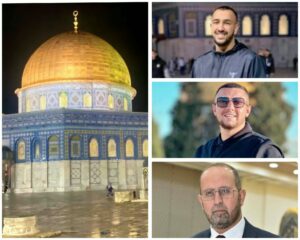
In addition to the Mamilla cemetery, al-Dajani is also responsible for the maintenance of the Bab al-Rahma cemetery, located near the northeastern side of the Temple Mount. Both cemeteries are highly sensitive and serve as a point of friction between Israeli authorities and the Waqf administration regarding authority, control and sovereignty. Against this backdrop, al-Dajani published two posts earlier this month that are considered inciting.
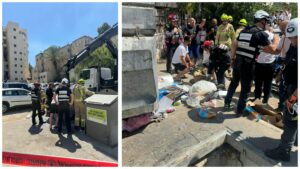
In the first post, published on April 3, 2026, he uploaded an image of his grandfather’s grave with the caption: “Our cemeteries are not just stones, they are our history and our existence in this city. Any attempt to dig into graves is an attack on our faith.” The post was published in the context of ongoing works in Independence Park, where the Muslim cemetery is located.
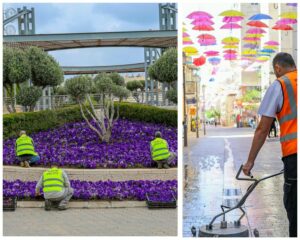
In another post published on April 7, 2026, following a tour he conducted at the Bab al-Rahma cemetery, al-Dajani wrote: “The occupation imposes suffocating restrictions on worshippers during Ramadan, and Bab al-Rahma cemetery is the first line of defense for Al-Aqsa Mosque. We will not allow them to turn it into Talmudic gardens.” These remarks come amid preparation works for a biblical park (“King’s Garden”) around the Old City walls.
About a year ago, during a visit to his grandfather’s grave, al-Dajani found that a Jewish man had moved into the memorial structure (“sheikh’s tomb”) built above the grave. He alerted the police and municipal workers, who evacuated the intruder.
This past Sunday, Judge Gad Ehrenberg of the Jerusalem Magistrate’s Court ordered al-Dajani’s release to five days of house arrest, along with restrictive conditions including a ban on entering the Old City and its surroundings (including the Bab al-Rahma and Mamilla cemeteries) for 15 days. He was also prohibited from publishing posts or statements on social media for two weeks and required to post a personal and third-party bond of 5,000 shekels.