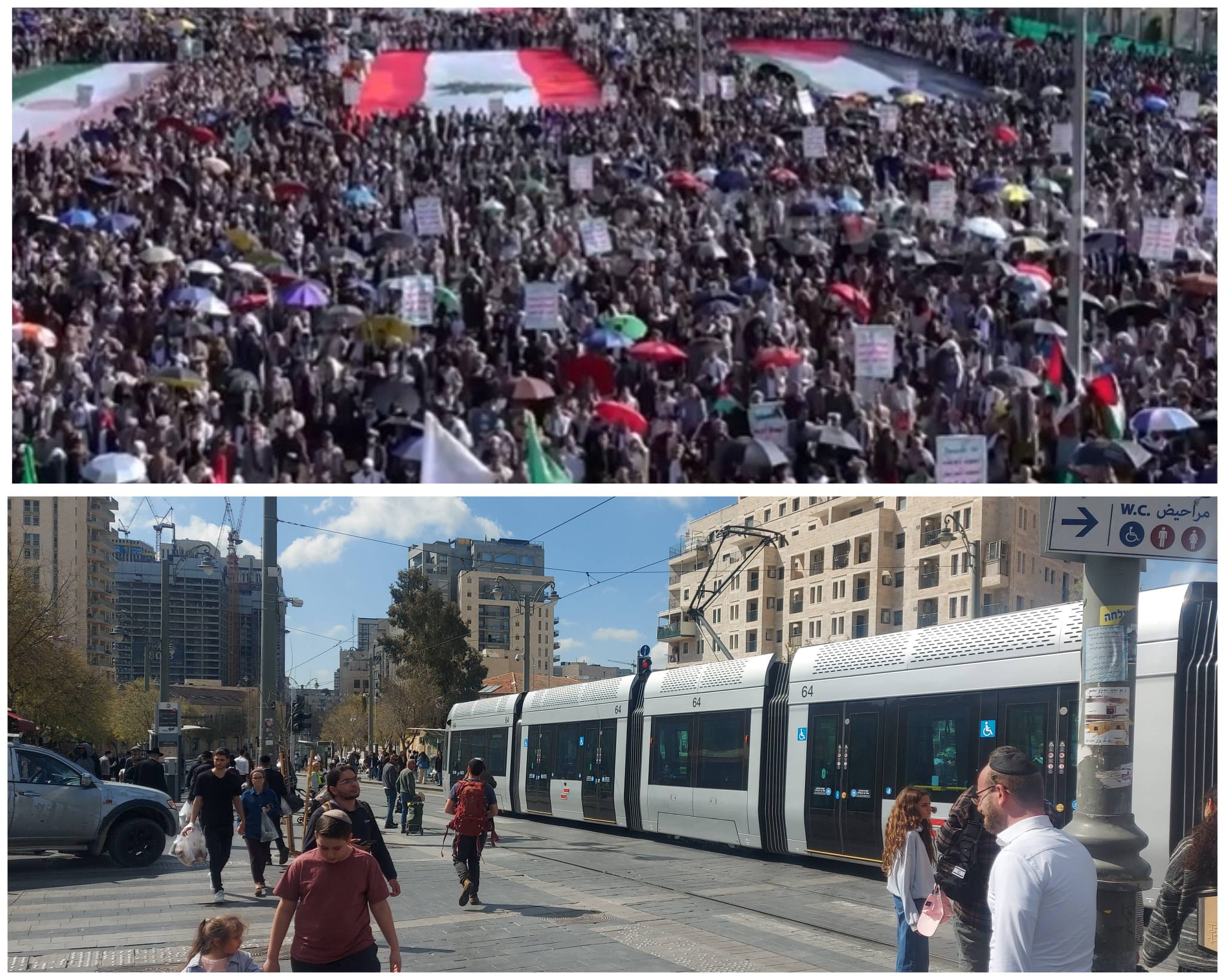
Thousands of kilometers away, in the squares of Sana’a, Yemen, crowds march under calls for unity across arenas in the Arab world, yet the most sensitive impact of these shifts is felt דווקא in the alleyways of Jerusalem. The city, long a volatile religious and political focal point, once again finds itself on the seam between cross-border rhetoric and everyday security reality.
In recent speeches delivered during protests in Sana’a against the “Greater Israel” plan, Jerusalem was explicitly mentioned as the central axis around which resistance is forming. For residents of Jerusalem, especially in the eastern parts of the city, these messages carry weight. Houthi leader Abdul-Malik emphasized in recent remarks that Jerusalem is the compass of all fronts, warning that continued fighting in Lebanon poses a direct threat to the status quo in the city and to Al-Aqsa Mosque.
As protests across the Arab world intensify and rhetoric around Lebanon sharpens, tensions in Jerusalem rise. The city’s security situation is directly influenced by the sense of “victory” or “suffering” projected by regional actors. Ongoing activity in Lebanon is perceived by parts of the Arab public as an attempt to reshape the regional order, potentially culminating in control over holy sites. This perception may fuel local unrest or inspire lone actors to respond to developments in the north through actions in Jerusalem.
How do Houthi statements affect tensions in Jerusalem?
Statements by the Houthi leadership about “surprises” and an escalation path aimed at the heart of the entity, namely Jerusalem, cast a cloud of uncertainty over the city. Jerusalem, which exists in a delicate symbiosis between populations, experiences such shifts in multiple ways. On one hand, security forces raise alert levels over concerns that rhetoric could translate into local violence. On the other, residents themselves are influenced by the dynamic, and so is their daily routine.
When the Arab street mobilizes around “defending Lebanon,” Jerusalem becomes the arena where sovereignty and stability are tested. Every military development in the north is interpreted through the lens of “unity of arenas,” a concept intended to undermine the sense of security within Israel and position the capital as an integral part of the regional battlefield. The sensitivity of holy sites only amplifies the potential for protests in Yemen to become fuel for local flashpoints.
Can a regional ceasefire stabilize Jerusalem?
International efforts to reach a ceasefire through Pakistani mediation offer a potential opening for Jerusalem as well. Regional stability is essential for maintaining daily life in a city that is both a major tourist destination and a complex urban environment. However, warnings from Yemen’s Presidential Leadership Council against “military adventures” that use Jerusalem as a pretext for escalation highlight internal struggles within the Arab world — struggles that also filter into the consciousness of Jerusalem’s residents.
The continuation of Israeli military activity in Lebanon is now being tested not only against Hezbollah, but also against the ability to keep Jerusalem outside the direct and indirect circle of fire. The balance between military action and sensitivity to the Arab street, alongside the explicit references to the city in regional rhetoric, remains the central challenge. In the heart of the Middle East, Jerusalem remains a precise barometer, reacting to every shift in Lebanon and every chant in Sana’a, reminding all how deeply interconnected the region truly is.