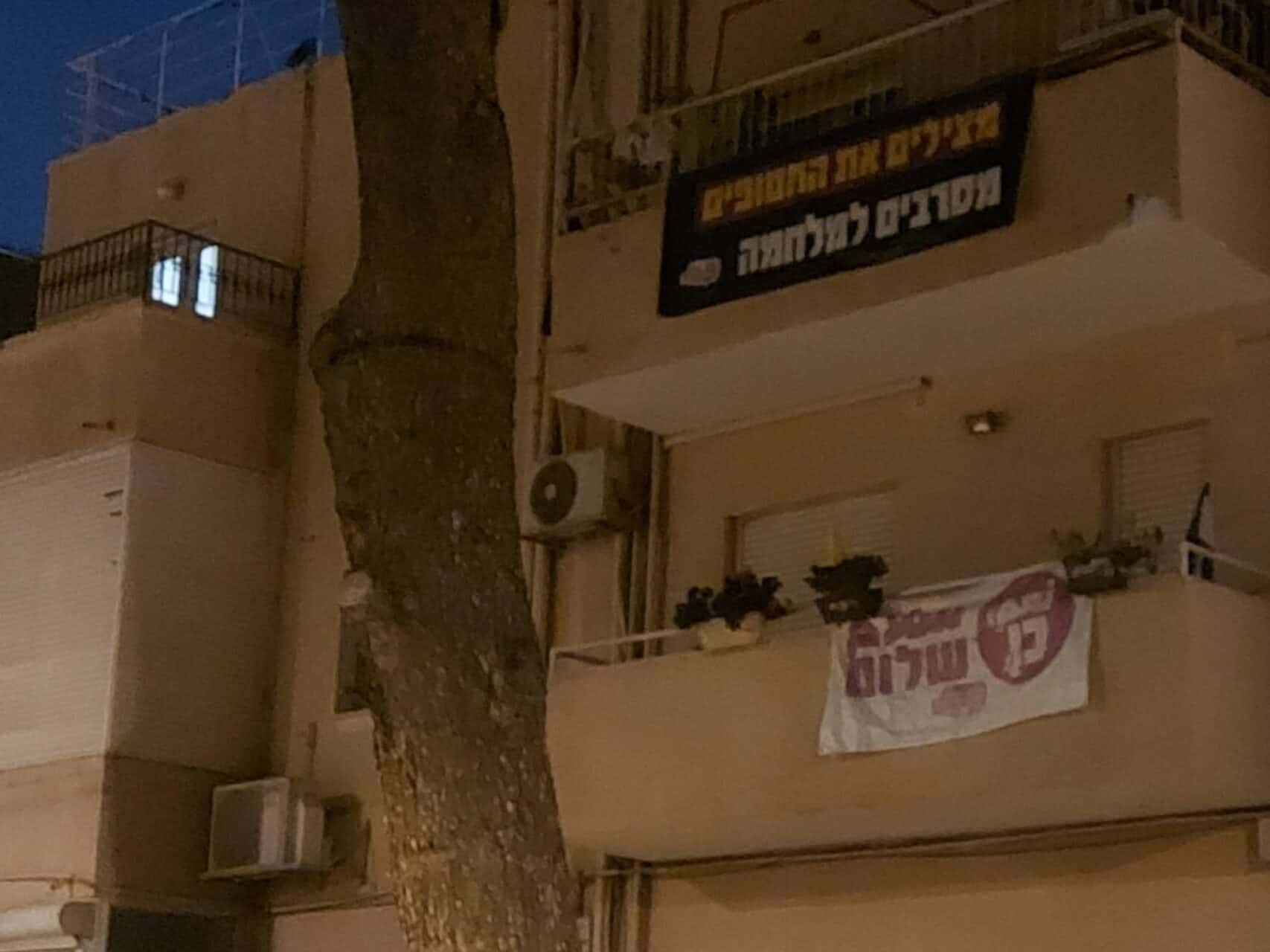
In Rehavia – a neighborhood long identified with Israel’s establishment and consensus – an unusual visual statement has appeared in recent days. Two separate balconies, located just five minutes’ walk from the President’s Residence, now hang large signs with politically charged slogans
One banner reads: “Free the hostages – refuse the war,” while another nearby proclaims: “Yes to peace.” These messages, easily missed among the trees but impossible to ignore in context, echo a voice rarely seen – a defiant message from an unexpected place
Refusal banners in the heart of official Jerusalem?
The language used would typically be associated with radical leftist groups or fringe protests – yet here it is, boldly positioned in the symbolic core of Israeli political life. The juxtaposition of these messages near the President’s home only intensifies the question: is this a turning point in public sentiment
Some see it as a moral outcry, others as a breach of national unity during wartime. Online discussions in local Jerusalem forums have already ignited debate – between those who see it as legitimate concern for the hostages, and those who view it as an unacceptable deviation
This location – home to academics, former military officers, and political figures – makes the message even more poignant. Could these be the first signs of a growing ideological split within the capital
Whether local or symbolic, this image of banners calling for peace and refusal just steps from the President’s official residence may come to define the political atmosphere of summer 2025. Some on social media have already labeled it “a moment of truth