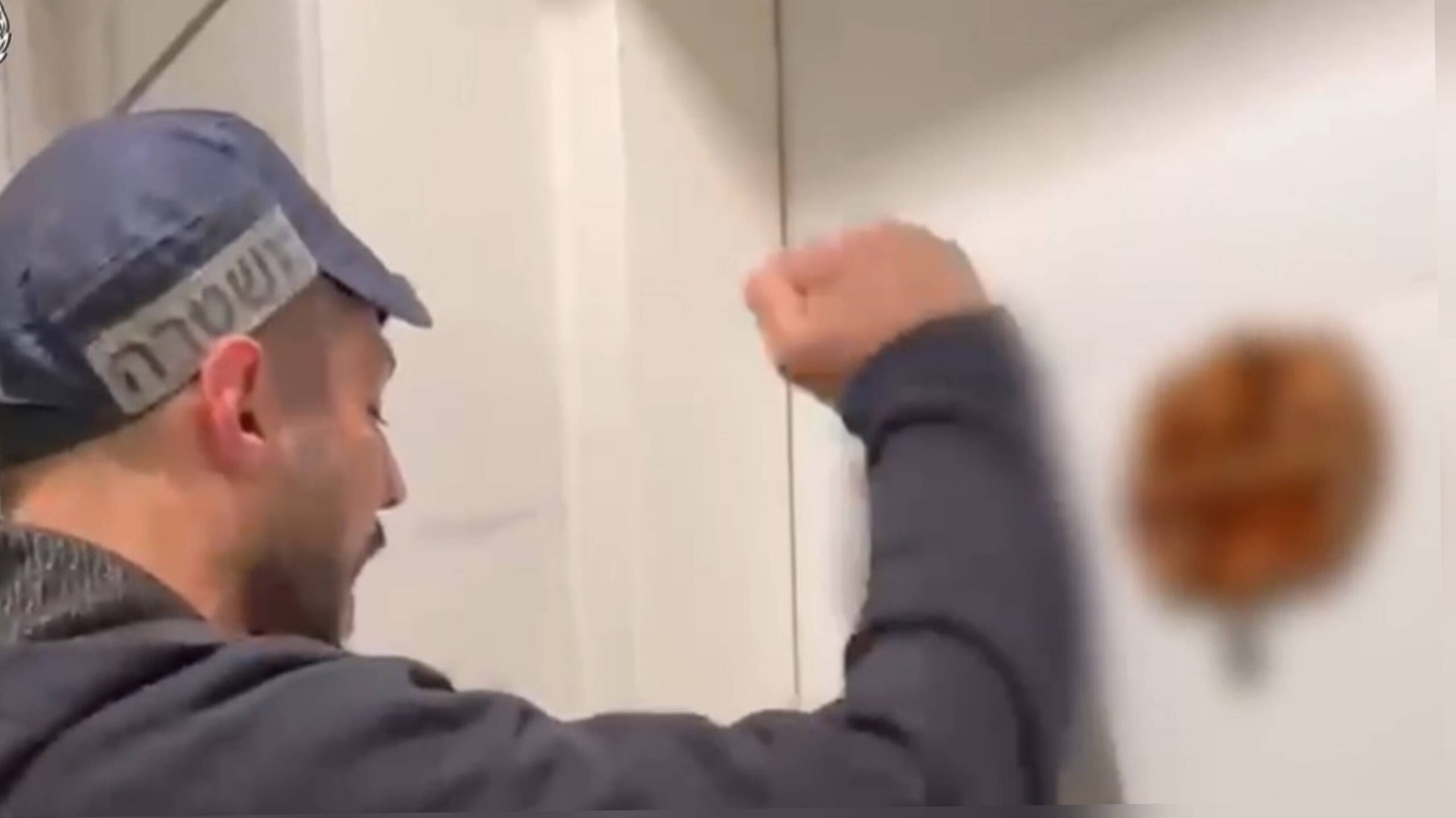
The fist knocking on a closed door in Beit Shemesh is more than a local act of violence. It echoes a growing tension within Israeli society, one that repeatedly converges around Jerusalem and the contentious issue of ultra-Orthodox military conscription. This time, the victim was a soldier in uniform, and the suspects, according to police, are linked to extremist ultra-Orthodox factions.
In recent days, the atmosphere in Jerusalem and its surrounding areas, particularly Beit Shemesh, has become increasingly charged. Conversations about the draft law have spilled out of political arenas and into the streets, sometimes turning into physical confrontations. Between ultra-Orthodox neighborhoods and more secular communities, between young soldiers and those who see enlistment as a threat to their way of life, the line is becoming increasingly fragile.
Why does the draft law keep igniting tensions in Jerusalem?
The debate over ultra-Orthodox conscription is not new, but each time it resurfaces, it meets a more volatile reality. For many in secular and national-religious communities, military service is seen as a basic civic duty. For extremist ultra-Orthodox groups, however, the very demand for enlistment is viewed as an attack on identity and tradition. Jerusalem, where these communities live side by side, naturally becomes a focal point of friction.
What happened in the Beit Shemesh assault case?
According to police, the investigation began after a report received on Friday night about an assault involving several suspects. The victim, a uniformed soldier, sustained facial injuries and required medical treatment. Within hours, officers from the Jerusalem District, alongside riot police and Border Police units, identified and arrested three Beit Shemesh residents suspected of involvement. They were taken in for questioning and are expected to appear in court for a remand hearing.
The Jerusalem District Police stated: “Upon receiving the report, we launched an investigation that led to the identification and arrest of the suspects. We will continue to act decisively against violent offenders and anyone who disrupts public order and harms public safety.”
What happens when public debate turns into street-level hostility?
Incidents like this do not stand alone. They join a pattern of confrontations, verbal abuse, and at times physical violence between different groups in and around Jerusalem. The language of “duty” and “rights” quickly shifts into feelings of coercion versus resistance, identity versus threat. In such moments, a person in uniform becomes a symbol, and a doorway becomes a frontline.
Jerusalem, a city that often manages to contain deep religious and cultural complexity, sometimes struggles to hold together its internal fractures. Beit Shemesh, on its edge, mirrors that tension – a place where close proximity can quickly become volatile.
מעצר בבית שמש pic.twitter.com/giM76aznxY
— jerusalem online (@Jlmonline) April 28, 2026