Jerusalem Day, marked each year on the 28th of Iyar to commemorate the reunification of the city in the Six-Day War, will fall this year on Friday, May 15, 2026. The day is already known for its tension, largely due to the Flag March passing through East Jerusalem and provoking Palestinian anger. This year, an additional question looms: will Jews be allowed to ascend the Temple Mount on this sensitive day?
In the 59 years since Jerusalem’s reunification in 1967, Jews have never been permitted to visit the Temple Mount on a Friday – the busiest day of Muslim prayer. Will this year mark the first exception?
Will the long-standing restriction on Jewish visits to the Temple Mount on Fridays be broken?
Temple advocacy groups, including the Temple Mount Administration, Beyadenu – Returning to the Temple Mount, the Temple Organizations Headquarters, Returning to the Mount, and Women for the Temple, recently launched a campaign under the slogan: “On Jerusalem Day, the Temple Mount is not closed to Jews.”
According to the groups, it is unacceptable that Jews are barred from visiting the Temple Mount specifically on Jerusalem Day. In their view, it should be a day of opening, not closure. “It is inconceivable that on the day marking the liberation of the Temple Mount in 1967, Jews would be completely denied access to their holiest site,” they said. At the very least, they propose opening the site on the eve of Jerusalem Day (Thursday night, May 14, 2026), between 10:00 PM and 2:00 AM, as an alternative to the usual Friday morning closure.
A petition campaign has also been launched, gathering hundreds of signatures so far. Tom Nissani, CEO of Beyadenu, sent an official letter on the matter to Jerusalem District Police Commander Avshalom Peled and National Security Minister Itamar Ben Gvir, calling for special operational preparations to enable access despite the security sensitivity.
The National Security Minister himself stated that he is working with enforcement authorities to “maximize freedom of worship and access for Jews on their holiday.” He asked the Police Commissioner to examine the possibility of an exceptional opening on Friday morning or, at the very least, the night before.
Several Knesset members are also involved, including Amit Halevi, Ariel Kallner and Dan Illouz (Likud), as well as Zvi Sukkot (Religious Zionism). MK Halevi formally appealed to the chairman of the Foreign Affairs and Defense Committee, demanding an urgent discussion. He also contacted the National Security Minister and the Police Commissioner, arguing that “the status quo is not more sacred than Basic Law: Jerusalem,” and that closing the site on the day of its liberation amounts to surrendering to threats of violence.
How are Palestinians preparing and what is expected at Al-Aqsa Mosque on Jerusalem Day?
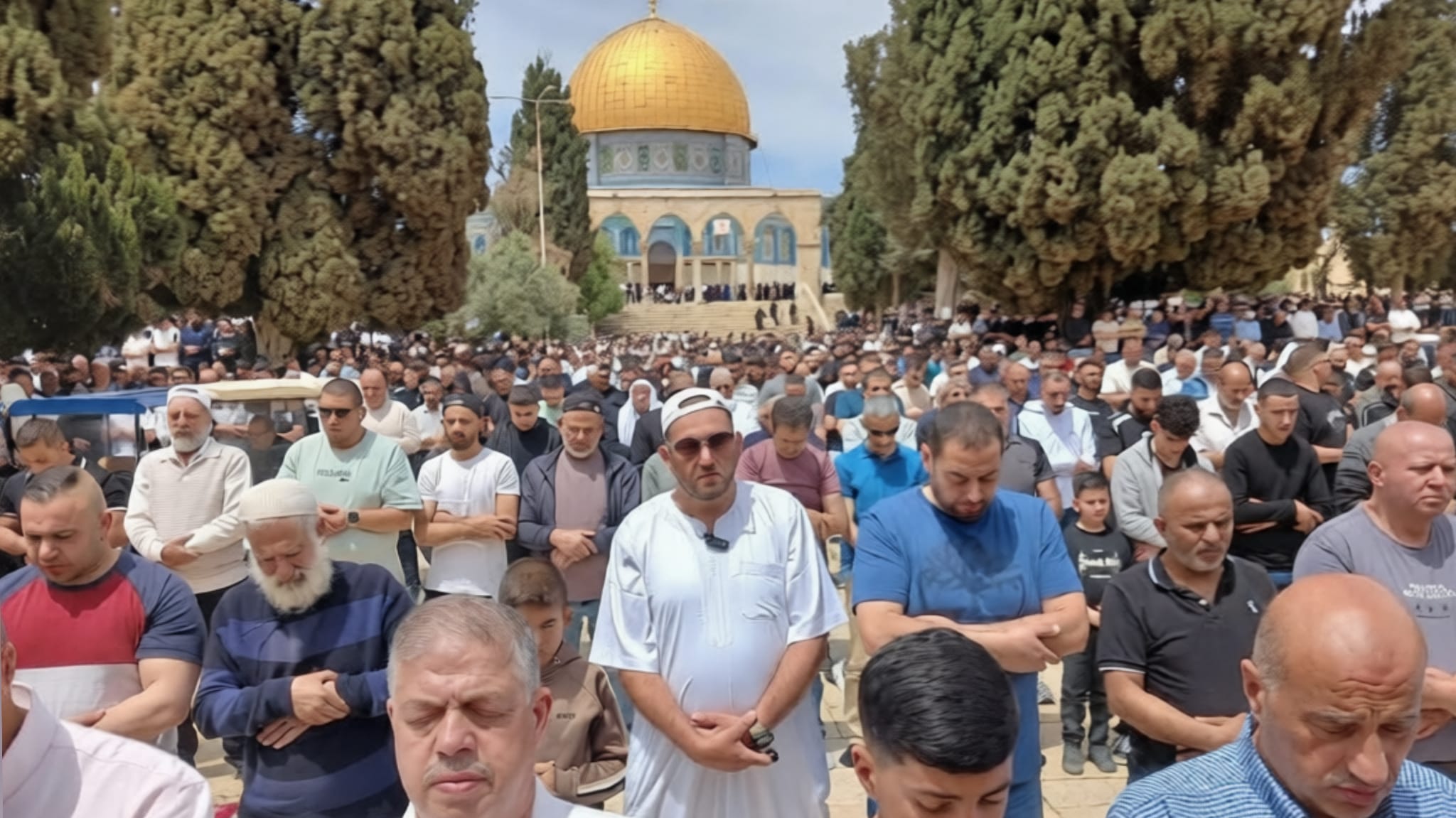
On the other side, Palestinian social media is seeing calls for mass mobilization to defend Al-Aqsa Mosque on the sensitive day. The public is urged to arrive in large numbers already for the dawn prayer, known as “Great Fajr” (Fajr al-Azim). Worshippers are encouraged to remain in the compound after the prayer and make it difficult for Jewish visitors to enter.
It should be noted that since the ceasefire with Iran and the lifting of Home Front Command restrictions on large gatherings, thousands have been attending the dawn prayer at Al-Aqsa every Friday, with around 70,000 worshippers participating in the midday prayer.