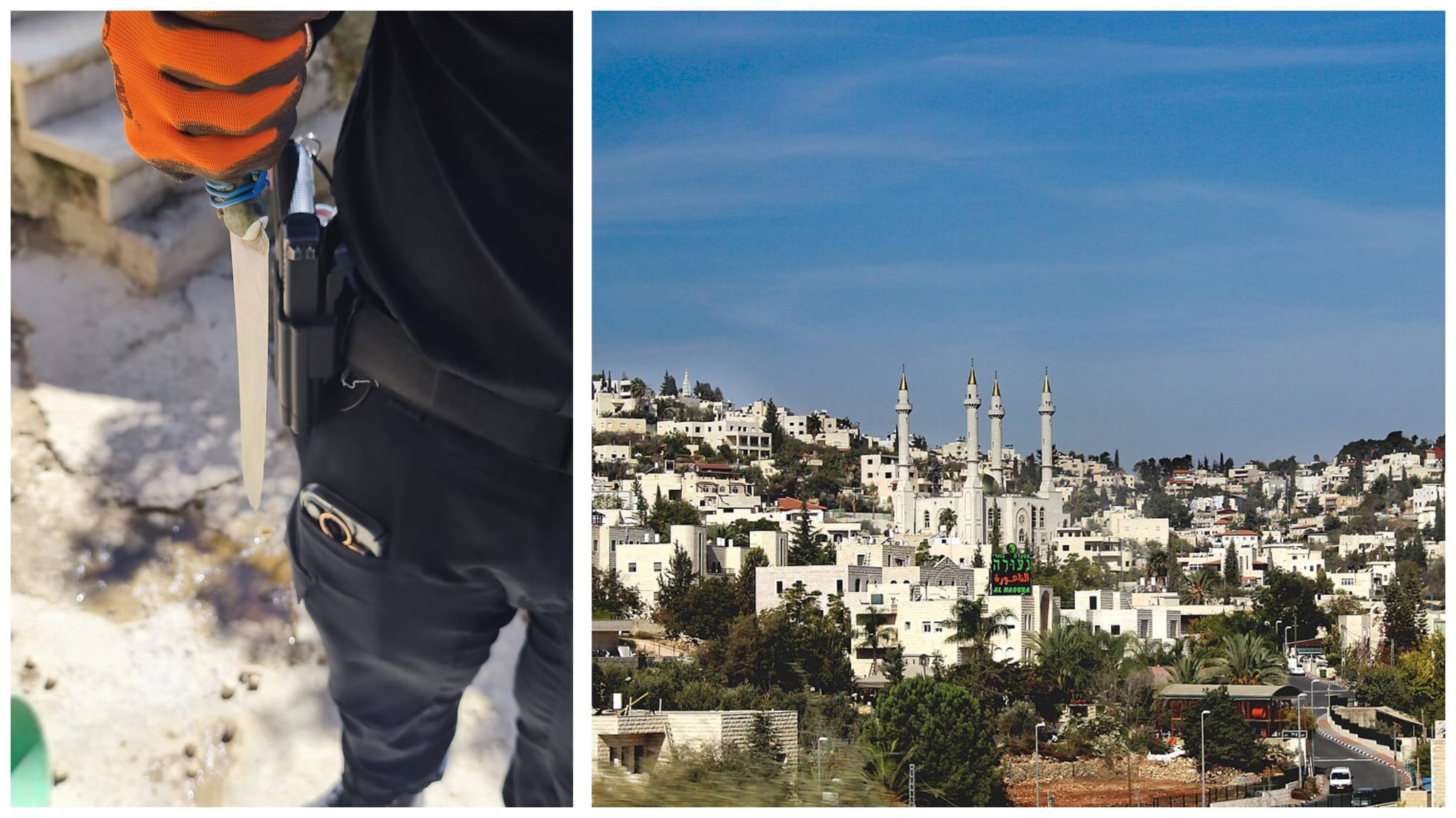
Some stories don’t begin in the street, but deep inside the home. Not in the shouts that echo outside, but in the ones that stay within four walls. In a space meant to feel safe and familiar, tensions can quietly build until they break all at once.
That is what appears to have happened in early April in the village of Abu Ghosh, just outside Jerusalem. An ordinary day was abruptly interrupted when a call to the police emergency line brought officers from the Harel station to the scene. By the time they arrived, the picture was already clear: a wounded woman, a brother in custody, and a heavy silence left behind.
How does a family argument turn into a stabbing?
Domestic violence rarely erupts out of nowhere. It tends to grow over time, layered with anger, frustration, and unresolved conflict. Investigators working on the case sought to reconstruct not only the moment of the attack, but also the path that led to it.
According to the investigation, the suspect, a 42-year-old resident of the village, allegedly attacked his sister with a knife. The victim was evacuated for medical treatment with injuries, while the suspect was arrested at the scene by responding officers.
What happens after an arrest in such a case?
From the moment of arrest, a personal story becomes a legal process. Police investigators gather evidence, take testimonies, and work to build a full account of the incident.
In this case, after about two weeks of investigation, a prosecutor’s statement was filed in court, indicating that sufficient evidence has been collected to proceed toward an indictment. The suspect’s detention was extended until April 24, 2026, as legal proceedings continue.
The Jerusalem District Police said: “Police will continue to act decisively against all forms of violence and will work to bring offenders to justice in order to protect public safety and bodily integrity.”
Behind the legal language and procedures, one question remains: how does a place meant to be the safest of all become the scene of such violence?