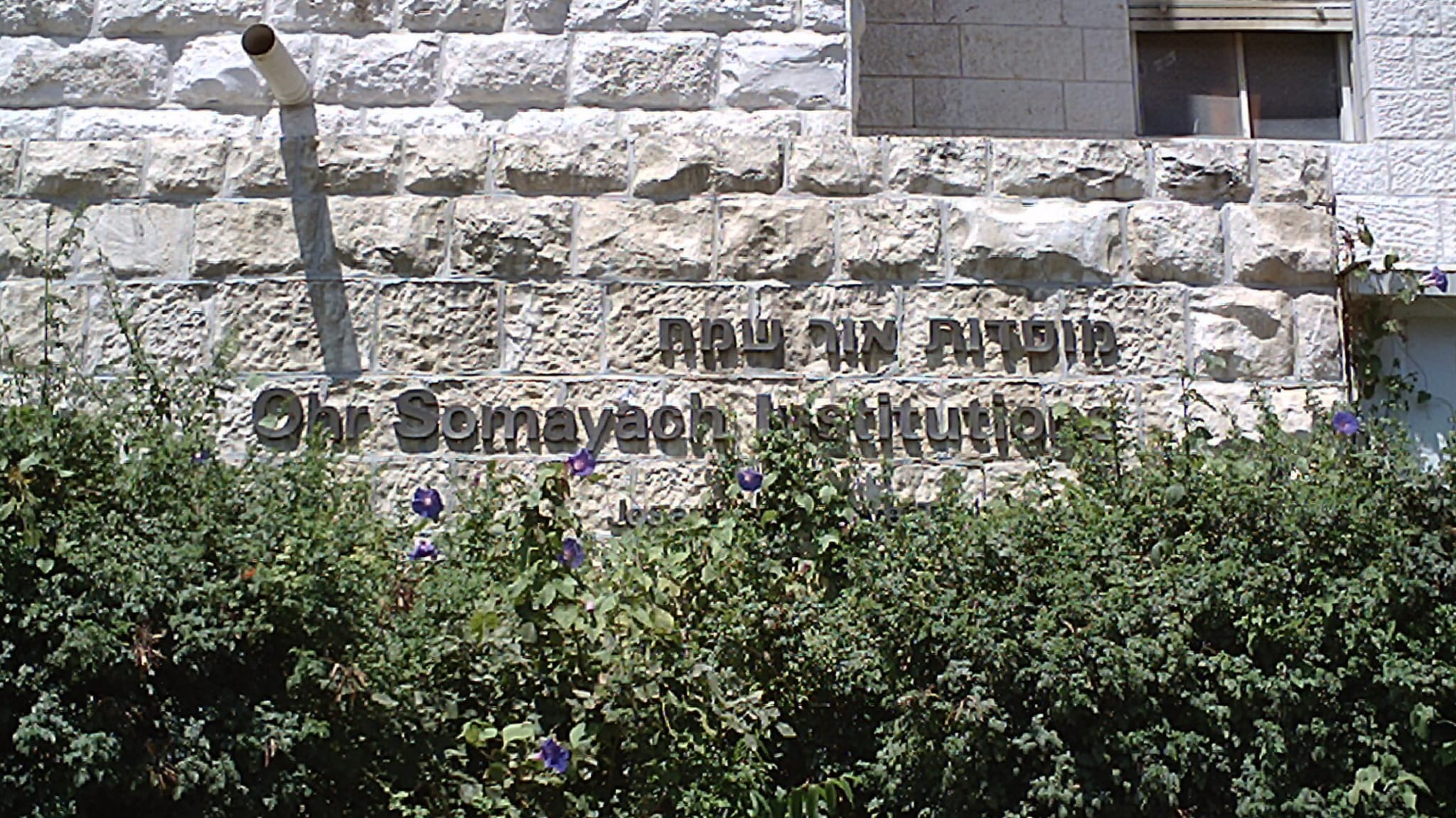
At its meeting on April 20, 2026, the Jerusalem District Planning and Building Committee approved a plan to establish a new campus for the Ohr Somayach Institutions yeshiva in the heart of the Sheikh Jarrah (Shimon HaTzadik) neighborhood, rejecting objections submitted jointly by the left-wing NGO Ir Amim and an association representing Palestinian residents of Sheikh Jarrah. This brings to an end 12 years of disputes and controversy over the project, but opens a new chapter in a long-running struggle over the character of Sheikh Jarrah – a struggle that could shake Jerusalem in the coming years and draw international opposition.
What does the Ohr Somayach Institutions yeshiva campus plan in Jerusalem include?
The approved plan calls for the construction of an 11-story building (8 above ground and 3 underground) on a site of approximately 5 dunams (about 5,000 square meters) at the southern entrance to the neighborhood, opposite the Sheikh Jarrah mosque. The building will serve as the main campus of the ultra-Orthodox Ohr Somayach Institutions yeshiva, whose current main facility is located in Jerusalem’s Ma’alot Dafna neighborhood. The project will include dormitories for hundreds of students, most of them ultra-Orthodox students from abroad and newly observant Jews, as well as residential units for staff.
The plan was first submitted to the local committee in 2014 and approved for deposit, but was delayed for many years due to objections, political and diplomatic pressure, and legal proceedings. The land was expropriated by the State of Israel about 30 years ago for public use, and in 2007 was allocated to the Ohr Somayach Institutions association by the Israel Land Authority and the Jerusalem Municipality without a public tender. The municipality itself joined the plan as a developer.
Supporters argue that this is a legitimate educational institution on state land originally designated for public-institutional use. According to them, the plan meets statutory planning requirements and is no different from other educational institutions in Jerusalem. They also claim that opposition to the project is mainly political and not based on planning considerations.
Opponents argue that Sheikh Jarrah (Shimon HaTzadik) in East Jerusalem has been one of the most sensitive flashpoints in the Israeli-Palestinian conflict for decades, due to legal battles over property ownership, Jewish settlement activity, and allegations of “Judaization” of the neighborhood. From their perspective, the plan to build a large Ohr Somayach Institutions yeshiva complex has become a symbol of that dispute. They contend that the project represents a “takeover” of public land expropriated from Palestinians, along with demographic and geographic changes to a historic Palestinian neighborhood.
Why is Sheikh Jarrah in Jerusalem considered such a sensitive area?
Sheikh Jarrah was the first Palestinian neighborhood built in Jerusalem outside the Old City walls. In addition to the local mosque, located about 20 meters from the planned Ohr Somayach Institutions construction site, the neighborhood also includes, within a few hundred meters, two Palestinian buildings regarded by many as national institutions: the Orient House, which once served as the PLO headquarters, and the Al-Hakawati Theatre, the Palestinian National Theatre. Both buildings currently stand empty after being closed by Israeli authorities due to unauthorized governmental activity on behalf of the Palestinian Authority in Jerusalem, which is prohibited under the Oslo Accords. The neighborhood is also home, near the planned site, to several foreign consulates representing countries that do not recognize Jerusalem as Israel’s capital.