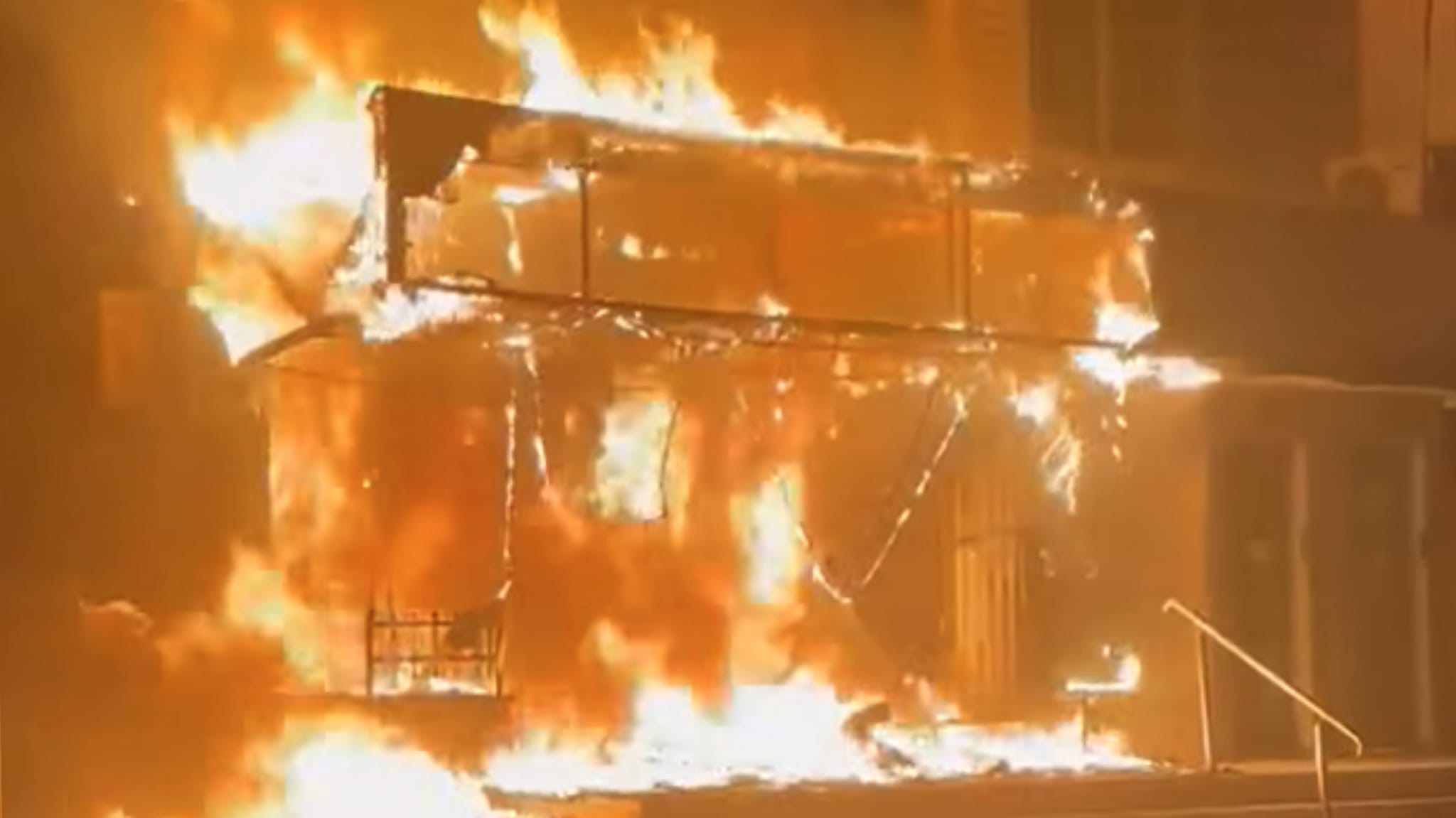
On the night between May 1 and May 2, 2026, a branch of the Arab-Islamic Bank in the Beit Hanina neighborhood in north Jerusalem was set on fire. The main damage was caused to the front of the branch, the external ATM, and the entrance area (lobby). Inside the branch, heavy soot and smoke damage were recorded.
The fire at the bank branch was extinguished by local residents and young people from the neighborhood, who used handheld fire extinguishers and improvised means before the flames spread into the inner part of the bank. Their quick response prevented total destruction of the building.
What is behind the wave of attacks on Palestinian banks around Jerusalem?
Today, Sunday, a solidarity vigil is expected to be held by local residents, who are the primary victims, outside the bank branch, demanding decisive action to stop the acts of vandalism.
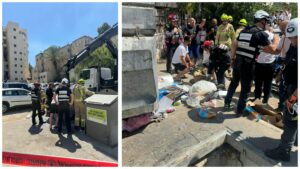
This was the latest incident, so far, in a series of violent events over the past two months targeting Palestinian financial institutions in the northern Jerusalem area, including Bank of Palestine and the Arab-Islamic Bank. For example, on an unspecified date in February or March 2026, an ATM was stolen from a bank branch in the town of Bir Nabala, located north of Jerusalem near Givat Ze’ev. The ATM was uprooted from the wall using heavy vehicles, causing severe structural damage to the building. According to unofficial estimates, the stolen ATM contained between 150,000 and 300,000 NIS.
In additional cases, in early April, significant damage was caused to an Arab-Islamic Bank branch in the town of Al-Ram, which borders north Jerusalem, including shattered windows and tires set on fire at the entrance. There were also reports of gunfire directed at the front of a Bank of Palestine branch in the town. In these incidents, no ATMs were stolen, but the damage led to temporary closures of the branches for repairs.
Is this a wave of security chaos or a deeper economic crisis?
Palestinian media portrays these incidents as part of a broader wave of security anarchy affecting Palestinian Authority areas, emphasizing the damage to the Palestinian national economy. It calls on security forces to increase their presence in communities outside the separation barrier. A significant portion of the incidents is attributed to local criminal gangs attempting to collect protection money from large financial institutions.
However, on Palestinian social media, other voices are also heard, linking the incidents to the financial crisis affecting the Palestinian Authority, including liquidity shortages and difficulties in currency exchange, often referred to as the “shekel surplus,” which fuels public anger toward banks, sometimes perceived as failing to assist customers during times of crisis.
Alongside strong condemnation of the vandalism, criticism is also directed at the banks themselves over issues such as fees and interest rates, creating discourse that sometimes indirectly justifies the sentiments that led to the violence. Enforcement of these financial crimes falls between jurisdictions: while in Al-Ram and Bir Nabala, which are under Palestinian Authority control, responsibility lies with Palestinian security forces, in the case of Beit Hanina, Israeli police are expected to handle the matter. Local criminal gangs are aware of this dual authority and exploit it, operating with relative confidence due to the lack of a coordinated enforcement mechanism.