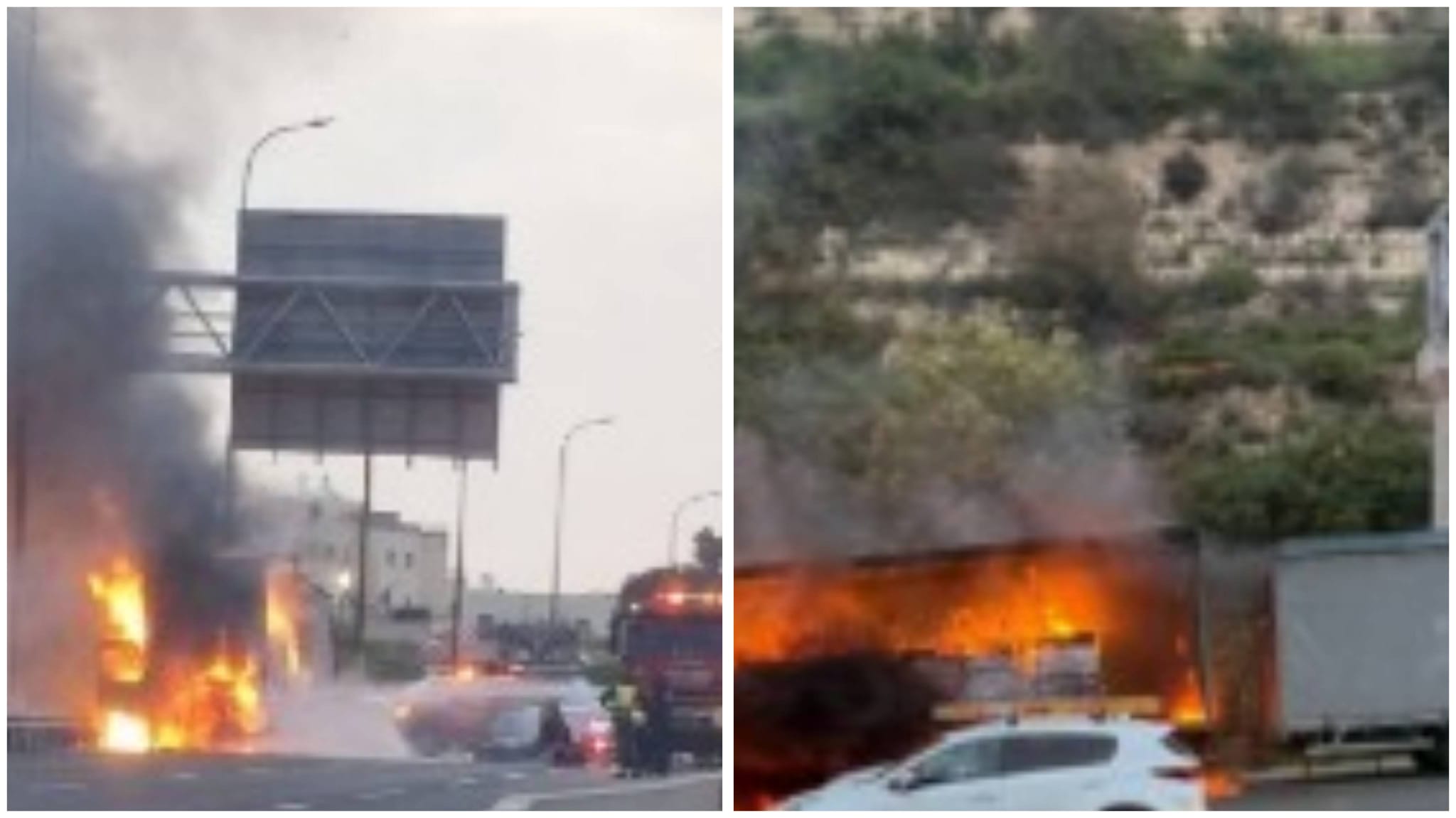
A dramatic scene unfolded this morning on Highway 1, the main artery connecting Jerusalem to central Israel, after a truck burst into flames near the Harel Interchange. Thick black smoke billowed into the sky, visible from a distance, as emergency crews rushed to contain the fire and secure the area.
For international readers, Highway 1 is a critical route linking Jerusalem – a city of global religious and political significance – with Tel Aviv and the country’s coastal plain. Any disruption along this corridor quickly ripples across the broader region.
Why did traffic grind to a halt outside Jerusalem?
In the immediate aftermath, authorities shut down the westbound lanes entirely, creating severe bottlenecks for commuters leaving Jerusalem during peak morning hours. Even after partial reopening, the backlog of vehicles led to prolonged delays and slow-moving traffic stretching far beyond the scene.
As of now, two מתוך three lanes have reopened, but the situation remains far from normal. The buildup has spilled into surrounding roads, with congestion reported not only on Highway 1 but also inside Jerusalem itself, as drivers search for alternative routes.
What are drivers being told to do now?
Police on the ground are actively directing traffic and urging drivers to follow instructions and avoid the area if possible. Diversions are in place, but the volume of vehicles means delays are still significant.
The incident is a stark reminder of how dependent Jerusalem is on a limited number of access routes. A single disruption – especially on Highway 1 – can quickly escalate into a citywide traffic event, affecting thousands of commuters and reshaping the rhythm of an entire morning.