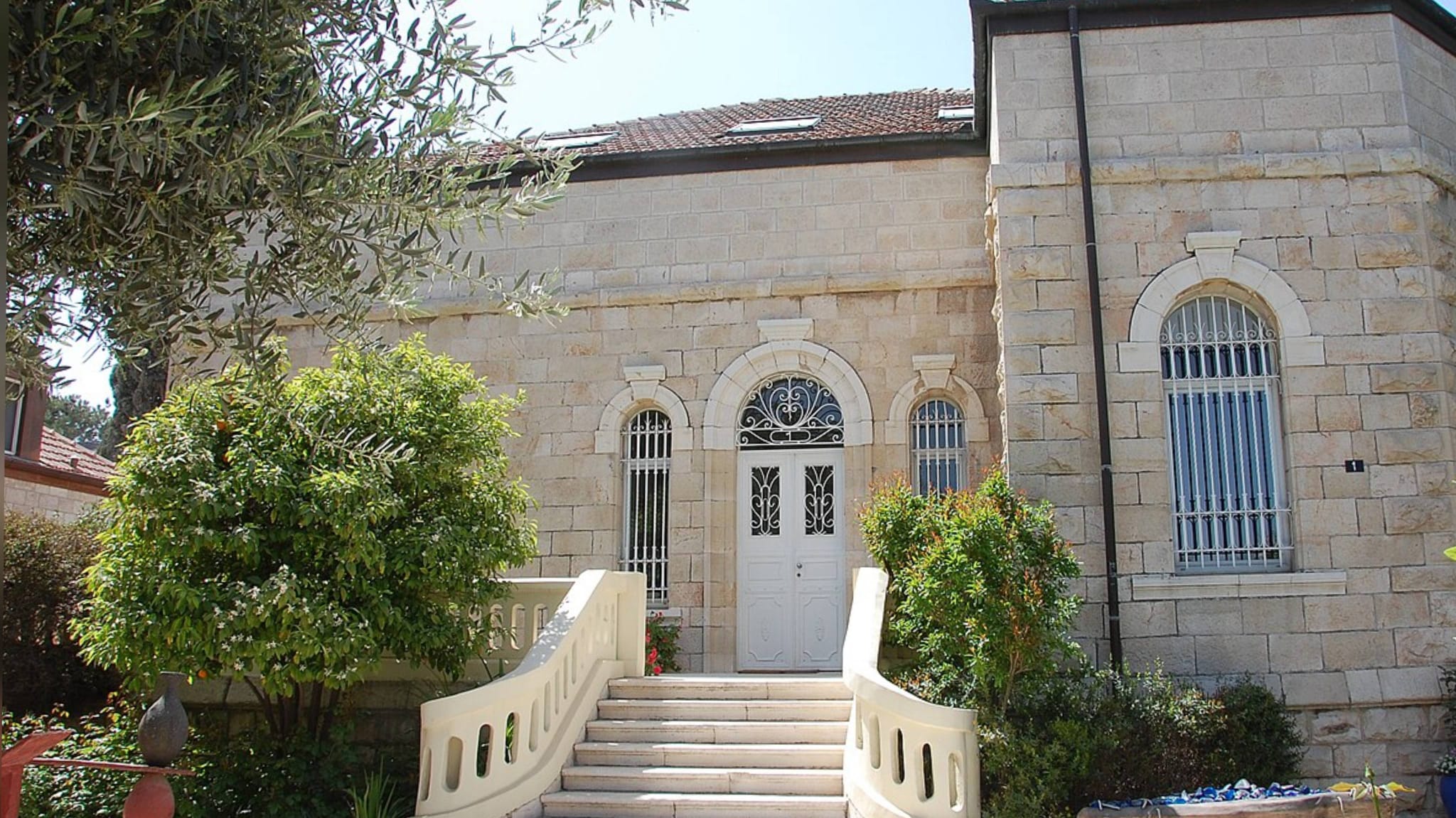
One of Jerusalem’s most luxurious and rare real estate properties was recently sold in the Talbiya neighborhood for approximately NIS 45 million, or about $14.7 million. The property is Villa Katana, which is 100 years old. The deal, brokered by Ronit Dweck of Prosperity Real Estate, highlights the continuing demand for historic luxury properties in the city, including buildings in need of extensive renovation.
The villa has approximately 450 square meters of built space and stands on a 578-square-meter corner lot. It was sold for approximately NIS 105,000 per built square meter. The property is located at the corner of Hovevei Zion and Marcus streets, opposite the Belgian Consulate and near the Jerusalem Theatre and Villa Sherover.
The property was built in the liwan style typical of aristocratic Arab homes constructed during the 1920s and 1930s in the Talbiya and Katamon neighborhoods. It features a spacious entrance courtyard with mature trees, a broad staircase, large arched windows, high ceilings, original Jerusalem stonework and balconies. The building contains rare historic architectural elements but requires extensive renovation.
The identities of the buyer and seller were not disclosed – a common practice in luxury real estate transactions in Jerusalem, particularly when historic properties are involved, in order to protect the privacy of the parties. The deal is part of a broader trend of rising demand for luxury properties in Jerusalem, driven in part by increasing antisemitism around the world and demand among buyers from Jewish communities abroad.
Who Built Villa Katana in Jerusalem, and Who Owned It Over the Years?
The villa was built in 1926, during the British Mandate period, for Antonio Katana, a prominent Christian Catholic businessman in Jerusalem. His family lived there until 1948. Following Israel’s War of Independence, the property was declared absentee property, transferred to the Custodian of Absentee Property and passed through several owners before reaching the Hebrew University of Jerusalem in the 1970s.
In 1987, the property was purchased by Charles Bronfman, a Canadian Jewish philanthropist. Bronfman transferred it to the Keren Karev foundation he established, and the villa was used mainly as the foundation’s offices. It stood vacant from 2014 until 2022 and was later leased to the Armstrong Institute of Biblical Archaeology.
Apart from the Katana family, the property was not used as a private residence by families or individuals for extended periods and was primarily used for institutional purposes.
The villa stands immediately beside another historic residence at 3 Hovevei Zion Street, where the extended family of philosopher Martin Buber once lived. The neighboring house, built in the 1930s, was used by Buber and his family during his final years in Jerusalem and became a symbol of the neighborhood’s period of transition. The presence of the two historic properties side by side highlights Talbiya’s status as an intellectual and architectural center of Jerusalem.
Villa Katana is more than a real estate transaction. It represents the rare combination of history, architecture and luxury in Jerusalem. As neighborhoods such as Talbiya preserve their heritage, demand for properties of this kind continues to grow. The villa, which has served owners and institutions from different communities and backgrounds, continues to tell the complex story of the city.