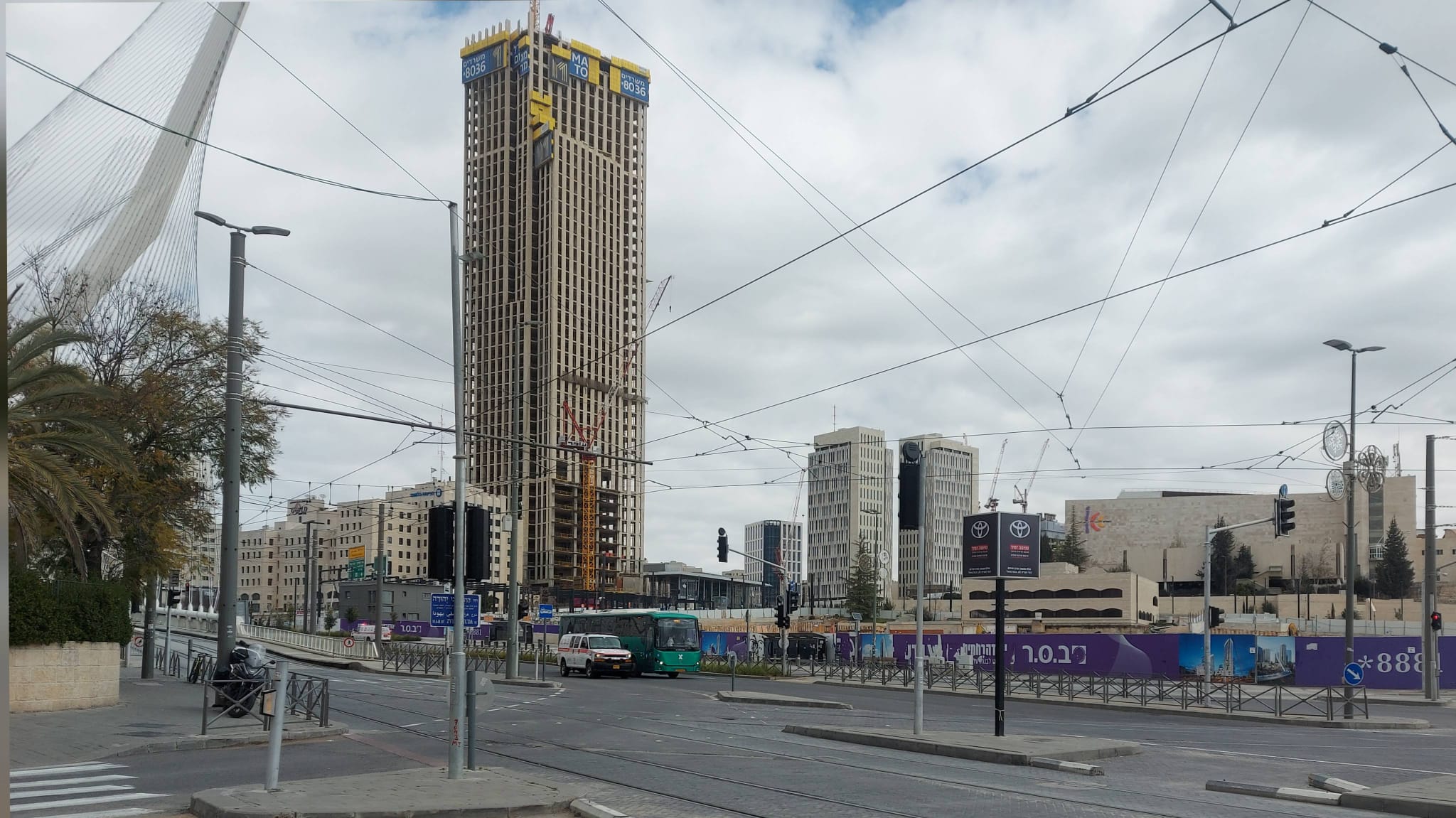
Jerusalem’s housing market has reached a critical point. The stock of newly built apartments still waiting for buyers is growing, while young couples and families are delaying decisions and watching for changes in prices, interest rates and financing terms. At the same time, the local planning committee has recommended advancing seven projects containing about 2,700 new housing units. A major increase in supply could strengthen buyers’ bargaining power, although years may pass between planning approval and the delivery of completed apartments.
Will Thousands of New Apartments Lower Jerusalem Housing Prices?
The largest plan is located in the renewed Talpiot district, between Poalei Tzedek, Pierre Koenig and Yad Harutzim streets. Three old industrial buildings would be replaced by four 50-story towers containing 1,366 apartments, some designated for long-term rental. The complex would also include a 40-story employment and commercial tower, schools, kindergartens, daycare centers, synagogues, cultural and sports facilities and public open space.
In Jerusalem’s city center, the Orion complex is planned at 17 Hillel Street. It would contain 342 apartments in three buildings of 35, 25 and 12 stories, together with commercial, employment, hotel and public space. The historic Lifshitz College building would be fully preserved, while the former Orion Cinema building would be dismantled and reconstructed under conservation supervision.
Where Will Jerusalem’s New Residential Towers Be Built?
In Kiryat Menachem, four buildings containing 64 apartments are slated for demolition and replacement by 288 homes in a 40-story tower and a 10-story building. In Gonenim, 60 older apartments would be replaced by 261 units in two 20-story buildings.
Another 248 apartments are planned on Kadish Luz Street in Ramat Sharet. In Kiryat Moshe, a separate project proposes 222 homes in a 30-story tower and two 10-story buildings. An additional plan in the neighborhood includes two schools, kindergartens, daycare centers, a sports hall and the formal regulation of existing synagogues.
Why Does More Housing Not Guarantee Lower Prices?
Long-term rental schemes have also failed to become an affordable alternative in every project. High construction and financing costs can undermine economic viability, while rental prices may remain beyond the reach of young families. Even when hundreds of apartments are officially designated for rental, their effect on the wider housing market remains uncertain.
Jerusalem Mayor Moshe Lion noted that urban renewal “changes the face of streets, neighborhoods and communities, while providing residents with security and life-saving protection.” For buyers, however, the real test is different: whether the new towers will create genuine competition and push prices down, or simply add more expensive apartments to the city’s unsold inventory.