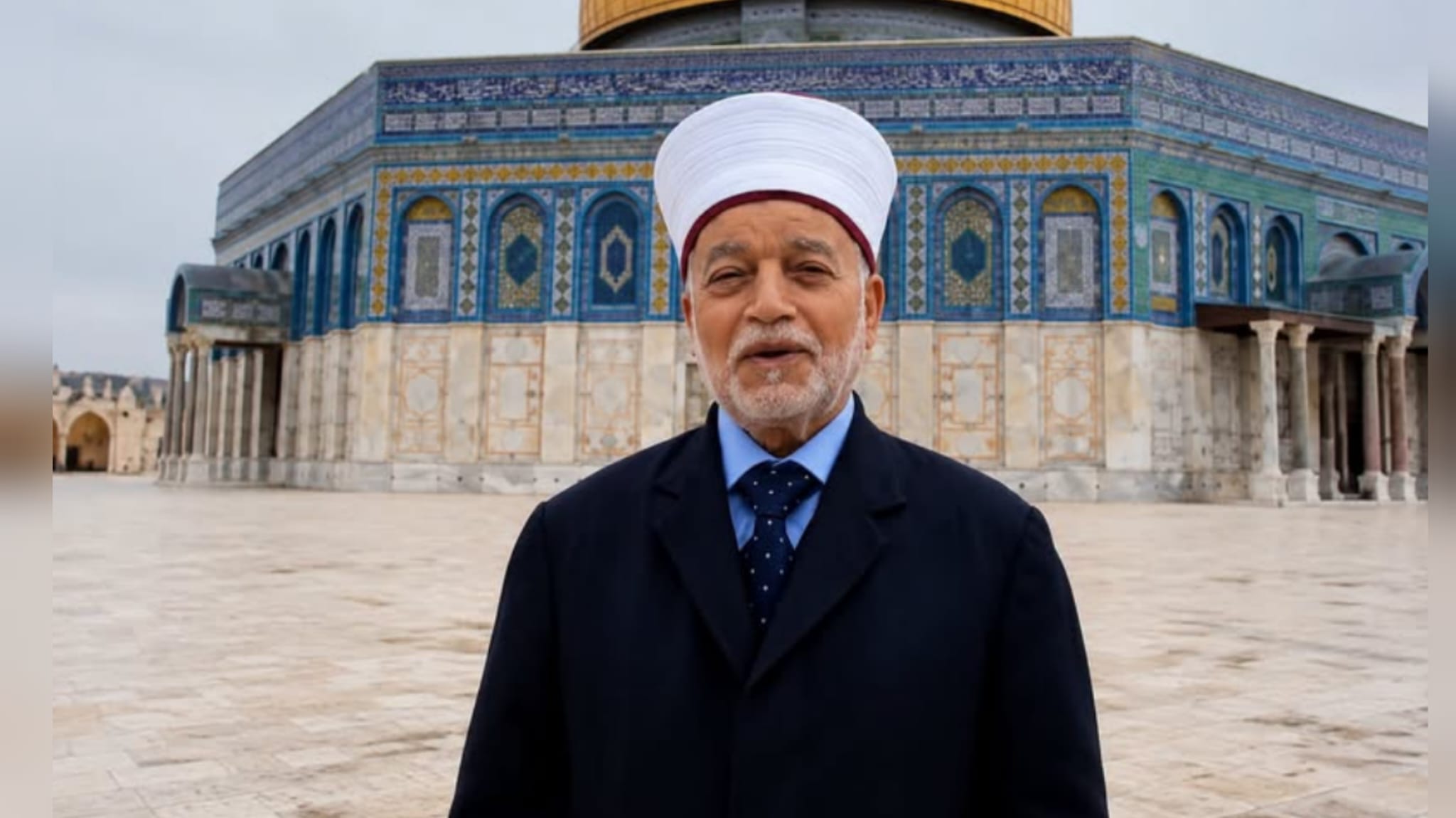
Jerusalem District Police officers detained the Mufti of Jerusalem, Sheikh Mohammad Hussein, last Friday after remarks he delivered during the Friday sermon at Al-Aqsa Mosque on the Temple Mount. According to the allegations against him, his statements raised suspicion of incitement. According to a Waqf estimate, around 70,000 worshippers were present at the compound for Friday prayers.
After a brief questioning at the police post near the Chain Gate, Hussein was barred from the compound for one week, pending a final decision by the district commander.
Why Was the Mufti of Jerusalem Barred from the Temple Mount?
During his sermon, Hussein prayed for the souls of militants who had been killed, referring to them as “martyrs,” and also addressed the issue of security prisoners held in Israeli prisons – remarks regarded in Israel as incitement, support for terrorism and encouragement of violence. Hussein did not deny making the statements, but claimed that he had fulfilled his religious and humanitarian duties and that his words did not constitute incitement.
This has become a recurring pattern involving Hussein since the massacre carried out by Hamas militants in October 2023. One year later, in October 2024, he eulogized militants during a sermon, including members of Hezbollah, and was barred for a short period. In July 2025, he claimed that Israel was implementing a policy of starvation against the civilian population in Gaza. He was then barred from the Temple Mount for six months.
Who Is Sheikh Mohammad Hussein, the Mufti of Jerusalem?
Mohammad Ahmad Hussein, 76, was born in Jerusalem. He studied Sharia at a Jordanian university and later completed a master’s degree in Islamic studies at Al-Quds University in Jerusalem.
Before his appointment as mufti in July 2006 by Mahmoud Abbas, also known as Abu Mazen, Hussein worked for around 20 years as director of Al-Aqsa Mosque. Before that, he served as a teacher in Islamic educational institutions, a supervisor of Islamic instruction for the Waqf, and an imam and preacher at Al-Aqsa. He is considered a central religious figure with a longstanding presence at the Temple Mount compound.
In recent years, and especially since the outbreak of the Swords of Iron War, Israel Police have increased oversight of sermons delivered at the Temple Mount. The aim is to prevent incitement, calls for violence and support for terrorist organizations. Security officials view such sermons as a genuine security risk because they reach large audiences of worshippers.
The latest incident is part of broader efforts to preserve order and security at the compound while balancing freedom of worship with the prevention of incitement. Jerusalem District Police stress that exclusion orders are a lawful and proportionate tool against those who cross red lines.