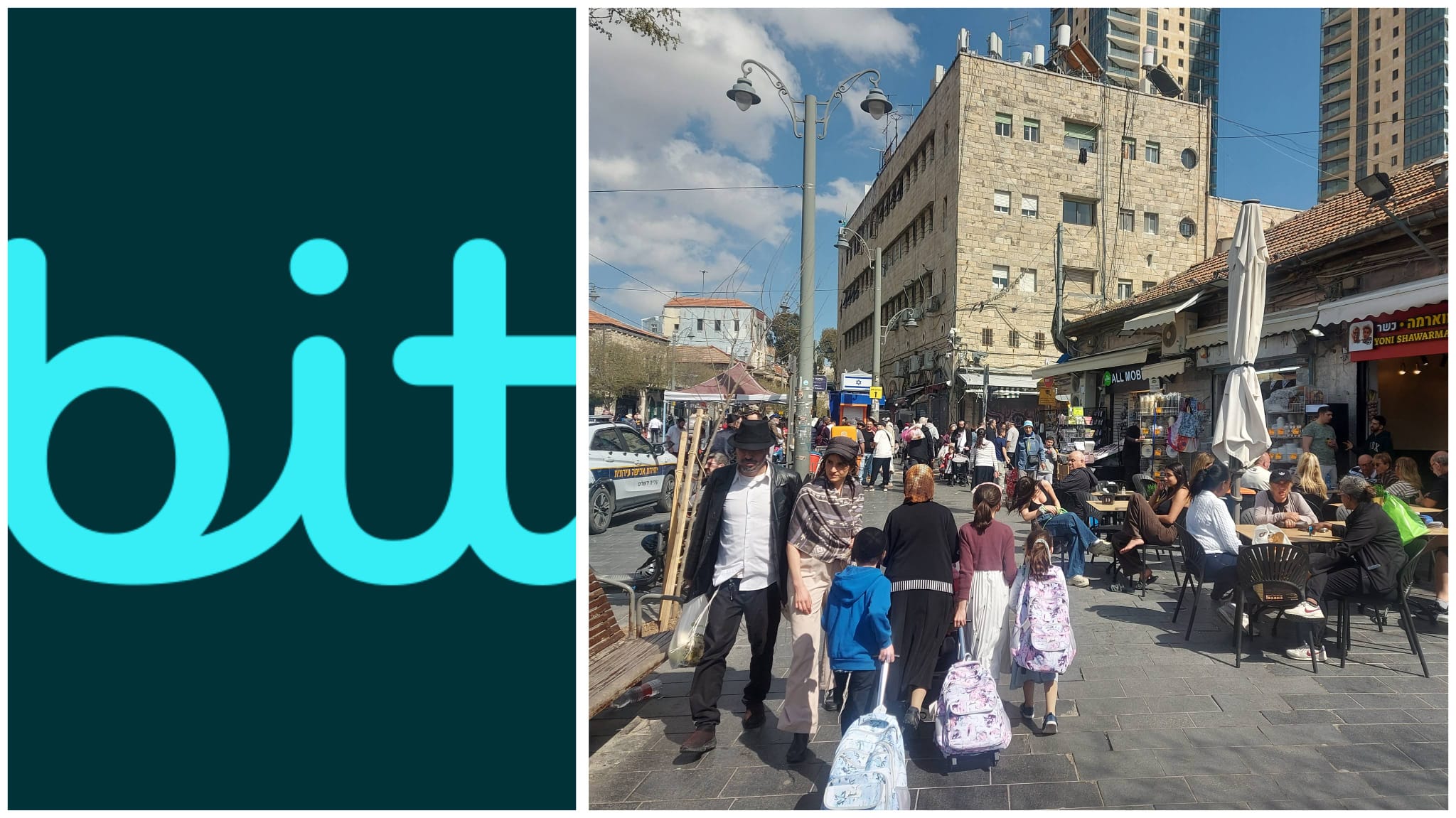
In Jerusalem in 2026, nearly every new public service is measured through the screen of a phone. But this city, perhaps more than any other large city in Israel, also includes a vast population that deliberately lives outside the smartphone world. Many ultra-Orthodox residents of Jerusalem do not own smartphones at all, and large parts of this community oppose regular internet use. This is not a marginal group, but a major urban, social and political force whose voting bloc has already helped bring the current mayor, Moshe Lion, to victory twice.
Against this background, the Jerusalem Municipality has published a new tender for clearing and payment services for municipal taxes, fees and various city services through the bit payment app. The move is meant to expand the city’s digital payment options and offer a faster, more accessible method for residents who already use payment apps as part of daily life.
Can bit payments in Jerusalem serve all residents?
The move does not come out of nowhere. In December, the Jerusalem Municipality launched the option of paying arnona, the municipal property tax, by credit card standing order. According to the municipality, about 8,500 residents have joined that service so far. Now the city wants to add bit as another payment channel, mainly for residents who prefer to settle municipal bills quickly by phone rather than through call centers, websites or forms.
Jerusalem Mayor Moshe Lion stated in the municipal announcement: “Optimal municipal service must be simple, available, convenient and adapted to new habits and technologies. Expanding payment options, from credit card standing orders to advancing payment through bit, is part of a service approach that places the resident at the center and adapts the municipality to the digital age. We will continue working to make municipal service more accessible, efficient and advanced.”
How can digital service fit ultra-Orthodox Jerusalem?
The larger question is not whether bit is convenient for those who use it, but how a municipality in Jerusalem builds digital service without turning it into the only route. In many ultra-Orthodox neighborhoods in the city, a kosher phone remains the norm, and payment through an app is neither practical nor desirable. That means that alongside expanded digital options, the city must also preserve payment and service channels that do not require a smartphone.
Is this really a municipal payment revolution in Jerusalem?
If the tender turns into an active service, many Jerusalem residents will be able to pay the municipality faster and more easily. But in a city so divided by lifestyle and technology habits, a digital revolution will be measured not only by the technology itself, but also by the ability not to leave behind those who choose, for religious, cultural or personal reasons, to remain outside the app.