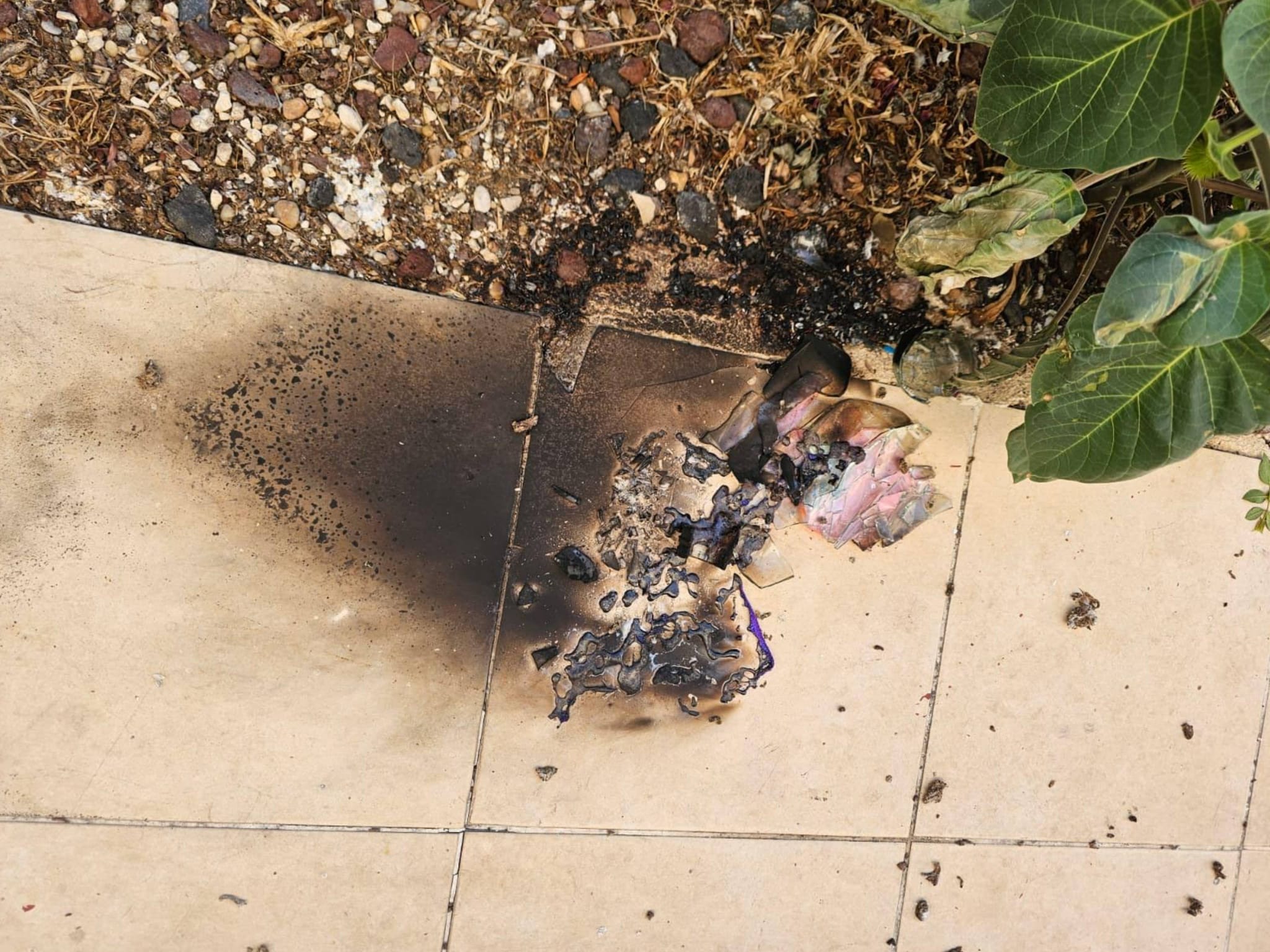
The scorch marks on a sidewalk near the Mount of Olives are more than evidence of another violent incident in East Jerusalem. They reflect an explosive reality in which just a few meters separating Jewish homes from those of Muslim residents can represent an enormous national, religious and psychological divide. Around At-Tur, where communities with different national identities live in close proximity, even a seemingly quiet street can become a flashpoint.
At-Tur, the neighborhood where four minors arrested this week reside, is not merely adjacent to the Mount of Olives. It sits on the mountain itself, east of Jerusalem’s Old City and south of Mount Scopus. This predominantly Muslim Palestinian neighborhood is part of a landscape that also includes the ancient Jewish cemetery, churches, monasteries and religious institutions. Jewish residential communities are also present in the surrounding area, sometimes a short distance from Palestinian homes. Physical proximity, however, does not necessarily create social closeness. It can instead intensify disputes over identity, sovereignty and belonging.
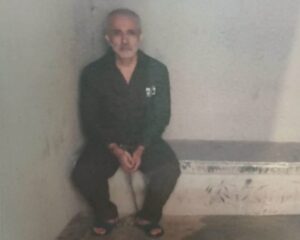
This week, four minors from At-Tur were arrested on suspicion of throwing Molotov cocktails at Jewish homes in East Jerusalem. Officers from the Jerusalem District Police’s Shalem Station and Jerusalem Border Police located the suspects following investigative work and video evidence. A court extended their detention until Wednesday, November 4, while the investigation continues.
Why Is Jerusalem’s Mount of Olives a Flashpoint Between Jews and Arabs?
The Mount of Olives is far more than a residential area. It holds profound religious and historical significance for Judaism, Christianity and Islam, and stands at the heart of one of the most sensitive areas of the Israeli-Palestinian conflict. Its ancient Jewish cemetery, Christian institutions and Palestinian neighborhoods create a densely layered landscape where almost every piece of land carries meaning beyond its everyday use.
The tensions are hardly new. During the 1990s, the establishment and expansion of the Beit Orot yeshiva generated controversy over Jewish residential and institutional presence within a predominantly Palestinian environment. Supporters viewed the development as an expression of historical attachment and the right to reside in the area. Palestinian opponents regarded it as politically driven expansion that could alter the character of their neighborhoods.
Sociologically, part of this tension can be understood through social identity theory, developed by Henri Tajfel and John Turner. When people perceive their surroundings as a competition between groups, the distinction between “us” and “them” becomes stronger. Under such conditions, even a localized incident can be interpreted as a threat to an entire community.
Can Jewish-Muslim Coexistence in East Jerusalem Reduce Violence?
Not necessarily. Intergroup contact theory, associated with psychologist Gordon Allport, suggests that interactions between communities can reduce prejudice under favorable conditions, including relatively equal status, cooperation and institutional support. Geographic proximity alone is insufficient.
Research into encounters between Jewish Israelis and Palestinians indicates that positive interactions can help reduce negative stereotypes. Yet meeting at a university or workplace is not necessarily comparable to living in a neighborhood where questions of property, sovereignty and national identity remain deeply contested.
Disparities in urban planning, infrastructure and economic opportunities across East Jerusalem also form part of the broader social environment in which these tensions develop. None of these conditions justifies violence or establishes the motives of the minors arrested this week.
That is perhaps the Mount of Olives’ most striking contradiction: a place sacred to millions around the world, yet one where some residents experience daily life through suspicion and fear. A single Molotov cocktail cannot explain the conflict. It can, however, illustrate how dangerous the intersection of physical proximity and national hostility can become.