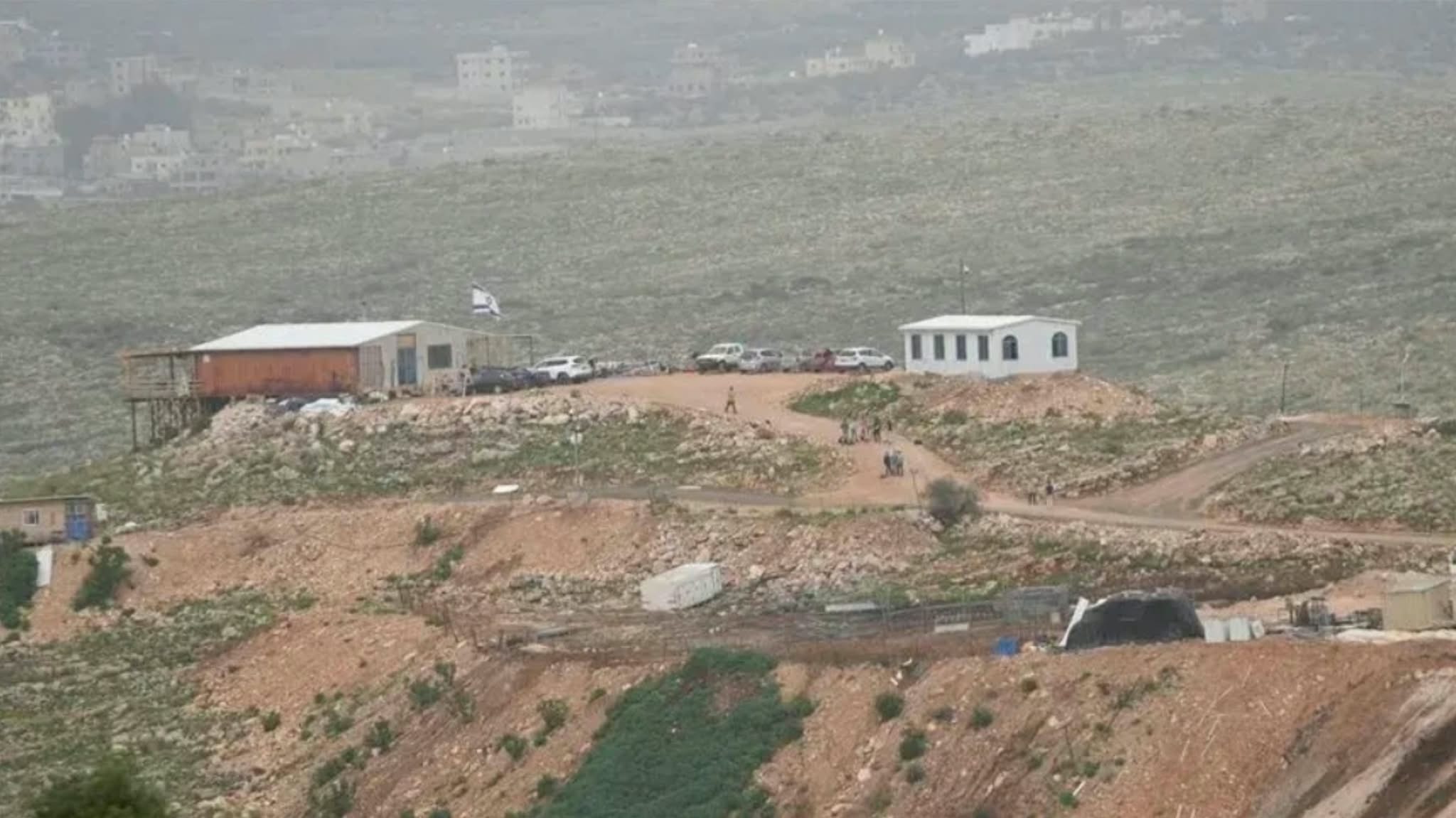
A new Jewish settlement point was established on Tuesday in the Khirbet al-Alawna area, on state land within the territory of the Palestinian village of Beit Iksa, northwest of Jerusalem. This is the second outpost to be established in the area in just four months, as part of an accelerating trend of creating facts on the ground in Area C on Jerusalem’s periphery.
The current sequence of events began in March 2026, when settlers accompanied by bulldozers and trucks arrived in the Ras Farij and Khirbet al-Gharaba areas of the village and placed initial portable and permanent structures there alongside tents. In August, infrastructure work and land clearing were expanded, and another stage was added to the move on Tuesday with the establishment of a new “shepherds’ camp” at the site.
Were the outposts near Beit Iksa established legally?
From a statutory perspective, these outposts were established without approved master plans or an official government decision. Nevertheless, in practice they benefit from close security protection by the security forces. The formal status of the land was determined in September 2025, when the head of Central Command declared approximately 20,000 dunams in the area a “seam zone.” This military declaration restricted the movement of Palestinians who are not registered permanent residents and created a buffer preventing the village’s farmers from reaching their historic lands.
This reality has led to a series of confrontations and incidents on the ground. In mid-May this year, physical clashes were recorded on the outskirts of the village, including the use of pepper spray, and in August the settlers blocked the only agricultural road used by Beit Iksa residents, who also claim incidents of property damage, livestock theft and harm to olive trees.
For now, the situation on the ground shows that these are “shepherds’ outposts” populated by only a tiny core of a few individual settlers, who are able to control the area thanks to military backing that prevents local residents from approaching.
Why are the outposts near Jerusalem causing such a fierce political dispute?
Reactions to the move have been harsh and reflect sharply opposing positions. Right-wing organizations and settlement movements present the development as a Zionist and strategic achievement. They argue that activity in the Beit Iksa area is essential in order to “halt the illegal Palestinian takeover of state land in Area C” and to create Israeli territorial continuity that protects Jerusalem’s periphery. From their perspective, the Jewish presence in the area, even though it has not been formally regulated, is the correct Zionist response to attempts by the Palestinian Authority to create facts on the ground.
By contrast, the Palestinian Authority has condemned the move and described it as “settler terrorism” intended to isolate “Palestinian” Jerusalem and carry out quiet ethnic cleansing. The Palestinian Foreign Ministry issued an official condemnation in which it sharply attacked the takeover efforts in the area and described them as “a continuation of a war of colonialism against the land, the people and the Palestinian narrative.” It added that this was “a systematic policy aimed at isolating occupied Jerusalem from its natural surroundings and changing its demographic identity.”
At the same time, Israeli left-wing organizations emphasize that the declaration of the “seam zone” was political from the outset rather than security-driven, and was intended to clear the area de facto for settlers. According to them, the Civil Administration’s failure to enforce demolition orders reflects a deliberate government policy of quiet annexation and disregard for the rule of law.