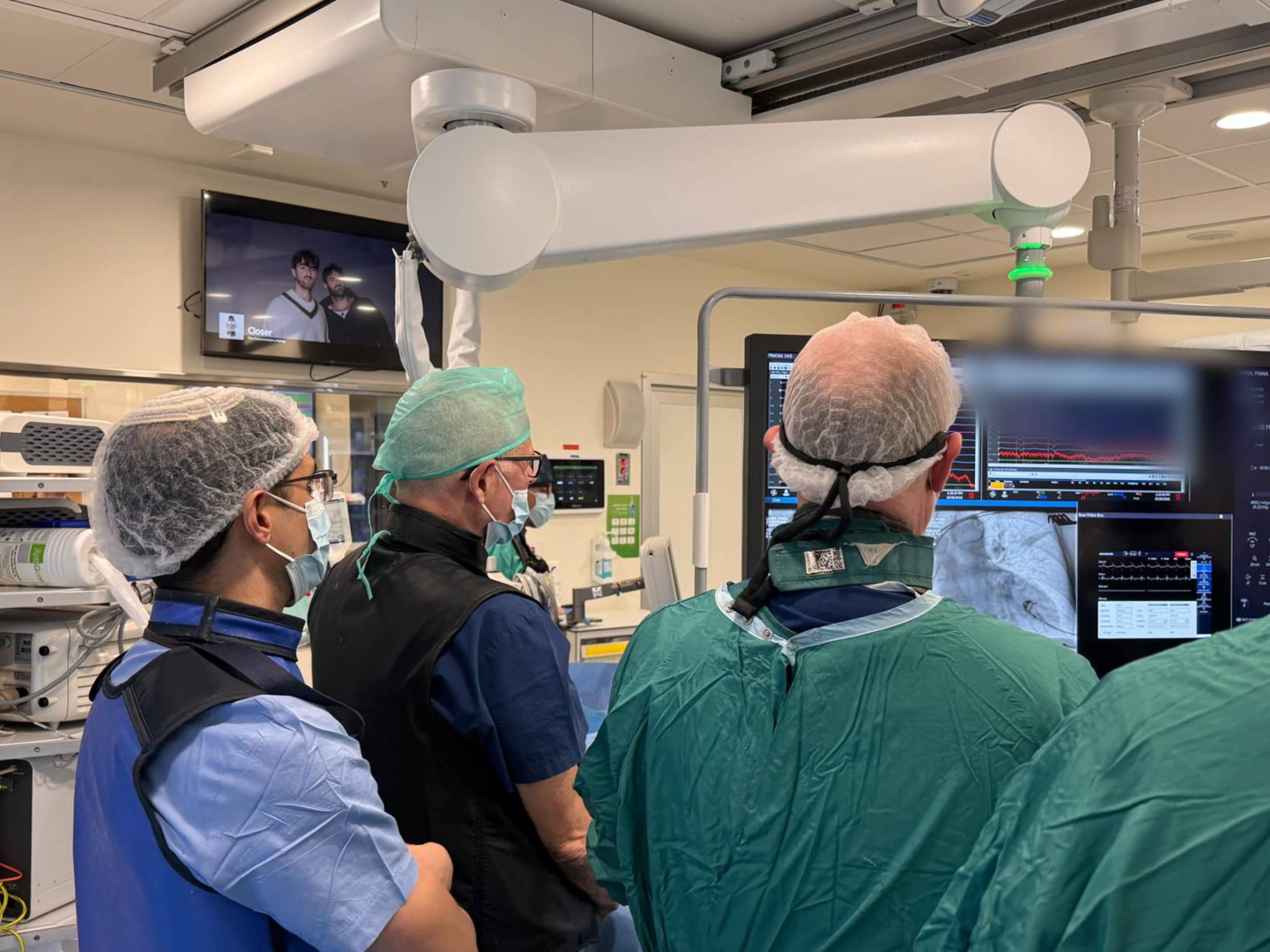
The human heart relies on a remarkably precise electrical system, where even a delay of a fraction of a second can disrupt coordination between its chambers. Now, Shaare Zedek Medical Center in Jerusalem has become the first hospital in Israel to introduce an advanced pacing technique designed to address one such problem: delayed electrical conduction between the heart’s two atria. Four pacemaker implantations using the new approach have been successfully performed at the hospital’s Integrated Heart Center, directed by Professor Michael Glikson.
How Does the New Pacemaker Technology at Shaare Zedek Work?
The innovation lies not in the pacemaker itself, but in the positioning of the electrode responsible for stimulating the atria.
In conventional pacing, the atrial electrode is typically placed in the right atrial appendage. From there, the electrical impulse spreads through the right atrium before reaching the left. In some patients, this produces a delay in left atrial activation, potentially disrupting electrical coordination and reducing the efficiency of the heart’s function.
The new technique positions the electrode near Bachmann’s bundle, a natural electrical conduction pathway connecting the right and left atria. Stimulating this region is intended to produce faster, more synchronized atrial activation by taking advantage of the heart’s existing conduction system.
The approach uses specialized electrodes manufactured by Medtronic and may be particularly relevant for patients who require pacemakers and experience atrial conduction delays or atrial rhythm disturbances. Eligibility is determined individually according to each patient’s medical condition.
Can Bachmann’s Bundle Pacing Reduce Atrial Fibrillation?
International research suggests that pacing in this region can improve electrical synchronization between the atria and may help reduce atrial fibrillation, a common heart rhythm disorder.
A scientific review published in August 2026, covering eight studies and 731 patients, reported improvements in electrical conduction measurements, alongside encouraging but still limited evidence regarding atrial fibrillation prevention.
Additional research remains necessary to establish the technique’s long-term clinical benefits and determine which patients are most likely to benefit.
The four procedures in Jerusalem were performed with guidance from an international specialist who traveled from Greece. The participating cardiac team included Professor Glikson, Dr. Ziv Dadon, Professor Yoav Michowitz, Dr. Moshe Rav Acha, and Dr. Ohali Tuvia-Brody.
Professor Glikson emphasized the importance of expanding treatment options for cardiac rhythm disorders through technological innovation.
“We spare no effort in finding the best technological solution for every patient,” he stated.
For now, the four successful implantations demonstrate the procedural introduction of the technique in Israel, rather than proven long-term reductions in arrhythmias among these patients. Nevertheless, its arrival in Jerusalem offers cardiologists an additional option for treating patients who require cardiac pacing.