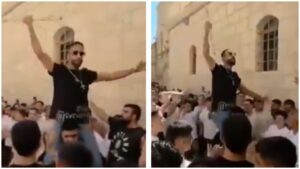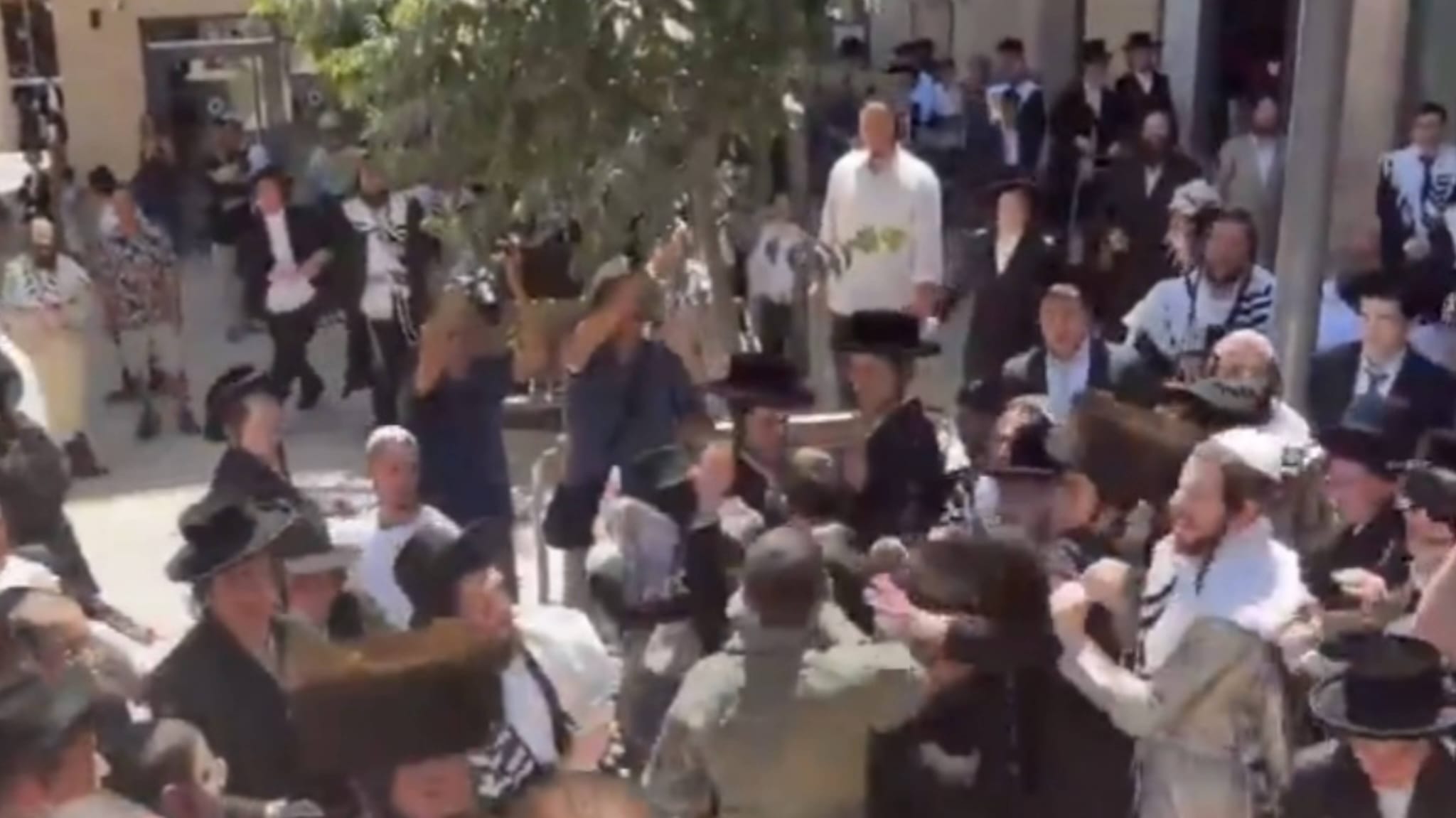
This is no longer a small protest outside a coffee shop, nor another familiar Jerusalem argument that can be dismissed with a few cries of “Shabbos.” Week after week, ultra-Orthodox protesters arrive at “Cafe Basimta” on Agripas Street. Facing them is a growing liberal public that has decided, this time, not to leave, not to bow its head and not to search for somewhere else to drink coffee.
The latest Saturday brought another escalation. Around one hundred ultra-Orthodox protesters tried to break through toward the café, police blocked their path and confrontations developed at the scene. Weeks of shouting, banging on windows, stone-throwing, an overturned table and police barriers have already turned the tiny alley into one of Jerusalem’s most volatile flashpoints.
How did Cafe Basimta in Jerusalem become a powder keg?
The ultra-Orthodox protest is not fading. On the contrary, it has returned regularly in recent weeks, while the camp supporting the business has grown each time. On one Saturday, hundreds of people came to stand with the café as police removed protesters who tried to approach the entrance. With cries of “Shabbos” from one side and “Go enlist” from the other, little remains of the polite pretence of coexistence.
The liberal mobilisation is now moving from the alley to Facebook and Instagram. Posts, videos and calls to share are urging the public to arrive on Saturday, August 8, at 10:30 a.m. and fill “Cafe Basimta.” One Instagram appeal has drawn thousands of reactions and likes, turning a visit to a coffee shop into a planned show of support. Alongside Jerusalem residents, the online discussion also includes voices from outside the city, including people from the greater Tel Aviv area who say they intend to travel to the capital to support the venue. How many will actually arrive will only become clear on Saturday, but the mobilisation is no longer local or spontaneous.
For years, anger has been building among secular Israelis, traditional Jews and religious kippah-wearers who are not ultra-Orthodox over what they view as an ultra-Orthodox takeover of public space and Jerusalem’s leisure culture. Many have already left the city. Others stayed, but have lost their willingness to retreat every time someone tells them that their way of spending Saturday is unwanted.
Could the coming Saturday in Jerusalem end in violence?
Not every ultra-Orthodox protester comes intending to strike someone, and not every liberal supporter arrives looking for a fight. But when crowds come prepared to battle over a symbol, facing a camp that feels the time has come to fight back, good intentions guarantee nothing.
The alley reflects an Israeli society breaking apart into camps that no longer speak to one another, but instead mobilise against one another. Ultra-Orthodox military enlistment, Shabbat, religion and state, and control of public space have blended into a single combustible mixture. One insult, one shove or another breach of the barriers may be enough for the next confrontation to end not with another online video, but with a street fight. “Cafe Basimta” is only the location. The explosion, if it comes, will belong to all of Israel.