Jerusalem plans to plant approximately 11,000 trees every year, but the program’s success depends on more than the number of saplings planted. Their long-term survival and growth are equally important. A new collaboration between the Bezalel Academy of Arts and Design, the Hebrew University of Jerusalem and the Jerusalem Municipality is now focusing on professional tree maintenance and expanding shade across the city’s streets and public spaces.
Why Is Planting 11,000 Trees a Year Not Enough for Jerusalem?
A young tree cannot provide the same shade as a mature one. Its development depends on sufficient soil volume for its roots, proper irrigation, appropriate pruning and protection from damage caused by construction and infrastructure projects. In a densely built city like Jerusalem, where sidewalks, roads and underground utilities compete for limited space, planting a tree does not guarantee that it will reach maturity.
This challenge is at the heart of a new academic and practical training course involving Bezalel’s undergraduate Landscape Architecture Program, the Hebrew University’s Faculty of Agriculture and Jerusalem’s municipal professionals.
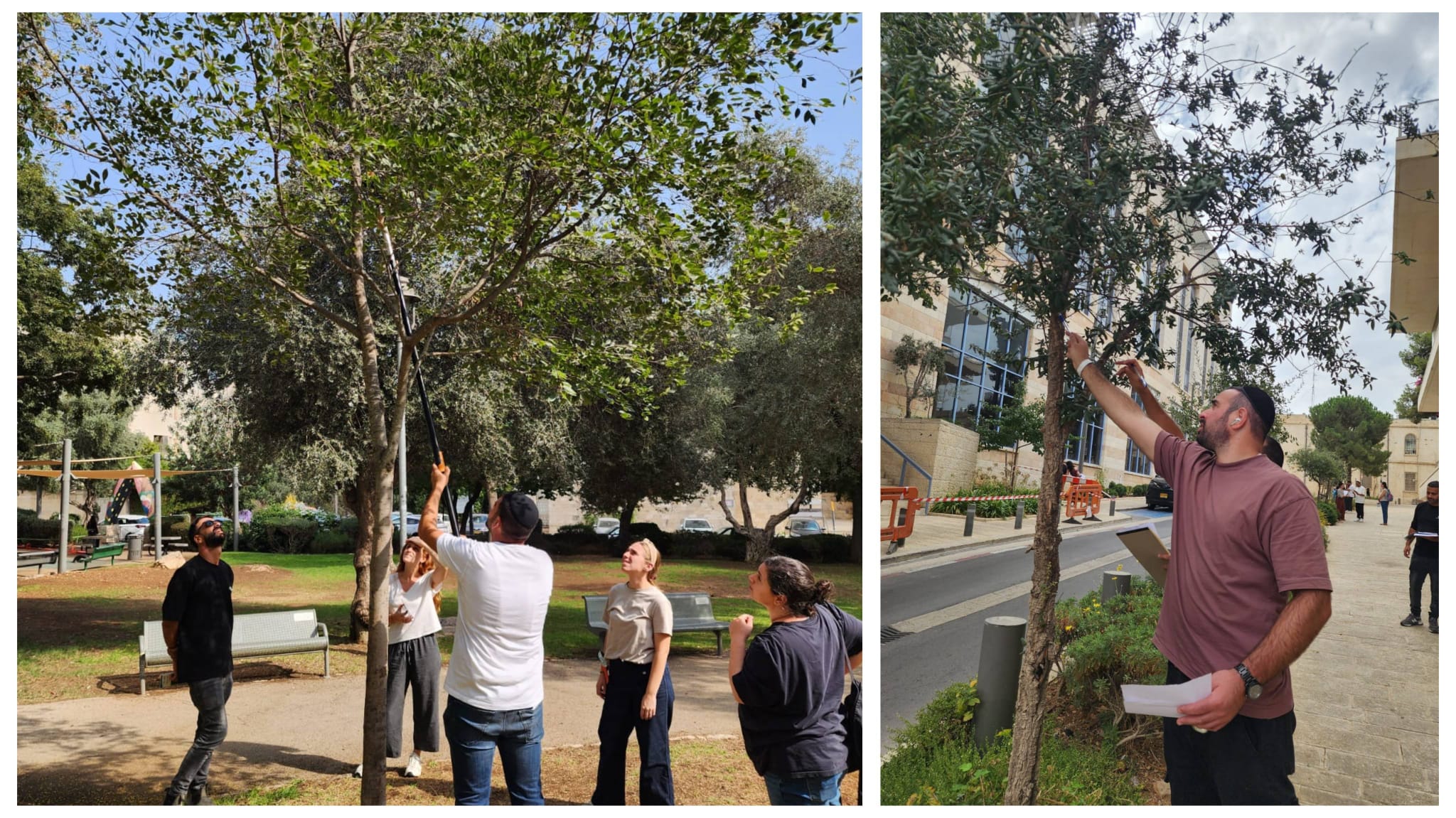
The course brings together fourth-year landscape architecture students, municipal gardening and landscaping employees, and field inspectors. Classroom learning is combined with practical experience in Jerusalem’s streets and gardens, focusing on the challenges of maintaining trees in a complex urban environment.
Agronomist Israel Galon, the municipality’s urban forestry adviser and a lecturer at Bezalel, explains that trees provide benefits extending far beyond shade. They improve air quality, help regulate stormwater runoff and support urban biodiversity.
“Maintaining an urban forest is not simply about planting trees. It also requires ongoing care and protecting the trees that already exist,” Galon explains.
How Can Urban Trees Improve Life in Jerusalem?
Urban forests influence how people experience and use their city. Shaded streets can encourage walking, outdoor activities and greater use of public spaces during warmer hours. Streets exposed to direct sunlight, by contrast, may become places pedestrians prefer to pass through as quickly as possible.
Jerusalem City Engineer and Head of the Planning and Infrastructure Administration Yoel Even describes trees as essential urban infrastructure. He emphasizes that future urban development must not come at the expense of Jerusalem’s existing trees.
The training initiative originated following requests from residents to Bezalel and was subsequently developed by Professor Alisa Rosenberg and Israel Galon in cooperation with municipal planning and environmental professionals.
It forms part of Jerusalem’s Urban Forest and Shading Master Plan, developed with assistance and funding from Israel’s Ministry of Environmental Protection.
The real measure of success, however, will emerge over time. Rather than counting only how many trees appear in annual planting reports, Jerusalem will need to examine how many develop into mature trees with substantial canopies capable of improving local climatic conditions and transforming the pedestrian experience.