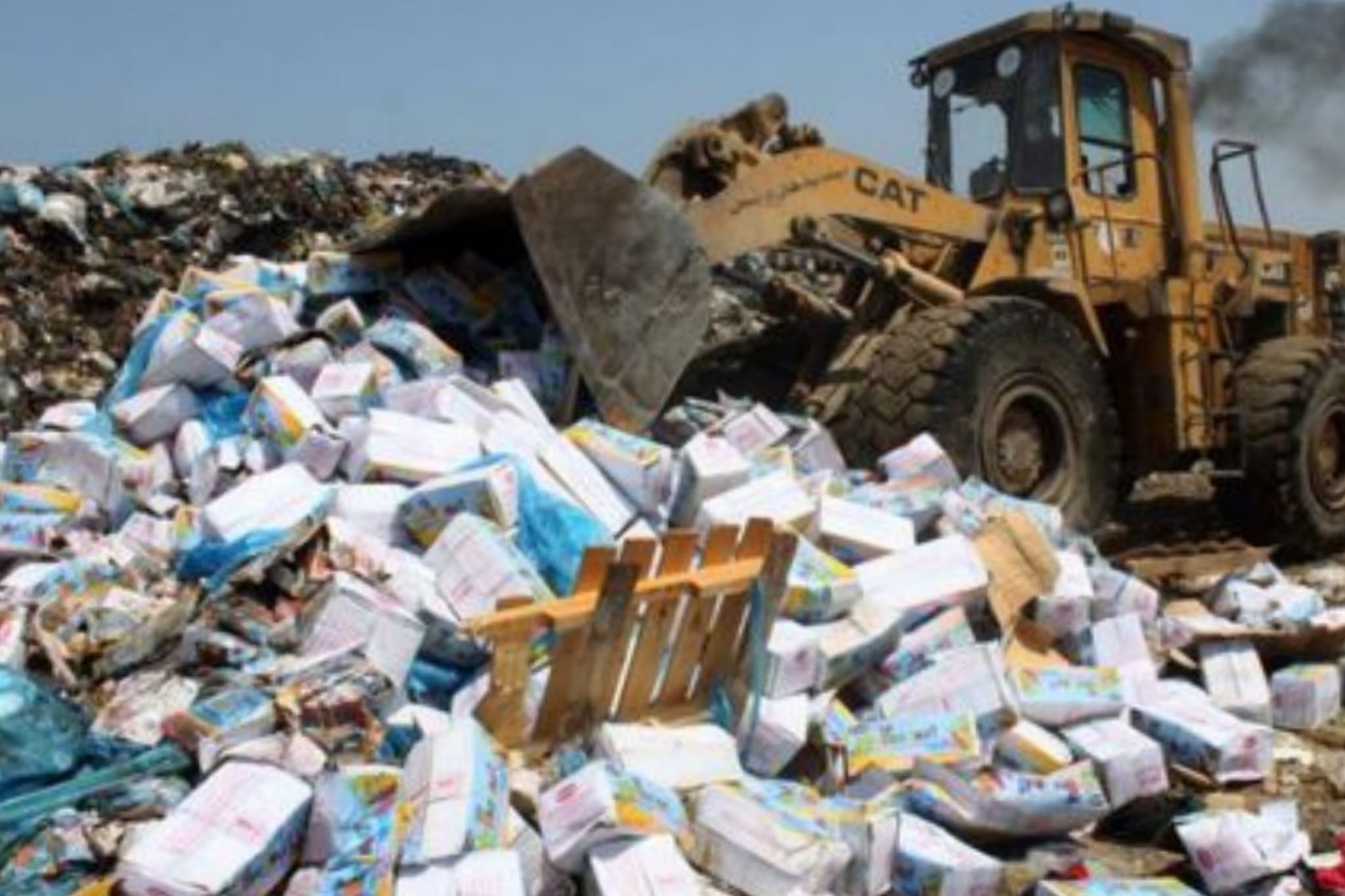
Just a few kilometers from Jerusalem’s northwestern neighborhoods and nearby Israeli communities, including Givat Ze’ev, Har Adar and Ma’ale HaHamisha, an escalating environmental and humanitarian crisis is unfolding. For ten consecutive days, Israeli security authorities have blocked access to the main landfill serving Palestinian villages northwest of Jerusalem, located in the town of Beit Anan. While Israel maintains that the site is unauthorized and unregulated, the Palestinian Authority insists that it is legal and supervised.
The landfill covers approximately 25 dunams (2.5 hectares) and lies about 12 kilometers northwest of Jerusalem in a straight line, just five kilometers from Givat Ze’ev. It serves as the sole waste disposal facility for 22 Palestinian communities, towns and villages in the area. Since access was blocked, garbage collection services have come to a complete standstill, prompting local village councils to declare a public health emergency. With no alternative disposal site available, large piles of garbage are accumulating in residential neighborhoods and near homes. Residents and local authorities warn of potential disease outbreaks, growing pest populations, severe odors and environmental contamination that could rapidly spread beyond the separation line, affecting air quality and the environment in Givat Ze’ev and Jerusalem itself.
Tensions reached a new peak over the weekend. The Palestinian Joint Services Council for Solid Waste Management, together with local officials and residents, organized a protest near the closed landfill, demanding its immediate reopening. According to Palestinian reports, Israeli security forces arrived and dispersed the demonstrators. During the confrontation, the forces confiscated a garbage collection truck and arrested its driver and the landfill’s security guard.
Why Does the Beit Anan Landfill Closure Threaten Jerusalem’s Environment?
At the heart of the dispute lies a longstanding infrastructure crisis in a densely populated and politically sensitive region. Mohammad Rabie, head of the Joint Services Council, emphasized that the Beit Anan landfill is the only available disposal site in the area, with no viable alternative because of severe land shortages and dense construction. Contrary to the Israeli position, which considers the site an environmental hazard requiring closure, the Palestinian Environmental Quality Authority describes Beit Anan as a “supervised site” rather than an illegal dump. The authority has conducted joint inspections with the Palestinian ministries of health and local government in an effort to regulate its operation. Since the closure began, local authorities have urgently contacted the Ministry of Civil Affairs and the District Coordination and Liaison Office, seeking to restore access. They have also urged residents to remain patient and refrain from dumping waste in streets and open areas.
On the Israeli side, neither the security establishment nor the Civil Administration has issued an official response specifically addressing this closure. However, Israel’s broader enforcement policy in the region focuses on shutting down unregulated waste disposal sites that fail to meet environmental standards, citing concerns about garbage fires, air pollution and groundwater contamination affecting nearby communities. Israeli policy generally requires waste to be transported to regulated facilities farther away, such as the Al-Minya landfill near Bethlehem or the Zahret al-Finjan facility near Jenin. For small Palestinian municipalities northwest of Jerusalem, however, transporting garbage dozens of kilometers every day through checkpoints is economically and logistically impractical. The result is an escalating environmental threat affecting the entire region, with potential consequences for Israeli and Palestinian residents alike.