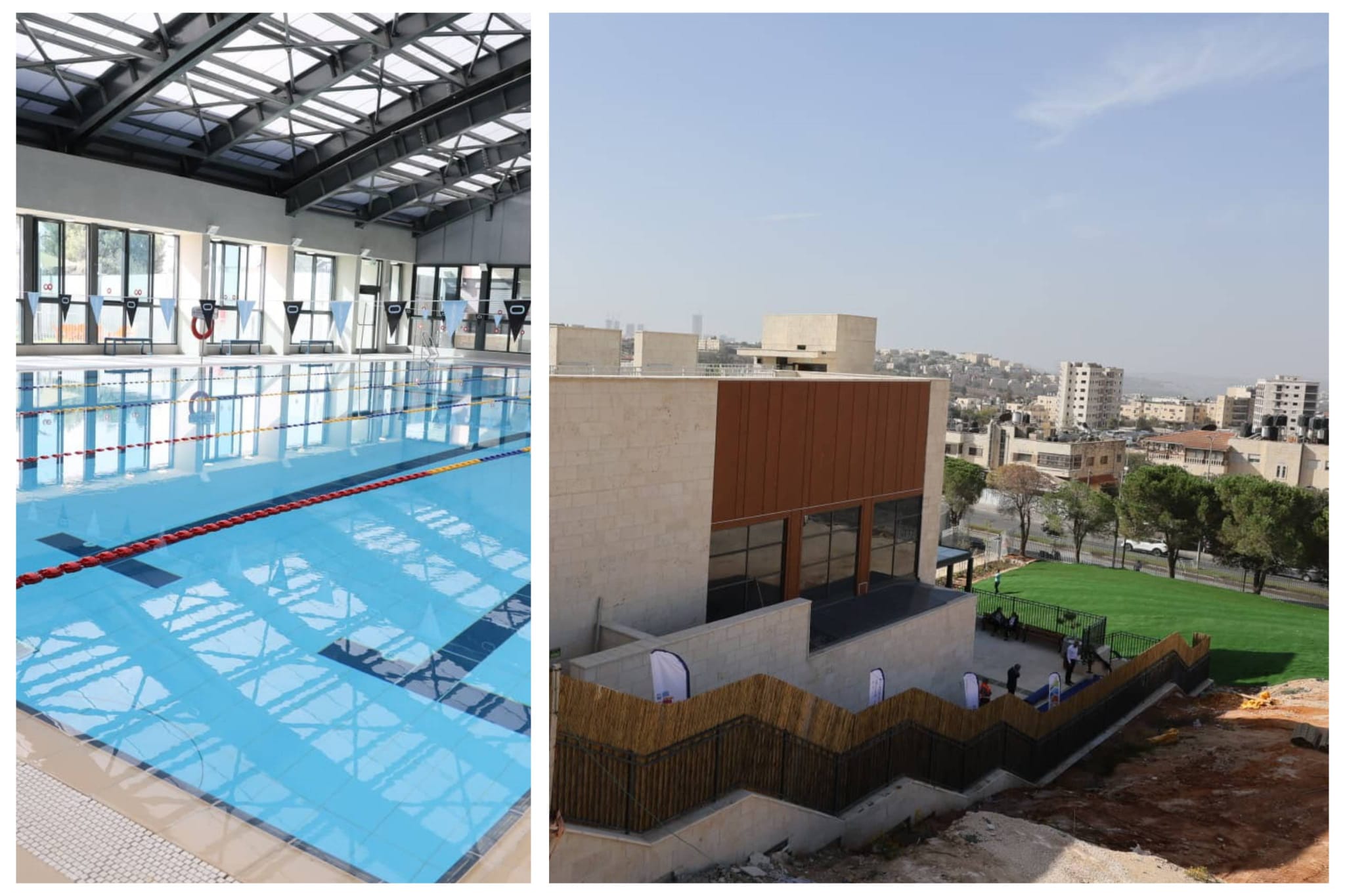
In Jerusalem, the distance between the eastern and western parts of the city is measured not only in kilometers but also in social, economic and national divisions. Against this backdrop, the opening of a public swimming pool carries significance far beyond sports. This week, a new community sports center was inaugurated in Beit Hanina, East Jerusalem, featuring the first public swimming pool in the eastern part of the city. Is this simply another public facility, or could it signal the beginning of a different urban reality, one in which equal opportunities gradually replace separation?
What Does the New Beit Hanina Sports Center in Jerusalem Offer?
Named after Jack, Joseph and Morton Mandel, the center covers approximately 5,000 square meters and represents an investment of around $20 million. It includes an indoor swimming pool, a toddlers’ pool, a teaching pool, fitness facilities, exercise studios and community spaces.
The project was developed through cooperation between the Jerusalem Municipality, the Ministry of Jerusalem and Israel’s Tradition, Mifal HaPais, the Jerusalem Foundation and the Mandel Foundation.
Dr. Wasim Alhaj, director of the Beit Hanina Community Center, explained: “The opening of the sports and swimming center in Beit Hanina addresses a genuine need among residents that has not been met until now. For five years, we closely accompanied the project to ensure that our families, children and teenagers would receive high-quality sports, health and recreational services close to home.”
The center is also expected to create dozens of jobs in coaching, lifeguarding, maintenance and management, potentially strengthening the local economy.
Can a Sports Center Promote Coexistence in Jerusalem?
This is where the deeper question begins. Jerusalem is one city administratively, yet in many respects, its residents experience two different urban realities. Disparities in infrastructure, public services and economic opportunities also shape their sense of belonging.
Investing in public facilities in East Jerusalem cannot erase national disagreements or decades of mistrust. However, it may help establish a shared civic foundation: children learning to swim, families gaining access to quality services, and residents feeling that their needs are being recognized.
Arik Grebelsky, president of the Jerusalem Foundation, recalled the vision of the foundation’s late president, Shai Doron, who believed in coexistence and viewed sports as a powerful means of promoting equality, connecting communities and building a shared society.
Jerusalem Mayor Moshe Lion also emphasized that, for the first time, East Jerusalem residents would have access to a public swimming pool and an advanced community sports center close to home.
Nevertheless, reducing inequality is not necessarily the same as achieving coexistence. The new center is primarily intended to serve Beit Hanina and surrounding neighborhoods. Whether it will become a meaningful meeting place for Jewish and Arab residents remains uncertain.
Perhaps that is Jerusalem’s real test: not the inauguration ceremonies or celebratory speeches, but whether equitable public investment can gradually translate into trust, belonging and genuine shared life.