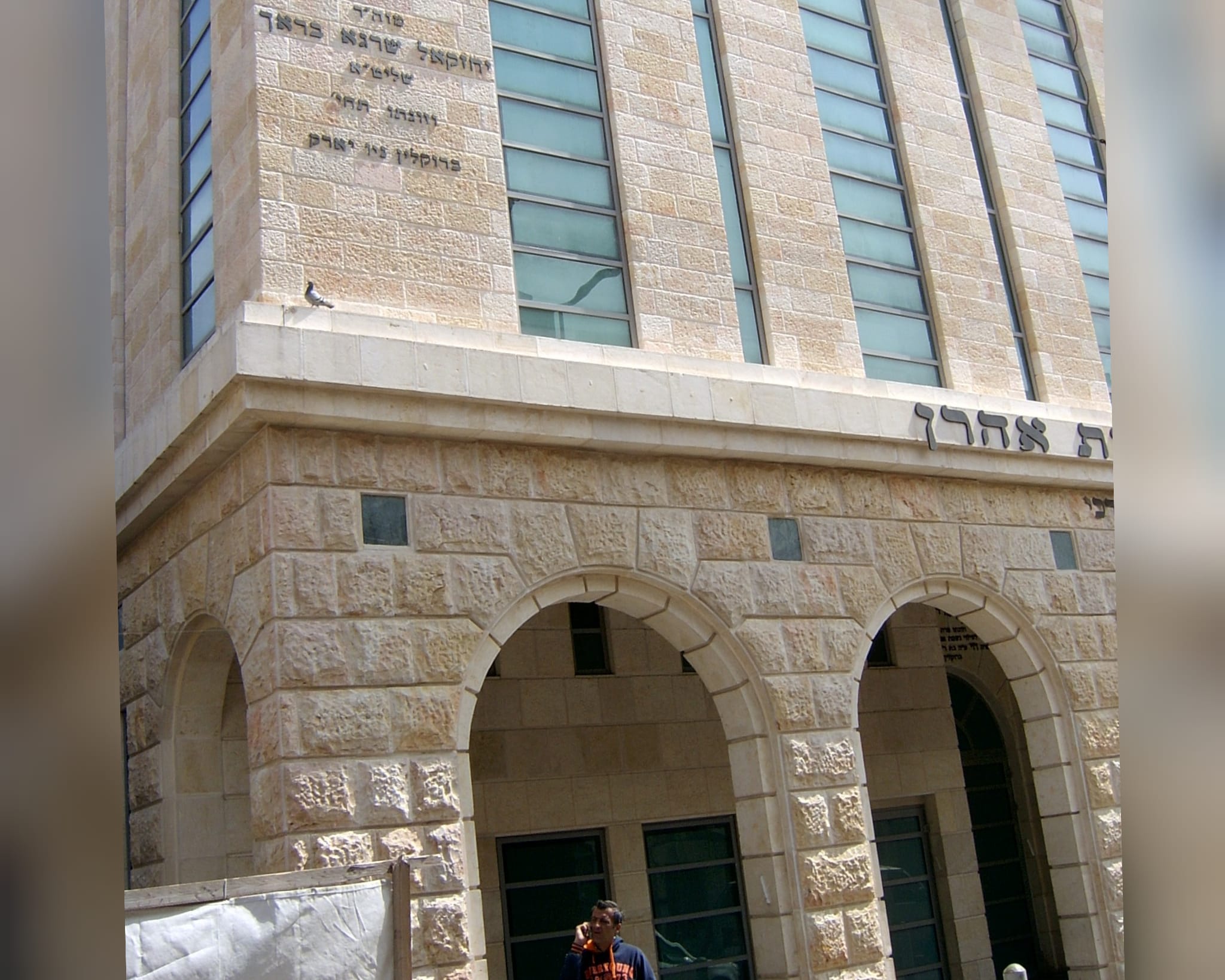
A historic, communal and architectural drama is unfolding these days in the narrow alleyways of Jerusalem’s Mea Shearim neighborhood. At the heart of one of the most conservative and religiously uncompromising communities in the Jewish world, the grand synagogue of the Toldot Aharon Hasidic dynasty is undergoing a dramatic transformation. The old stone building, which has served for approximately 70 years as an architectural symbol of Jerusalem’s Old Yishuv, is making way for a vast, sophisticated modern complex that will transform the neighborhood’s skyline. This week, the removal of equipment from the building began, with the demolition phase scheduled to follow.
How Will the Toldot Aharon Synagogue in Mea Shearim Change?
The current main building was constructed in the 1950s under the leadership of the dynasty’s first Rebbe, Rabbi Avraham Yitzchak Kohn. Its simple stone walls and nostalgic wooden and iron galleries were regularly packed with thousands of Hasidim during Sabbath prayers, the High Holy Days and the dynasty’s famous gatherings, known as tishes. For nearly two decades, the original building stood alongside a newer western wing, completed in 2009. However, financial and bureaucratic obstacles delayed their connection.
The breakthrough came last July, when the dynasty’s leadership held an extraordinary community referendum. An overwhelming 83% of participating Hasidim approved the ambitious expansion plan and agreed to help finance the project.
According to the approved plans, the new structure will comprise five main floors, including underground levels, and cover thousands of square meters. It will unite the synagogue, its famous courtyard and the adjacent Talmud Torah school building, which will also be vacated. The lower floors will house a modern ritual bath, offices and five smaller prayer halls, known as shtieblach, for weekday services. The upper floors will accommodate a vast hall for communal gatherings and mass prayers, featuring enormous protected seating galleries and tiered women’s sections, with a combined capacity of approximately 10,000 seated and standing worshippers.
Because the community maintains complete independence from Israeli government funding, the project, estimated to cost tens of millions of shekels, is being financed entirely through private contributions. At a special fundraising event organized by businessmen associated with the Hasidic court, 15 million shekels were raised. The remaining funding is based on long-term standing payment commitments undertaken by thousands of Hasidic families as part of the community referendum.
During construction, prayers and Torah lessons will be distributed among smaller study halls throughout the neighborhood, while a giant air-conditioned tent has been erected for Sabbaths and religious holidays. The project’s steering committee aims to complete the structural framework and connect the various wings within 18 to 24 months. The full inauguration of the lavish Hasidic complex is planned for approximately three to four years from now.