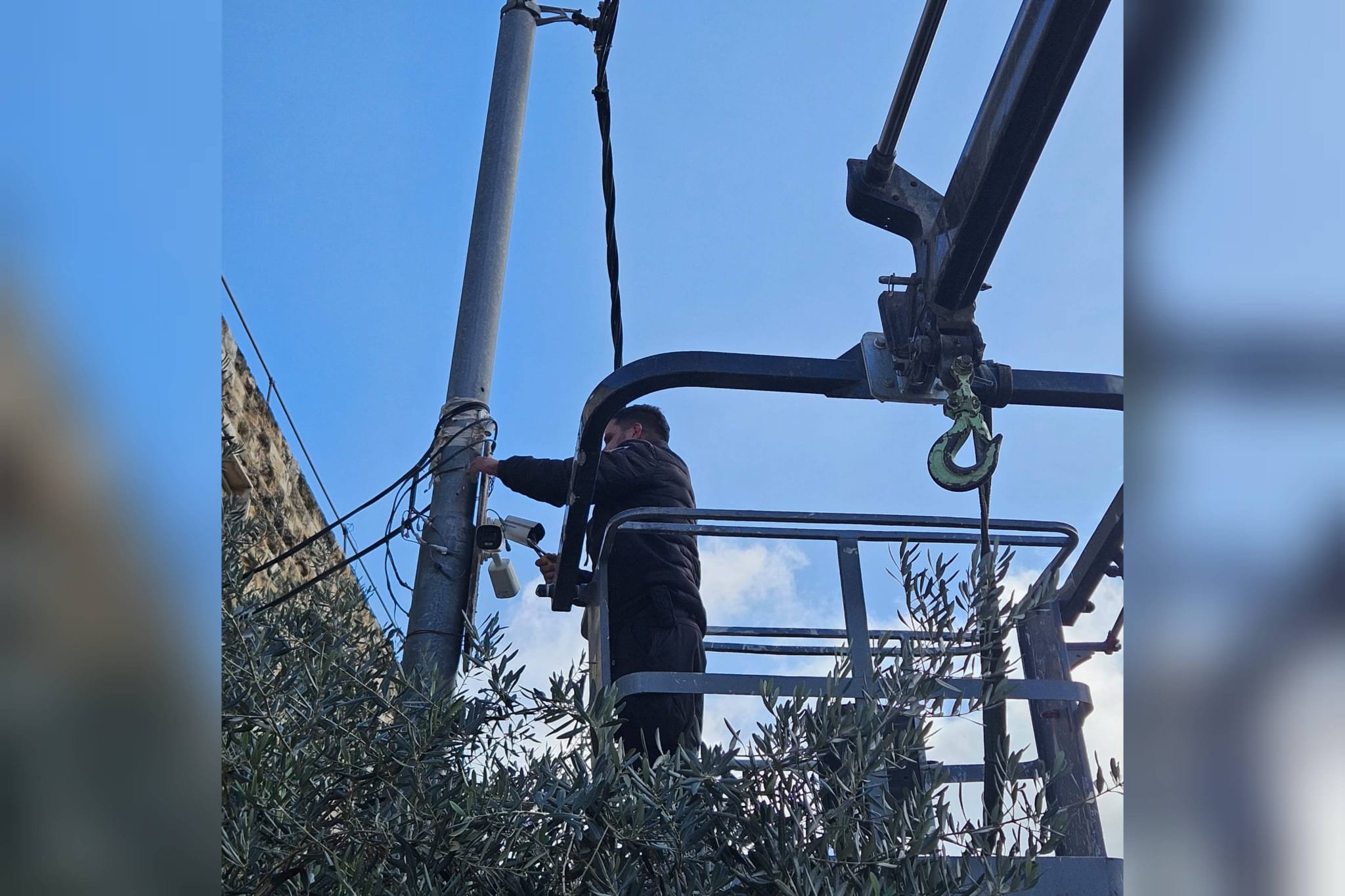
A security camera mounted above a street can protect residents, but it can also become a tool for monitoring them. In East Jerusalem, the boundary between these two functions can become dangerously blurred. Dozens of cameras installed illegally in the neighborhoods of Beit Hanina and Shuafat have been removed by Jerusalem District Police. According to police, the devices were used by criminal elements to monitor activities and exercise control over public spaces. Behind the enforcement operation lies a broader social issue: who holds power in the streets, who can monitor people’s movements, and who determines the rules of everyday life.
How Do Surveillance Cameras Become Tools of Criminal Control?
Officers from the Shafat Police Station, working alongside Jerusalem’s municipal enforcement division, removed dozens of cameras installed without authorization. Police linked their use to family disputes, drug-related activities and other criminal offenses.
The operation illustrates the importance of proactive policing that goes beyond responding to crimes after they occur. By dismantling surveillance infrastructure allegedly used by criminal groups, police can potentially weaken their ability to monitor neighborhoods and maintain an advantage over rivals.
From a criminological perspective, a camera is more than a recording device. In criminal hands, it can become a means of identifying opponents, detecting unusual movements and creating the impression that every corner of a neighborhood is under observation.
Such control does not necessarily require physical violence. Sometimes, the knowledge that someone is monitoring building entrances, daily routes or neighborhood visitors is enough to influence people’s behavior.
Why Does the Battle Over Cameras Matter in East Jerusalem?
In urban sociology, control over public space is considered a fundamental expression of power. Streets are supposed to be shared environments where residents can move freely without seeking permission from influential local figures.
When private actors use surveillance technology to establish territorial dominance, an informal system of authority can emerge alongside official state institutions.
However, surveillance raises questions beyond criminal activity. According to Israel’s State Comptroller, the number of surveillance cameras in Jerusalem’s public spaces increased from 80 in 2011 to approximately 3,800 in 2024, a 47-fold expansion.
This growth also raises questions about surveillance conducted by public authorities, particularly the balance between protecting residents and preserving their right to privacy.
Will Removing Illegal Cameras Make Residents Safer?
Removing unauthorized surveillance equipment may reduce the ability of criminal groups to monitor neighborhood streets, but it does not automatically resolve the conflicts and illegal activities that enabled such systems to emerge.
Even cameras installed for legitimate security purposes require consideration of necessity, proportionality and potential violations of privacy. The presence of a camera does not automatically make its installation lawful or justified.
In Beit Hanina and Shuafat, police stated that the cameras and related findings were handled in accordance with their legal authority. However, no details were provided about the identities of those operating the devices or the extent of the information collected.
Ultimately, dismantling the cameras addresses only the visible part of a larger problem. The real test in East Jerusalem is not how many devices disappear from utility poles, but whether residents can live in neighborhoods free from intimidation, unauthorized surveillance and criminal control.