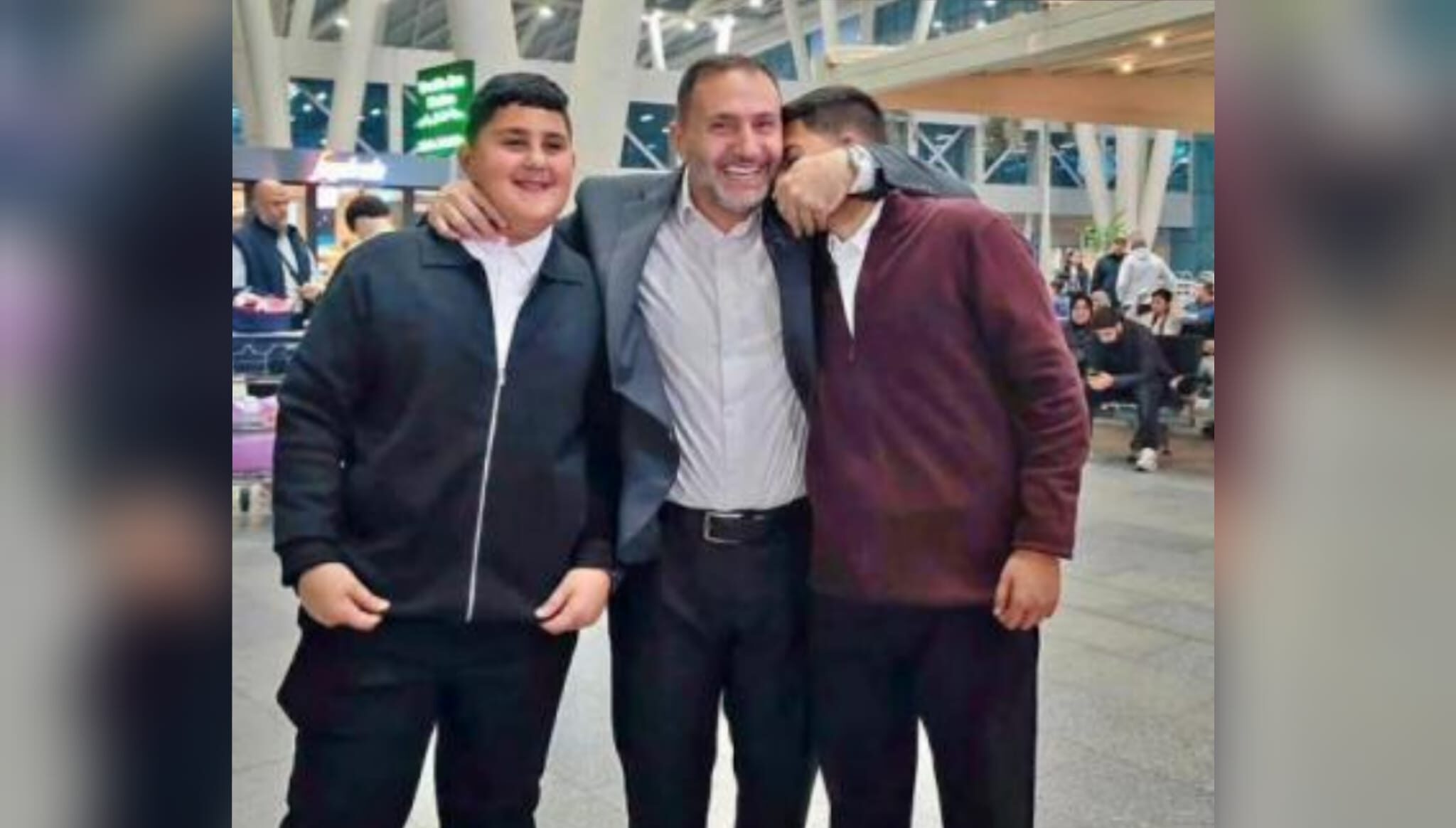
The name of Ammar Abd al-Rahman al-Zaban, a Hamas mass murderer and former senior figure in the organization’s military wing, returned to the headlines this weekend after footage emerged on Arab social media showing his first meeting in Cairo, Egypt, with his two sons, conceived through sperm smuggled out of an Israeli prison while he was serving a life sentence. Behind the images of this family reunion lies a bloody history of devastating terrorist attacks he orchestrated in Jerusalem, claiming the lives of dozens of Israelis, alongside an extraordinary chapter in the lives of Palestinian security prisoners held in Israel.
Who was behind the deadly 1997 suicide bombings in Jerusalem?
Al-Zaban, a native of Nablus who is now 51, commanded a deadly cell belonging to Hamas’s Izz ad-Din al-Qassam Brigades during the 1990s. In the summer of 1997, he was responsible for planning, dispatching attackers and supplying explosives for two of the deadliest suicide bombing attacks Jerusalem had experienced.
On July 30, 1997, two suicide bombers disguised as ultra-Orthodox Jews detonated their explosives in the crowded Mahane Yehuda Market, just dozens of meters apart. The double bombing killed 16 people and wounded 178 others. Approximately one month later, on September 4, 1997, the cell struck again in the heart of Jerusalem. Three suicide bombers simultaneously detonated their explosives on Ben Yehuda pedestrian street, killing five people and injuring nearly 200.
Altogether, al-Zaban was implicated in terrorist attacks that killed 27 Israelis and wounded more than 300.
In January 1998, Israeli security forces arrested al-Zaban, and a court sentenced him to 27 consecutive life sentences and an additional 25 years in prison. During his years behind bars, he pursued education and writing, completing bachelor’s and master’s degrees in political science through Al-Quds University.
He also published six novels dealing with the lives of Palestinian security prisoners and the Palestinian struggle, including When the Orange Blossoms (2011) and Behind the Lines (2015).
However, his broader recognition in the Arab world came in 2012, when he became the first Palestinian security prisoner reported to have successfully smuggled sperm out of an Israeli prison.
Through the secret transfer of his sperm to a fertility clinic in Nablus, he and his wife had two sons through in vitro fertilization: Muhannad, born in August 2012, and Salah al-Din, born in September 2014. The practice subsequently became increasingly common among Palestinian security prisoners.
On February 27, 2025, after approximately 27 years in prison, al-Zaban was released during the seventh phase of the hostage-prisoner exchange agreement and deported to Egypt.
Since then, he has remained in Cairo under Egyptian supervision, as no third country has agreed to accept him and grant permanent asylum.
Now, according to reports circulating on Palestinian social media, his long wait to reunite with his family has finally reached a turning point at Cairo International Airport. There, al-Zaban embraced his sons Muhannad and Salah al-Din for the first time in his life after they arrived from Nablus via Jordan.
His wife, however, was reportedly forced to remain behind for the time being because of security-related travel restrictions imposed on the families of deported prisoners.
While the family awaits a complete reunion, the families of his victims in Jerusalem continue to bear the scars of the terrorist attacks he planned and carried out.