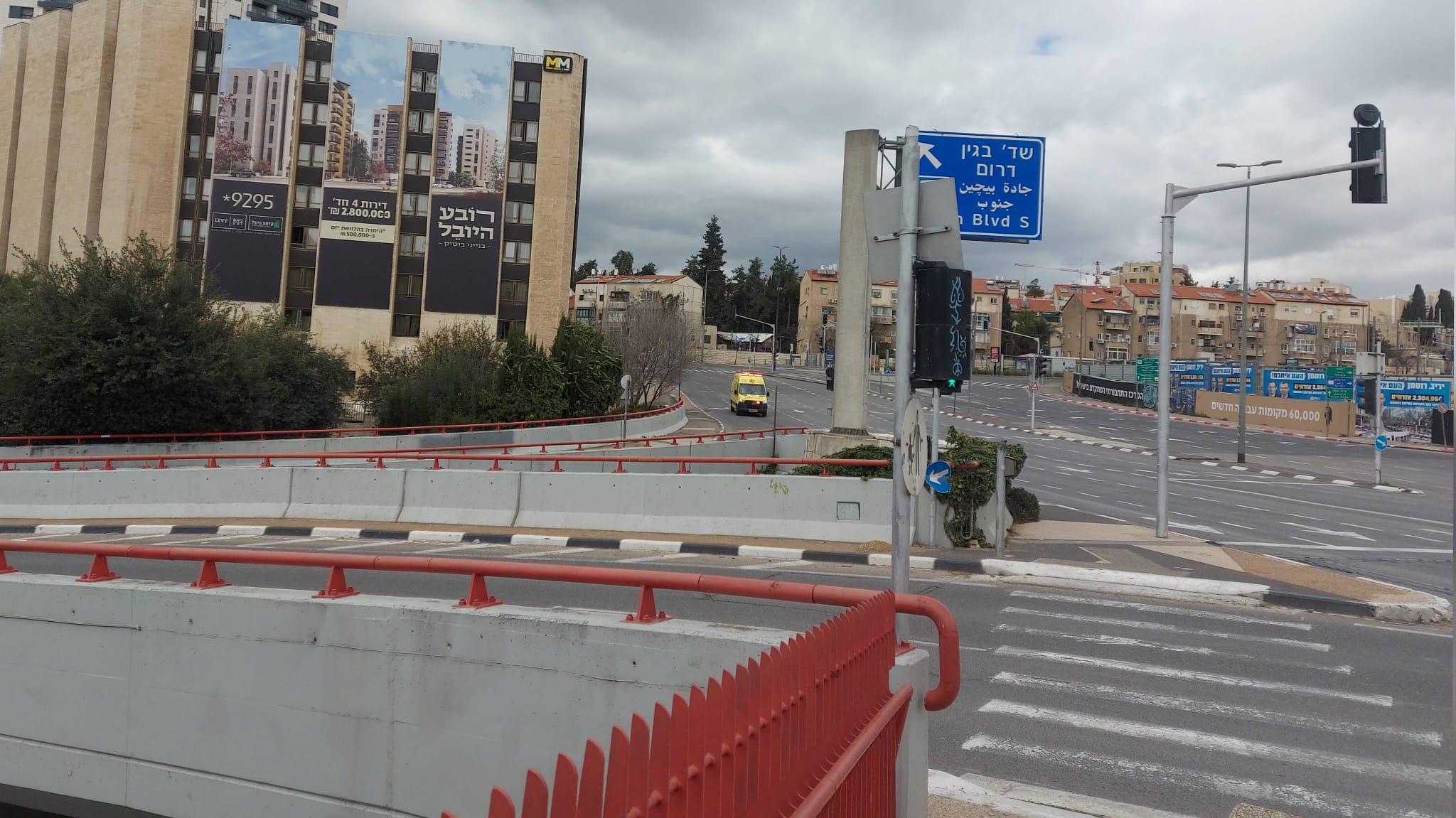
Two days after the war returned and after the tense night between June 7 and June 8, Jerusalem once again looks like a city holding itself together by force. The roads are thinner, the mood is gray, and the damage is no longer only about security – it is also hitting the pocket. Tourists are barely visible in the city, hotels are struggling to fill rooms, cafés, restaurants and shops in tourism areas are absorbing another wave of weakness, and Jerusalem – a city that depends heavily on movement from outside – is once again becoming a place of waiting, cancellations and uncertainty.
The impact is clearly felt in the city center, along the main roads leading into neighborhoods, and on routes that usually benefit from visitors, tour groups, pilgrims and families. Instead of summer noise, there is a heavy silence. For many business owners, these are not just two days of emergency – but another blow in a long chain of difficult months, in which every security escalation immediately wipes out bookings, events and plans for a season that was supposed to be strong.
Why is tourism in Jerusalem collapsing again?
In Jerusalem, a few sirens and one emergency announcement are enough for tourists to disappear almost instantly. The city, which relies heavily on religious, historical and hotel tourism, is especially vulnerable to every escalation. With reports of Iranian fire toward Israel and Israeli strikes in Iran in the background, the immediate result is halted reservations, reduced movement in the streets, and damage to hotels, restaurants, markets and souvenir shops.
Even those who are already in Israel limit their movement, postpone tours and prefer to stay close to a protected space. Within a short time, this creates a feeling of an urban “desert” – fewer tourist buses, fewer foreign languages in the street, fewer customers and less hope among business owners.
How is Jerusalem operating in emergency mode?
The Jerusalem Municipality announced that, following the situation assessment and Home Front Command instructions, the city has shifted to a reduced emergency format. In its statement, the municipality said that “following the missile launches from Iran, Mayor Moshe Lion ordered the opening of all municipal shelters and the activation of the municipality’s emergency command center.” It also stated that “educational activities will not take place across the city,” and that workplaces may operate only where people can reach a proper protected space within the required warning time.
The consequences are broad: parents remain at home with their children, workers struggle to maintain a normal routine, and the local Jerusalem economy once again enters a state of partial activity. A city that wants to project stability is forced to turn inward again.
What happens to essential services and businesses in Jerusalem?
The health system is also working under adjustments. Hadassah said its hospitals “are preparing to operate according to the instructions of the Home Front Command and the Ministry of Health,” and that “all urgent activity will continue as usual.” Clalit Jerusalem District announced an emergency format, and district director Erez Levy said: “Clalit teams are prepared to continue providing safe, high-quality medical service to residents of Jerusalem and the surrounding area.”
But outside essential services, the picture is much harder. Private businesses, hotels and local commerce do not enjoy the same continuity. For them, every day without tourists is another day of losses. And so, only two days after the fighting resumed, Jerusalem already looks like a city that is breathing – but barely.