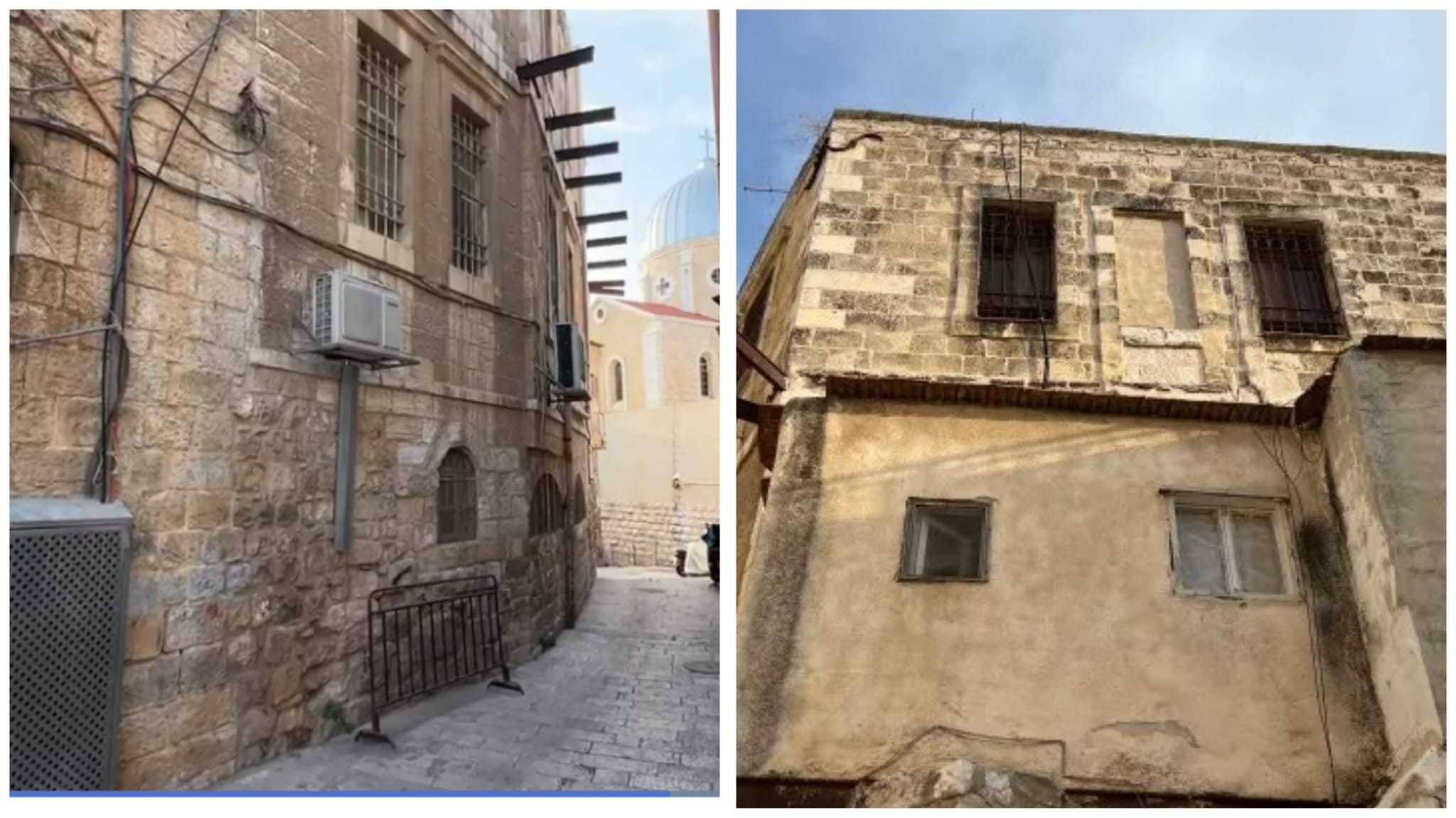
Following a prolonged legal battle that lasted approximately eight years, the process of returning the historic Torah Chaim Yeshiva building, located in the heart of the Muslim Quarter in Jerusalem’s Old City, to Jewish hands was completed in recent days.
The Supreme Court gave final approval to the previous rulings, and the building, which belonged to the yeshiva’s Jewish endowment before the establishment of the State of Israel, was returned to representatives of Ateret Yerushalayim Yeshiva, formerly known as Ateret Cohanim. The process was completed this week with the formal receipt of the property and the affixing of a mezuzah to the entrance door during a ceremony led by Rabbi Avishai Tzruya, head of Ateret Yerushalayim Yeshiva.
What is the history of Torah Chaim Yeshiva in Jerusalem’s Old City?
Torah Chaim Yeshiva was founded in the late 19th century on Al-Wad Street, near the Via Dolorosa. It served as an important center of Torah study for the Jewish population that lived throughout Jerusalem’s Old City at the time.
When Israel’s War of Independence broke out in 1948, the building was abandoned. However, the yeshiva’s equipment, sacred books and other belongings were preserved by local residents from the Basha family, who occupied the building as custodians entrusted with protecting both the property and the yeshiva. They carefully safeguarded the Jewish possessions over the years. Following the Six-Day War and the reunification of Jerusalem in 1967, the items were returned. A Jewish yeshiva later resumed operating at the site, alongside members of the Basha family, who continued living in part of the building.
Approximately eight years ago, a lawsuit was filed through the Administrator General at the Ministry of Justice, which is responsible for managing Jewish properties in East Jerusalem that predate 1948, seeking the return of the entire property to the holders of the endowment rights. According to the court decisions, the three-story building does indeed belong to the Jewish endowment. The courts also ruled that the later residents had failed to prove full ownership and that the property should be returned to its lawful owners.
The eviction was carried out in accordance with court orders, and the building was transferred to the Jewish community. Officials from Ateret Yerushalayim expressed satisfaction with the achievement, noting that it represented a historic correction and the renewal of the Jewish presence in a compound where Torah institutions had operated for generations. “Returning a historic Jewish property to its owners is the realization of a basic right and of the law of the state,” the officials involved stated.
The move strengthens Jewish territorial continuity in the Old City and allows the building to be restored and reopened for study and prayer. It is another chapter in the continuing story of returning Jewish properties in Jerusalem to those who owned them before the establishment of the State of Israel, as well as another chapter in the struggle between Jews and Palestinians over control of East Jerusalem.